
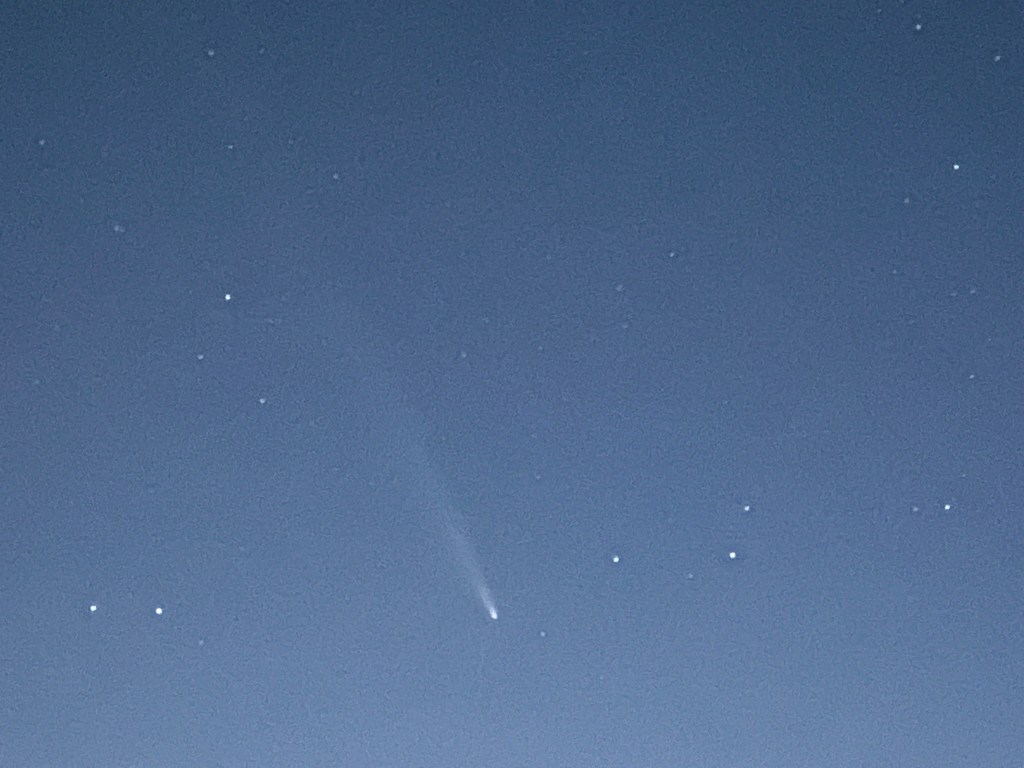
Over the last two weeks, our area has been dazzled by astronomical phenomena. First, aurora borealis danced over the Pennsylvania skies. Then, an ancient comet streaked past us after sunset for a few nights. These events remind me that nature extends beyond our communities and forests, into the final frontier.
Nature is not isolated to what is occurring at Earth’s surface. Stars, comets, planets, and moons are all part of nature, just as rocks, soil, and water. Like animate phenomena, inanimate phenomena interact with other phenomena through physics and chemistry.
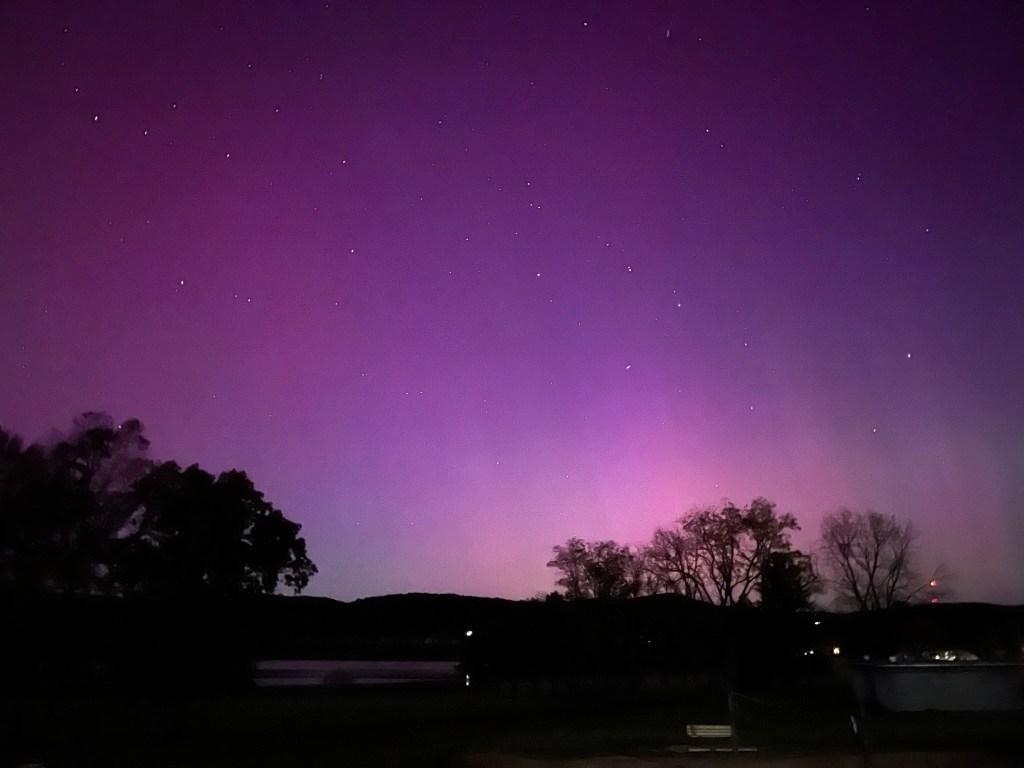
Aurora borealis, for example, are caused by magnetic storms triggered by solar activity. The auroras seen in Pennsylvania were the result of a solar flare. Auroras are uncommon in Pennsylvania but will occur in lower latitudes during periods of high solar activity, the solar maximum. Every 11 years, the Sun’s magnetic poles flip in the Solar Cycle, causing the Sun to have an increase in activity. This activity increases space weather- which eventually may trigger auroras.
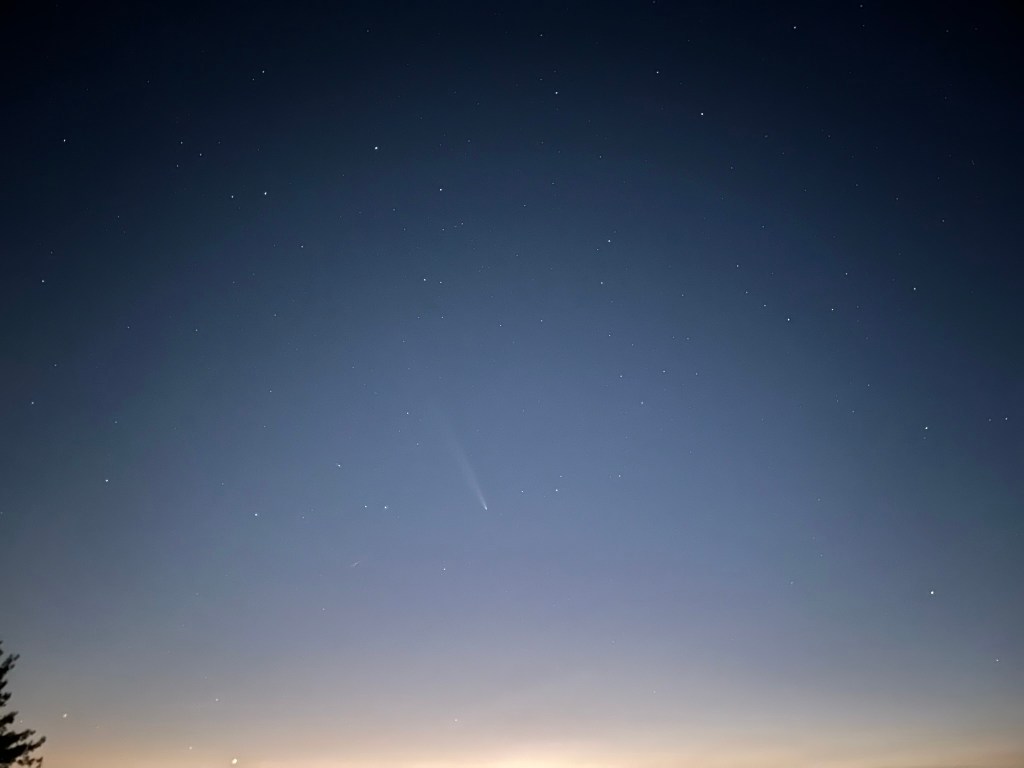
Other inanimate natural phenomena, like Comet A3, occur on a grander scale. C/2023 A3 (Tsuchinshan–ATLAS) has an 80,000-year loop around our solar system. This was the first time Comet A3 has been observed during written human history. The comet was visible in the Northern Hemisphere for a brief window after sunset as it swung around the Sun and passed by Earth. Comet A3 is from the Oort Cloud, an enormous shell of space debris hovering around our solar system. Most, if not all, long-period comets like Comet A3 originate from the Oort Cloud.
These inanimate phenomena cause great effects in animate phenomena. For example, during a total solar eclipse, the sudden change in light can cause animals to be disoriented. Human beings exhibit a variety of behaviors due to what is happening over our heads. As an astronomical observer, the stars, meteors, comets, and auroras fill me with total and complete awe. With the way my fellow comet-watchers reacted last Thursday, I would say that I’m not the only one.
Thursday evening, I was in a tizzy over the comet, rushing through dinner and scurrying out the door promptly at 6:45pm. I thought I had seen the comet out my kitchen window, but it was only the contrail of an airplane. My partner dropped me off at the dike and I sidled up to a group of people waiting patiently for twilight. Everyone else in the group was from the Philadelphia area, happening to be in the right place at the right time. Together, we chatted about astronomical clubs and events. We discussed at length the differences of stargazing in rural areas versus urban areas. Mostly, we admired the landscape before us.
An interesting study, The Social Effects of An Awesome Solar Eclipse, makes the claim that observing and interacting with solar eclipses causes people to feel a greater connection to the Earth, their communities, and their own selves. On Thursday, this claim was proven as we gasped at the sight of the comet over us. We all agreed that we felt lucky to have been able to see the comet, and to have the experience together.
After my partner picked me up, my heart was full of emotion. I was full of love for the Earth, excited to have seen the comet with my binoculars, and proud to have taken a handful of pictures. I admit to crying a little bit- at moments like these, I feel overwhelmingly lucky to be alive and bear witness to nature’s perfect beauty.
 Autumn Knepp
Leave a comment