

The concrete porch was cold under me, but I paid no attention as I studied the bird on my suet feeder. I watched the glossy bird rip into the suet cake, pause, and gobble down its bite. This bird, a European Starling, is the scourge of my days, devouring pound after pound of seeds and suet. Yet, I can’t deny anything- it, too, is trying to survive in adverse conditions.
In my attempt to spend 1,000 hours outside, I have been doing daily lunchtime birding. At home, I perch on my back porch and at work, I find a sunshine-drenched bench. All I have is my cellphone and binoculars. I keep to one place for about 15 minutes, recording all the birds I see and hear. The list is never very long, but I enjoy the regularity of the community of birds around me.

On this afternoon, mine and my neighbor’s yards were full of birds. Mourning doves roosted in the trees, grooming in the sunshine. A Red-Tailed Hawk called from overhead as it flew by. A solitary crow annoyed a flock of European Starlings to my left. House Sparrows and House Finches argued over feeder space. As I wound down my session, a female Northern Cardinal appeared nearby. At last, two Tufted Titmice darted to the maple tree. All the while, a chorus of American Robins called, completing the scene.
As I had my camera on hand, I decided to take pictures of some of the spring buds and shoots. The buds on the roosting tree of the Mourning Dove are already tinged red. Close by, the magnolia buds are fuzzy, growing larger by the day. On my remaining forsythia bush, the yellow buds are plentiful. I regret not ripping it out this past fall; this bush is a pain to care for. That said, I couldn’t rip it out- birds like roosting in its tangled branches.
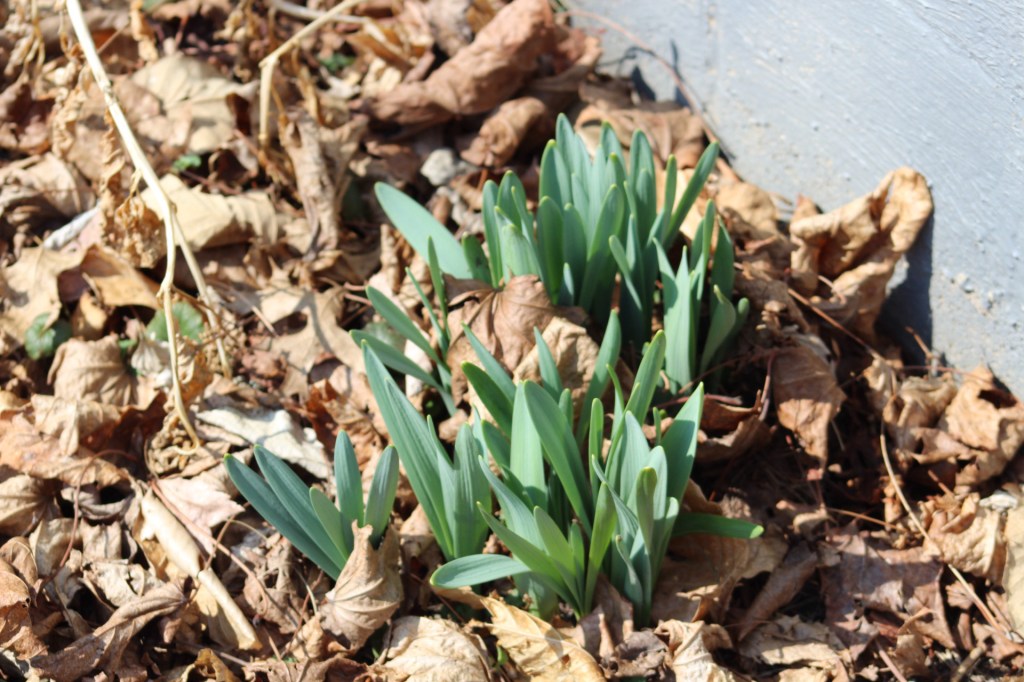
In the front yard, signs of Spring are a little different. Leaves are sprouting for daffodils, tulips, and hyacinths. Over winter, I debated on keeping them. On one hand, I could remove them and plant native flowers. On the other, I planted them before I knew about native flowers. The memory of my younger self prevailed; I decided to keep them. I will need to control spread of these plants. Hyacinths will produce bulblets as off-shoots and spread under the soil. Regular removal will curtail this spread and prevent an invasion in my yard.
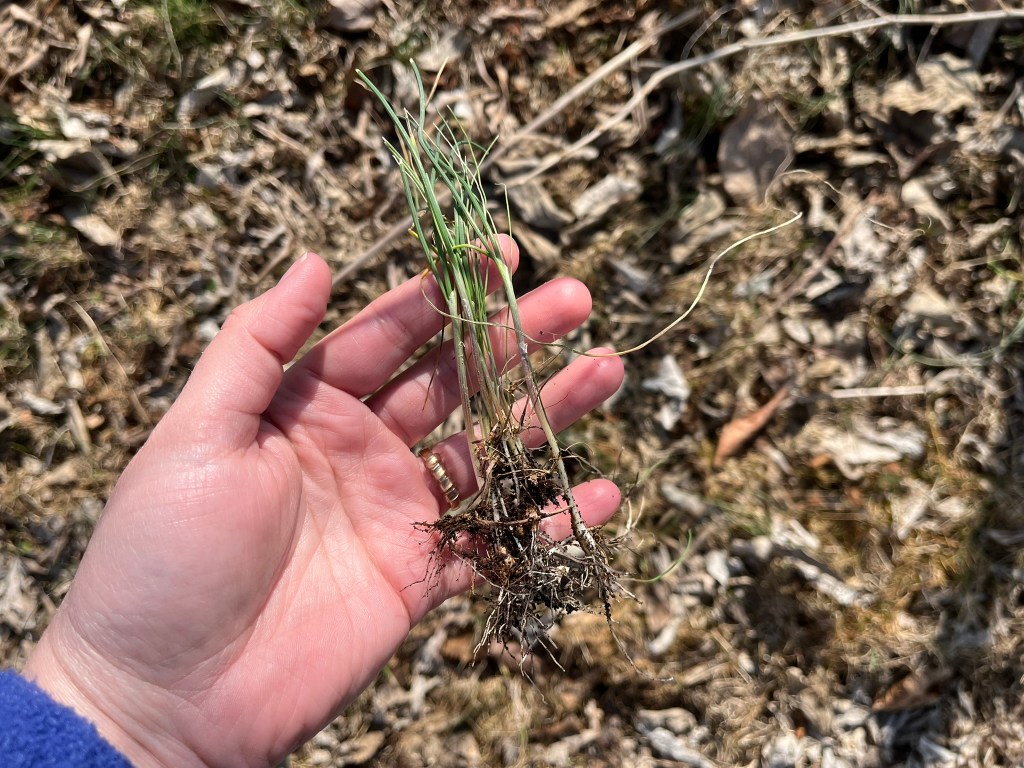
Amongst the returning grasses are the thin rapier-like leaves of wild garlic. Allium vineale is also known as “Crow Garlic” and “Field Garlic.” Introduced in the mid-1800s, wild garlic spread to cover much of the eastern United States. While wild garlic is edible, I wouldn’t eat it. The garlic flavor is pervasive and overrules all others in dishes. The taste is so strong that the flavor will get into the butter and milk of cows that have eaten wild garlic.
I have a few more weeks until the Spring wildflowers start blooming. Some friends have already seen skunk cabbage, the smelly harbinger of longer days. I’m waiting for Virginia Springbeauty and Wild Columbine. The emergence of these two flowers signals true Spring to me. I’m also excited for Yellow Trout Lily and Bloodroot this year. I will need to leave my yard to find these flowers- but it is a trek I look forward to.
These subtle signs of Spring are refreshing to my winter-weary eyes. With a little noticing, the drab landscape burst into life. With returning birds, the plants are emerging from their dormancy. Each day, we’re one step closer to the chirping of nestlings and the leafing-out of trees. Now, if the Purple Martins would simply come back…
What are you noticing about Spring near you? Share in the comments!
 autumn's country diary