Category: Trips & Visits

  • Indiana County’s Buttermilk Falls

    Indiana County’s Buttermilk Falls

    Usually the drive home from Pittsburgh area is uneventful- easy miles on Rt. 22 punctuated by Sheetz and upland forests. After 30 minutes on the road headed home, we decided to take a minor detour to Buttermilk Falls Natural Area.

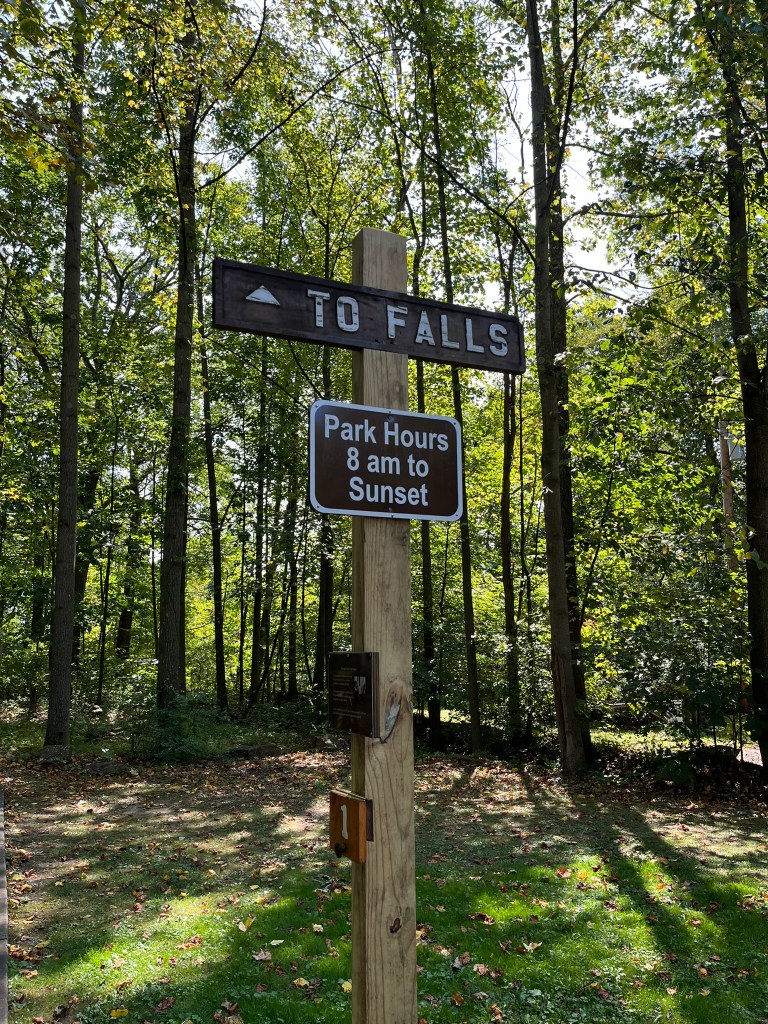
    A few miles down a country road, we pulled up to a gate staffed by a security guard. He provided simple directions: McFeely Trail to our right, and the Falls Trail to our left. After parking in the overflow section, we stretched our legs and headed to the trail on our left.

    Crisp 65° air filtered through the trees while we meandered down the trail. We admired the accessibility of the walkway as it gracefully turned down the valley. Plenty of signs warned visitors to not stray off the trail- delicate plants grew near the Falls. I noticed plenty of common jewelweed, a sign that deer avoid the area.

    We neared the first viewing platform in short order. Stepping out to the wooden deck, I couldn’t see any running water through the trees and brush. Straining my ears over the sounds of other hikers, I couldn’t hear a waterfall at all.

    Past the first viewing platform, the trail continued over the crest of the falls to a second viewing area. Stairs descended the far side of the valley and led to a platform under Buttermilk Falls. Once we were on the Eclipse Bridge, I realized that Hires Run was very low. Water still descended the valley, but it was a gentle trickle than the roar I was hoping for.

    Other hikers passed us as I led my partner down the stairs. Late summer wildflowers leaned over the cliffside; wood asters full of bumble bees. As we neared Buttermilk Falls, the scent of cool, wet rock permeated the air. As I waited for hikers to clear the area, I watched two small fish dart in the water pooling at the falls’ base.

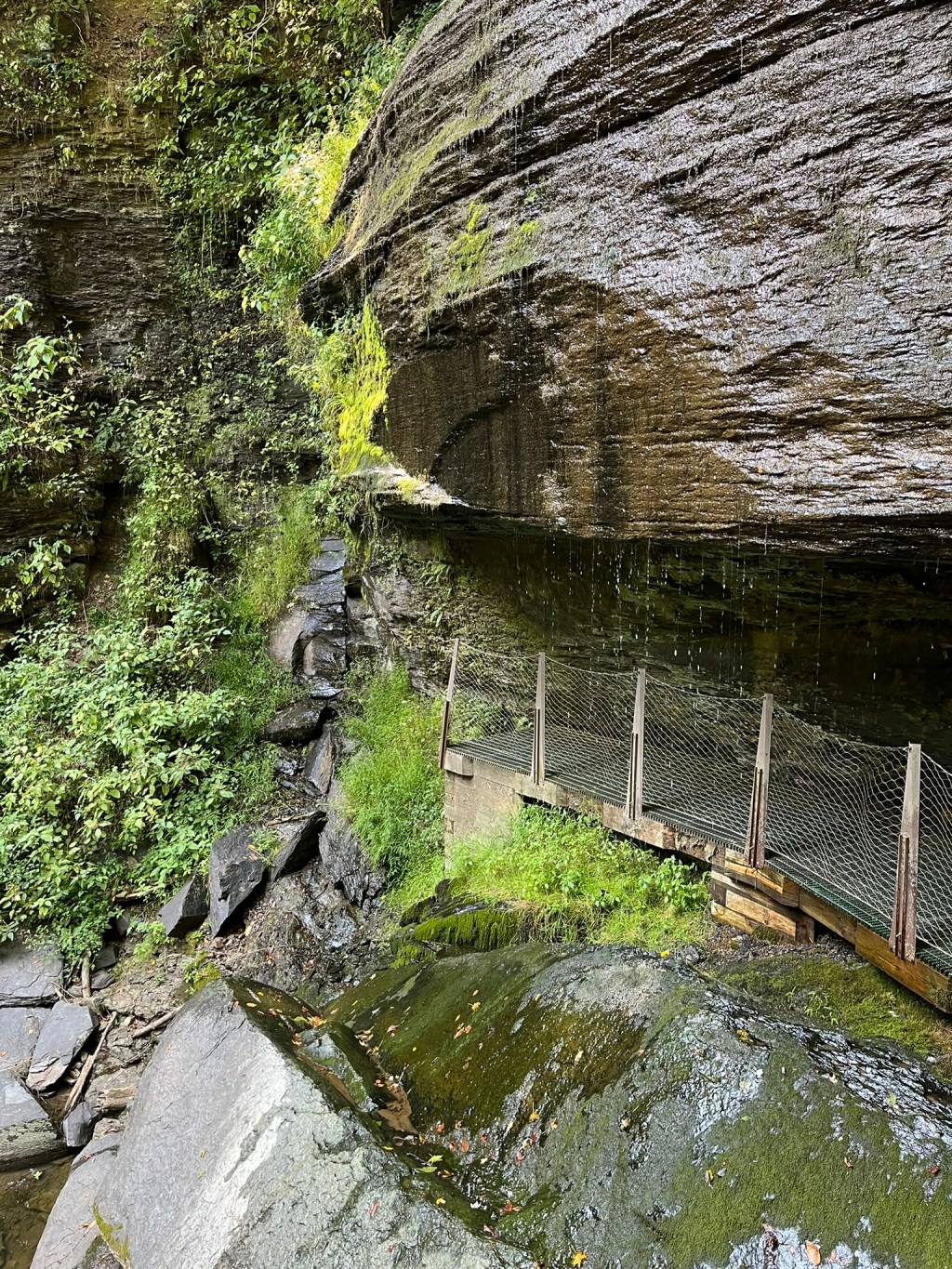
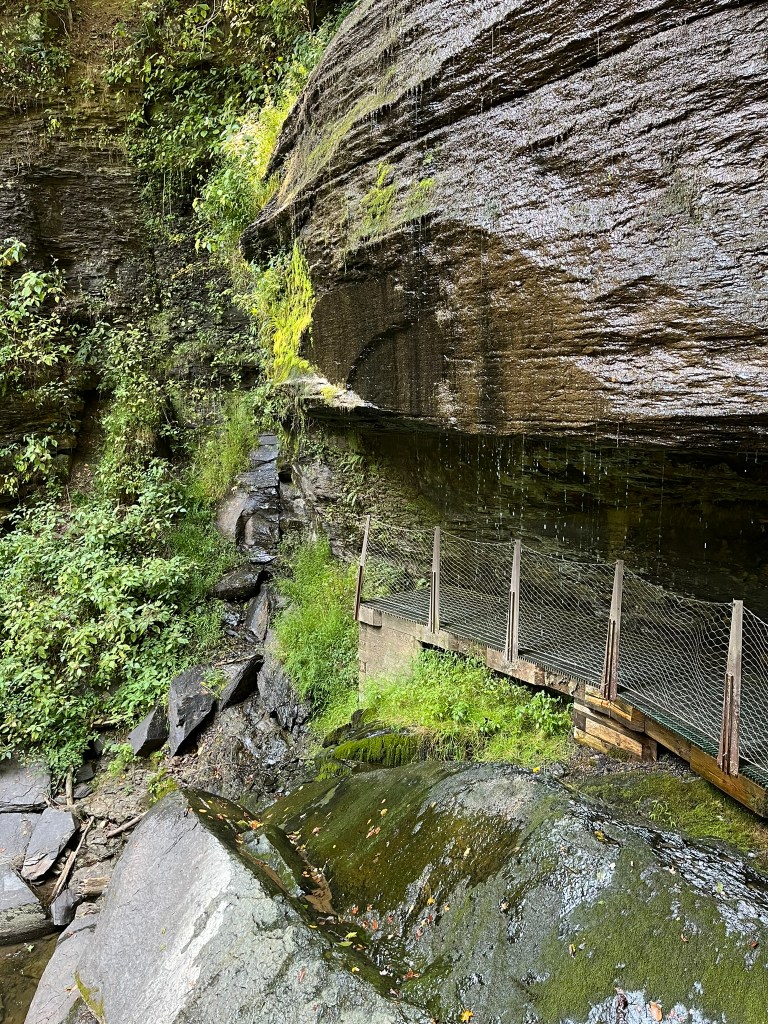
    We were soon able to walk behind Buttermilk Falls. A thick block of sandstone between two layers of shale allowed for an overhang to develop. Unfortunately, graffiti covered some of the shale wall behind the Falls. I wondered why visitors would want to deface natural beauty with grotesque images. As if to spite the graffiti, moss was spreading over the rock.

    After snapping a few pictures, we started climbing back up the stairs to take a look at the rubble by the falls’ crest. From 1930 to 1956, Mr. Roger’s grandfather owned property along Hires Run, which Mr. Rogers visited as a boy. The foundation of the home, and the weirs used to dam Hires Run are still there. As children were exploring the area, I didn’t dare disturb the rocks to look for salamanders.

    Walking back up the trail, we took our time to talk about football and decide that we will have to stop again. I want to visit in spring, when Hires Run is high and wildflowers are in bloom. My partner would like to visit when the Fall colors riot through the valley in mid-October. At any time, Buttermilk Falls are beautiful, and worth preserving. I’m thankful Indiana County Parks cares for this area and encourages visitors to do the same.

    Works Cited

    Indiana County Parks & Trails. “Buttermilk Falls.” Indiana County Parks & Trails, 26 Feb. 2024, www.indianacountyparks.org/our-parks/buttermilk-falls/. Accessed 9 Sept. 2024.

  • Visiting Karl B. Guss Picnic Area

    Visiting Karl B. Guss Picnic Area

    This past week, my partner and I took a trip to Tuscarora State Forest to picnic at the Karl B. Guss Picnic Area. I was not disappointed in this new-to-me place.

    About Tuscarora State Forest

    Tuscarora State Forest covers over 96 thousand acres in 5 counties. These counties are Cumberland, Franklin, Huntingdon, Juniata, Mifflin, and Perry. Named after Tuscarora Mountain, this State Forest honors the Tuscarora People. Through the 17th and 18th centuries, the Tuscarora People were exploited by colonists. Many Tuscarora were sold to Pennsylvania as slaves. In 1705, Pennsylvania banned the importation of indigenous slaves. Extirpated from their homelands, the Tuscarora People briefly settled along the Juniata River. Later, the Tuscarora completed their emigration to New York and were accepted as part of the Iroquois Confederacy. Now, the Tuscarora Nation of North Carolina is headquartered in Maxton, North Carolina.

    The State Forest was originally established as “Rothrock Forest Reserve” in 1902. The entire area was lumbered out during Pennsylvania’s logging era. In the 1930s, the Civilian Conservation Corps (CCC) founded several camps in the area. I could find record of 5 camps: S-55 Big Spring, S-56 East Licking Creek, S-58 Bell Furnace, and S-110 Kansas Valley. DCNR reports 6 camps, but records and place-names are not consistent, with several companies sharing one camp.

    Tuscarora State Forest has a variety of attractions. There are 3 listed picnic areas: Karl B. Guss, Bell Furnace, and Big Spring. There are 2 State Parks: Bell Furnace and Col. Denning. Tack on 2 Natural Areas: Frank E. Masland, Jr. and Hoverter & Sholl Box Huckleberry. Truly, Tuscarora State Forest holds something for everyone. We explored the Karl B. Guss Picnic Area in Juniata County.

    Exploring the Picnic Area

    Karl B. Guss Picnic Area is along East Licking Creek. East Licking Creek is an unlisted trout stream- few wild trout, but a substantial population of stocked fish. From one fishing platform over a deep pool, I spotted at least 10 tiny fish. To my touch, the water felt cool enough for trout to habituate and potentially breed. Penn State’s Riparia site lists East Licking Creek’s disturbance class as “pristine.” This is obvious in my photographs- aside from the fishing platforms, there is no obvious evidence of human intervention.

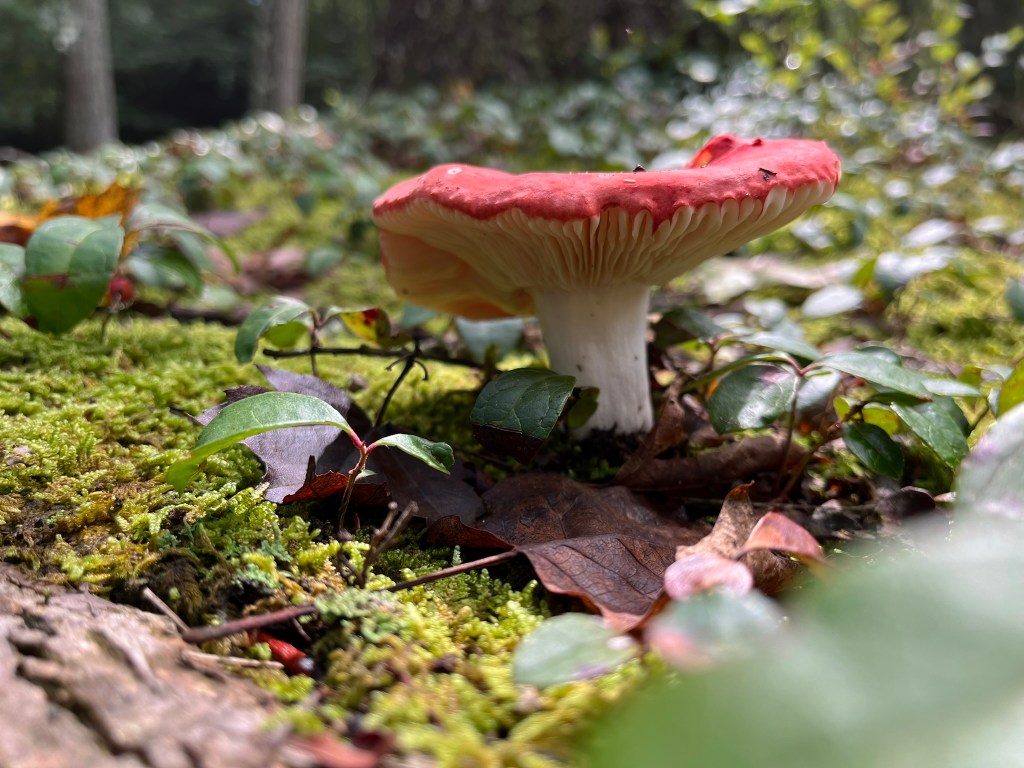
    I noticed that the mossy ground had a huge number of mushrooms. I recognized brittlegills and jack-o’-lantern mushrooms right away. I also saw mushrooms composed of many small yellow spires congregated near a field mouse shelter. Some of the mushrooms were covered in a white substance- mycelium! I hadn’t seen such a huge variety of fungi in one spot- there were many I wasn’t able to capture in a photograph.

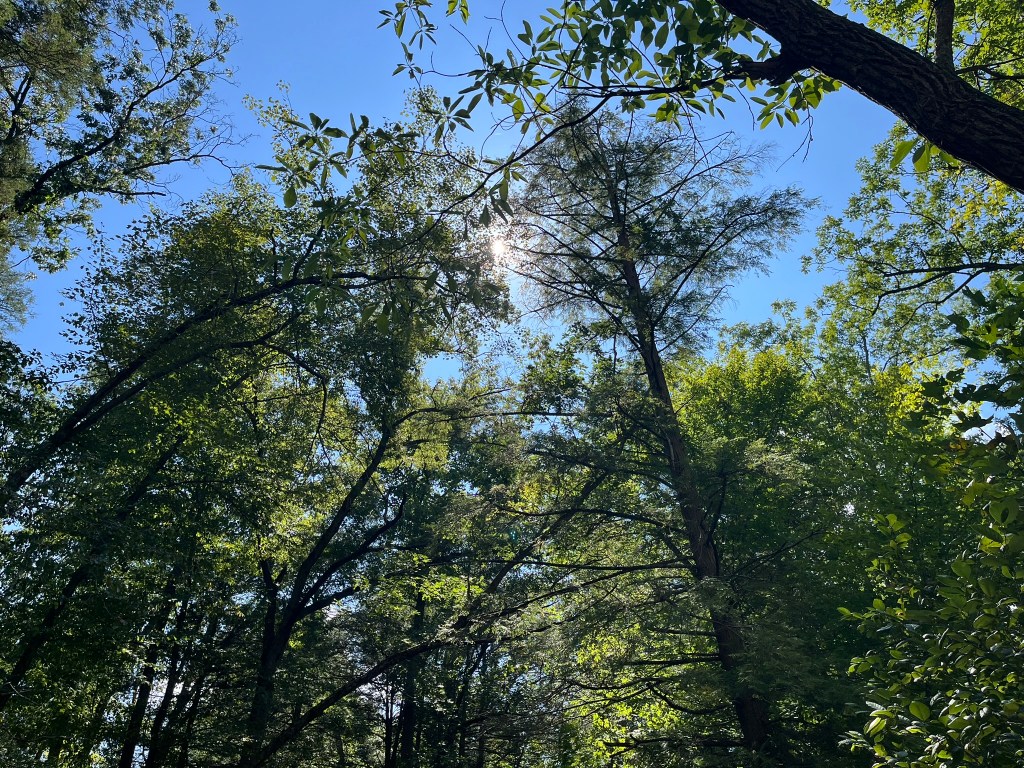
    Tuliptrees dominated the forest around the Picnic Area. Early tulip leaf fall covered some trails in a yellow-orange carpet. My hammock was between two oak trees, and I spent a lot of time admiring their canopy above me. Red Oak and White Oak were scattered throughout the picnic area, supplemented with evergreen and hemlock trees. I didn’t spot any cicadas, but their screams were heard in the trees all around us.

    The Bureau of Forestry (BoF) keeps the area up well, but some trails were overgrown. After having Lyme’s Disease as a teen, I am hesitant to hike in unkempt areas. I had brought along some Deep Woods Off, but even then, it wasn’t enough to keep the blackflies away. The picnic facilities were in good condition, with no obvious disturbance from bears. There are no bear-proof trash containers, so if there are bears, they enjoy whatever is left from picnickers.  

    Thinking of the Future

    I had a blast exploring the Picnic Area. The lack of cell service was great- I felt like I could focus on nature. I took two whole pages of notes! There were many trees perfect for hanging a hammock. I laid in mine for well over an hour, simply to admire the canopy of the oak trees over me. In the future, I would like to put on waders and take a walk up Spectacular Run to look for amphibians and reptiles.

    The Karl B. Guss Picnic Area was an excellent place to start exploring Tuscarora State Forest. I can imagine families returning year after year- which is what my partner’s family does. They have utilized this Picnic Area in the 60s when it opened! Proof perfect that our DCNR system is a lasting Pennsylvania tradition.

    Works Cited

    85. East Licking Creek. (1999). Riparia; The Pennsylvania State University. https://riparia.psu.edu/85-east-licking-creek/

    Pennsylvania Civilian Conservation Corps Online Archive. (n.d.-a). Camp Information for S-55-PA. Pennsylvania CCC Online Archive. Retrieved September 1, 2024, from https://www.iframeapps.dcnr.state.pa.us/stateparks/ccc/camp.aspx?ID=81

    Pennsylvania Civilian Conservation Corps Online Archive. (n.d.-b). Camp Information for S-56-PA. Pennsylvania CCC Online Archive. Retrieved September 1, 2024, from https://www.iframeapps.dcnr.state.pa.us/stateparks/ccc/camp.aspx?ID=82

    Pennsylvania Civilian Conservation Corps Online Archive. (n.d.-c). Camp Information for S-58-PA. Pennsylvania CCC Online Archive. Retrieved September 1, 2024, from https://www.iframeapps.dcnr.state.pa.us/stateparks/ccc/camp.aspx?ID=84

    Pennsylvania Civilian Conservation Corps Online Archive. (n.d.-d). Camp Information for S-110-PA. Pennsylvania CCC Online Archive. Retrieved September 1, 2024, from https://www.iframeapps.dcnr.state.pa.us/stateparks/ccc/camp.aspx?ID=37

    Pennsylvania Department of Conservation & Natural Resources. (2020). Tuscarora State Forest Map and Recreation Guide [Map]. Pennsylvania Department of Conservation and Natural Resources.

    Picknicking in Tuscarora State Forest. (2019). Pennsylvania Department of Conservation & Natural Resources. https://www.dcnr.pa.gov/StateForests/FindAForest/Tuscarora/Pages/Picknicking.aspx

    Tuscarora Nation of North Carolina. (2024). Our History . Tuscaroranationnc.com. https://tuscaroranationnc.com/our-history