Tag: explore pa

  • Mushrooming at S.B. Elliott State Park

    Mushrooming at S.B. Elliott State Park

    On the last Saturday in July, my family and I attended a Central Pennsylvania Mushroom Club meeting at S.B. Elliott State Park. Throughout the Spring, Summer, and Fall months, CPMC meets at various locations throughout Central Pennsylvania to hunt, talk, and teach about mushrooms. This meeting was my first time visiting S.B. Elliott State Park and hunting for mushrooms in July!

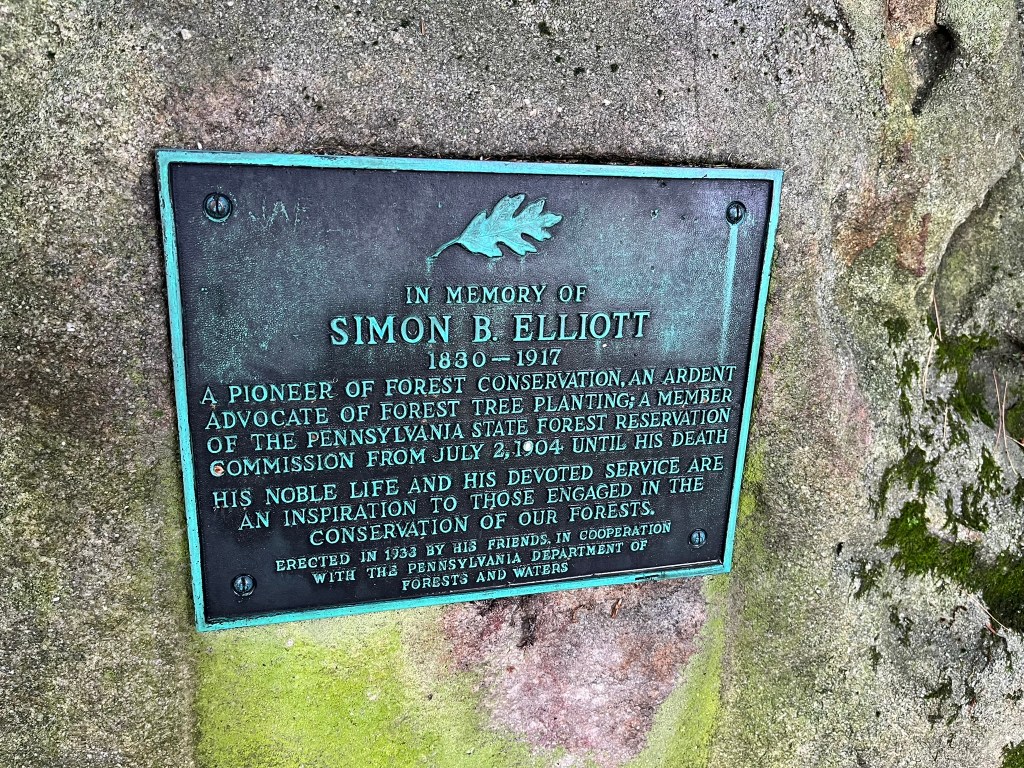
    In the same year the Civilian Conservation Corps established Camp S-116-PA, 1933, the Department of Forests and Waters created S.B. Elliott State Park. A memorial plaque to Simon B. Elliott, a dedicated conservationist, was erected to commemorate the park. This heartfelt memorial is now shrouded by trees, which, I imagine, Simon B. Elliott would have liked. The CCC Lodge, outbuildings, and pavilions remain, which looked magnificently historical and mysterious.

    Crown-Tipped Coral Fungus

    Promptly at 1:00pm, our meeting divided into three groups. One group headed in the direction of the bog, which may be either the “Wallace Sphagnum Bog” or “Crystal Springs Bog.” I didn’t have the time on this trip, so I noted it for future exploration. Another followed Crystal Springs Road to walk up the snowmobile trails. The last group, which we followed, headed towards the wooded area between our pavilion and the old Dague Nursery. This area was composed of second-growth woodland, with lots of oak, beech, and evergreen trees. I also spotted plenty of Christmas Fern and New York Fern. Some trees had naturally fallen, but a small handful had been cut down and left to rot.

    Just as we set out on our hunt, a light rain passed through our area. For a brief time, the rain cooled us off, but the humidity quickly ramped up again, and the bugs emerged. For a while, we found slugs and snails before seeing any mushrooms! I identified Western Dusky Slugs, but the snails escaped me. I was so focused on mushrooms that I forgot to take pictures of them.
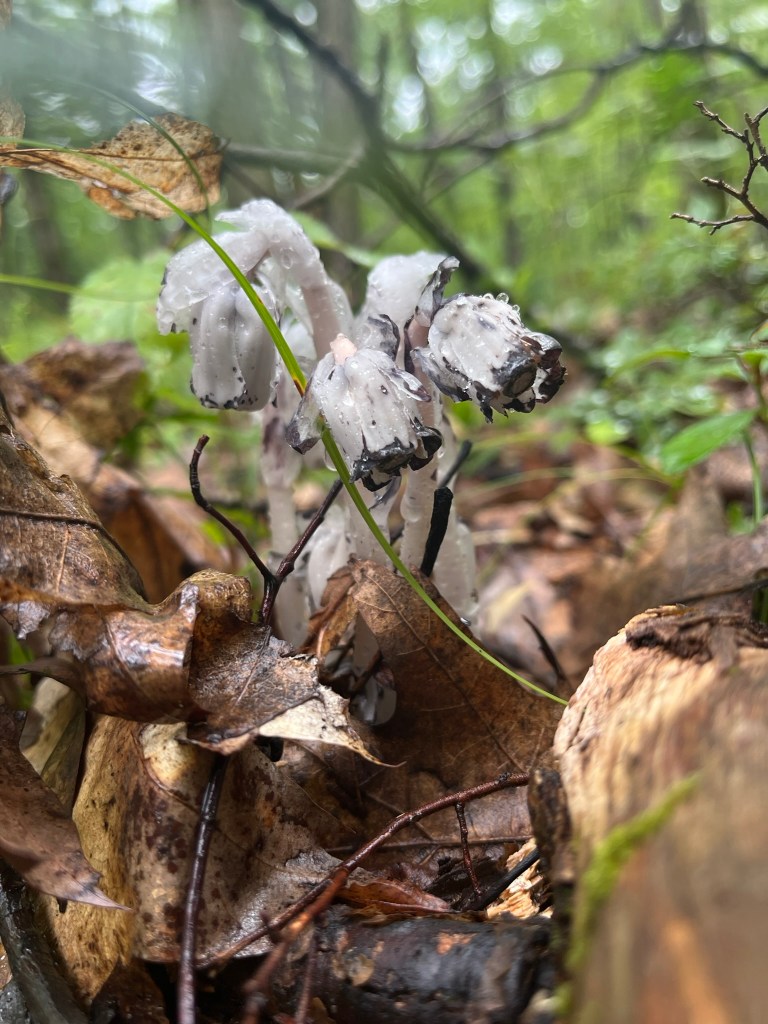
    After the slugs and ferns, we spotted Monotropa uniflora, Ghost Pipes. These perennial wildflowers are found all throughout Pennsylvania. The plants are a mycoheterotroph, a parasitic flower hosted by fungi in the Russulaceae family. Ghost Pipes are known to be the favorite flower of Emily Dickinson. I hadn’t seen any in person for many years. I couldn’t take a single step without nearly crushing a bunch of Ghost Pipes!

    As the humidity settled over us, we finally started spotting mushrooms. We were on the hunt for a Russula aeruginea, the Green Russula, which my sister spotted and took to our walk leader. I found some Crown-Tipped Coral Fungus sprouting in a large clump on a rotting log. I reached the point where I felt like every glance was full of mushrooms. We counted more than ten species from our small group alone. Favorites of mine were Oak Mazegill, Crowded Parchment, and Berkeley’s Polypore.

    Jack-o’lantern Mushroom

    Towards the end of our walk, our group stumbled upon a large growth of Omphalotus olearius, the jack-o’lantern mushroom. These poisonous mushrooms fruit at a similar time to Chantarelles, and look eerily alike. Jack-o’lantern mushrooms possess true gills, a feature Chantarelles lack. Plus, jack-o’lantern mushrooms are vivid orange, and are the same color throughout. While I know scientifically these mushrooms are poisonous enough to cause harm to human beings, I can’t imagine ever being tempted to eat them. There is a certain something in their appearance and smell that sets off my primitive instinct to leave them alone.

    After we finished our walk, all the groups gathered at a pavilion to begin identifying all the mushrooms found. Quickly the plates of identified specimens filled two picnic tables, and the heady scent of fresh fungi filled the air. Club leaders walked us through the species and families one by one. One of the best parts of the club is that there is a mix of ages and experience, creating a wealth of knowledge. I love to simply listen to them discuss different specimens or trade stories.

    All too soon, my family and I packed up our foraging baskets and backpacks. Tired and sweaty, we loaded in my Jeep and headed east on I-80. Mushrooms were on the mind as we discussed our plans for mushrooming in August. Soon a copy of Field Guide to Wild Mushrooms of Pennsylvania and the Mid-Atlantic will be on my doorstep, ready for more mushrooming adventures.

    If you are interested in joining a local mushroom club, please check out NAMA, the North American Mycological Association. A database of mushroom clubs throughout the United States is on their website at https://namyco.org/clubs/. The schedule of events for the Central Pennsylvania Mushroom Club is on their website at https://centralpamushroom.club/events/.
  • Penn State’s Living Filter

    Penn State’s Living Filter

    I participated in this event as part of my commitment to Centred Outdoor’s Outdoor Leadership Cohort. I recommend participating in their events throughout the Summer and Fall seasons. You can check out their schedule on their website. Please consider supporting Centred Outdoors and Clearwater Conservancy today.

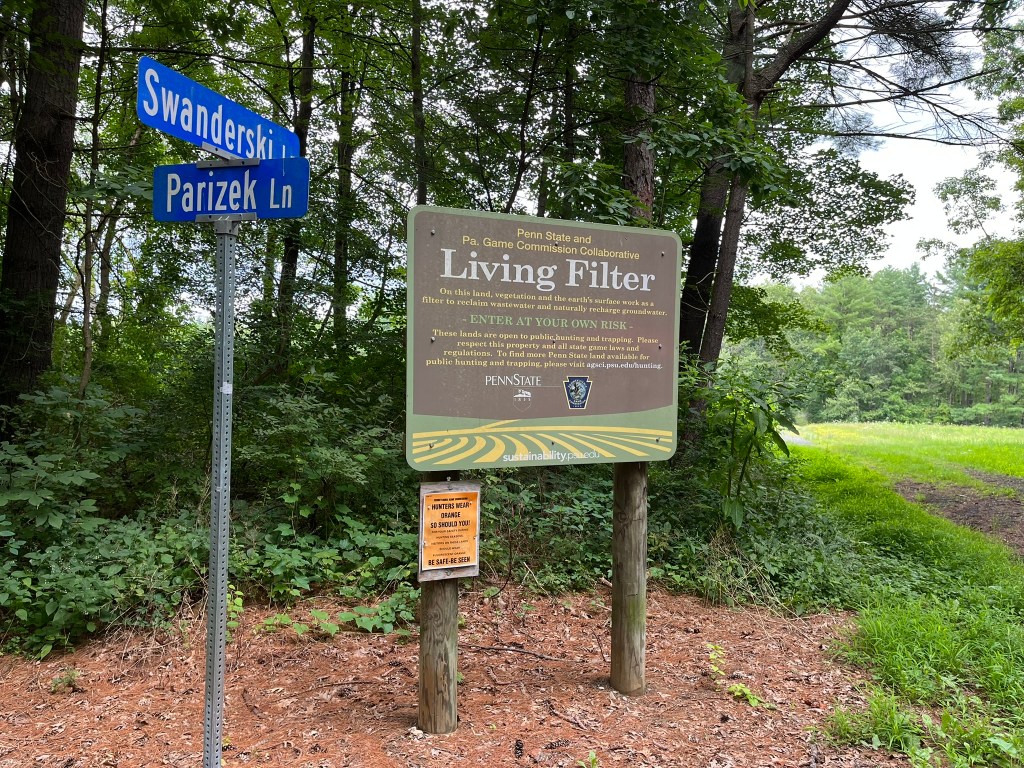
    Last Sunday, I packed a bag and dashed out the door to reach Penn State’s Living Filter in time for the 1:00pm guided tour. I wasn’t sure what to expect… I had gathered from promotional materials that the Living Filter was an experiment, yet also an established wastewater management practice. From the guided walk, I learned the Living Filter was much more than what met my eye.

    Dr. Preisendanz from the Department of Agricultural and Biological Engineering met us at the sign-in station to share the history of the Living Filter. For almost four decades, Penn State has used their wastewater effluent as forest and crop irrigation. The hope is that after nourishing the plants and crops, the water will recharge groundwater aquifers. Wastewater is sprayed over the foliage using aboveground pipe systems. This wastewater is some of the cleanest wastewater around- Penn State recently upgraded their wastewater treatment facility to better treat the wastewater from University Park campus and part of State College.

    Penn State staff, faculty, and researchers play an active role in maintaining the Living Filter. To ensure proper safety and security of the pipes, staff manually turn on and off the sprayer systems and handle the collection of samples for researchers. Working together, they have managed to eliminate the direct discharge of wastewater into streams and assist in maintaining the base flow of Spring Creek. Plus, this system supports different crops which are used to nourish research animals, eliminating the need to purchase and transport commercial feed.

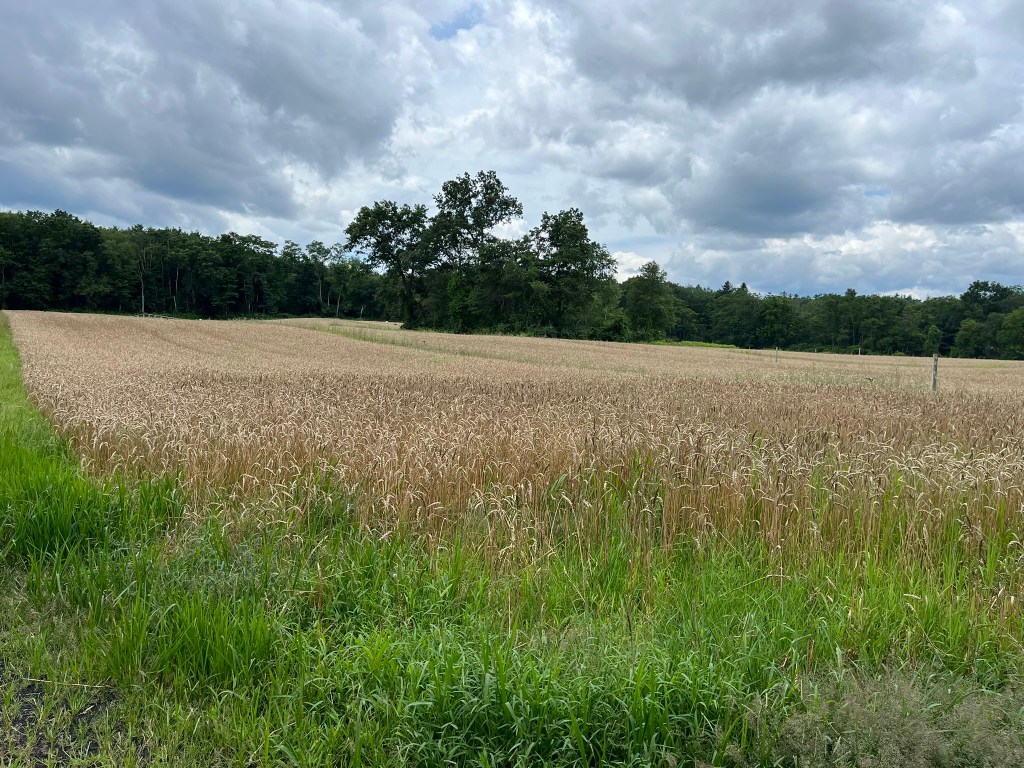
    During our walk, we soaked in the lush foliage around the service roads. Thick bushes of jewelweed lined our walking path. Grain crops emanated a warm and comforting glow over the hills. Climbing up over the grain fields, we passed into fields of tall, strong corn. While the hedgerows were not perfect, they were tidy. However, not all plants love the nutrient-rich water. Some trees, most of species that prefer dryer territory, were fading or even already dead. Penn State technical service staff maintain the safety of the Living Filter by removing any dead trees before, or immediately after a tree goes down.

    While the Living Filter is an inspiring facility, what caught me by surprise was the investment of the community members attending the outing. Our small crowd was certainly a mix of ages, experiences, and knowledge. We stopped multiple times during the walk to ask Dr. Preisendanz questions, which she met with enthusiasm. I felt comfortable in this group of (mostly) strangers, and happy to listen to the discussion surrounding wastewater management and sustainable agriculture. I learned that the morning group was larger and had even more questions than us. The 11:00 am group took over an hour, while ours was just under!

    On my way home from the outing, I drove past the site of the old Radio Astronomy Building. Now a decommissioned special services building, the area of what used to study celestial objects using radio waves now is the home of the Living Filter’s second half. I didn’t stop to check it out as I was unsure of the permissions one would need to see it for themselves. The initial portion of the Living Filter, on State Game Lands 176, is publicly available. However, be warned that the sprayers are turned on for all other days- even in the middle of winter.

    I enjoyed my visit to Penn State’s Living Filter. The “lesson” was fun, the walk was easy, and the attendees were interesting. While this place is checked off my To-Visit List for the Summer, it’s on my To-Visit List for the Winter. Dr. Preisendanz shared the area is a winter wonderland starting in December and worth the trip. For now, when I wash my dishes in the breakroom sink, I know the water will exit the system at the Living Filter!

  • A Weekend at Gifford Pinchot State Park

    A Weekend at Gifford Pinchot State Park

    In April, I attended the Pennsylvania Outdoor Content Creator Meetup at Gifford Pinchot State Park. This event was organized by Christian from the Hemlocks to Hellbenders podcast and sponsored by Explore York PA. The drive, while long, was easy. I listened to The Ghost Furnace Podcast and The American Birding Podcast. A little after 1 o’clock, I rolled up to the camping cottage to unload my stuff.

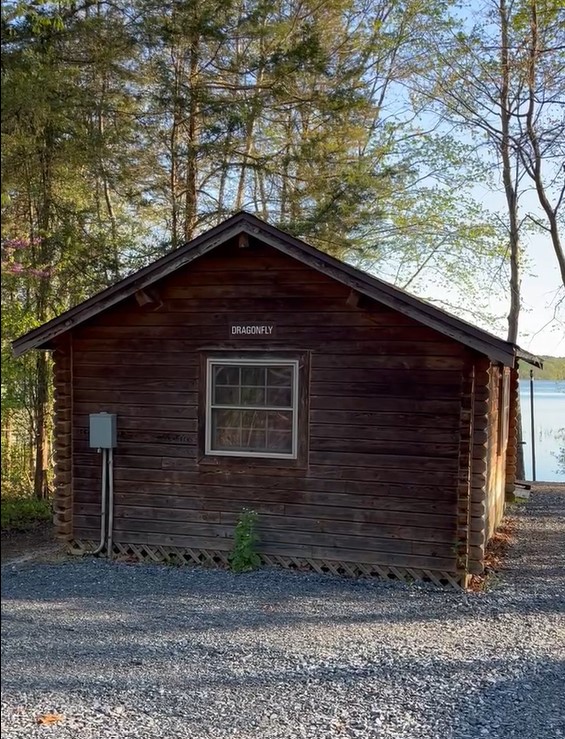
    Dragonfly Cottage is at the back of the campground on the shore of the lake. As I hopped out of my car, a Bald Eagle took off from a snag across the water. Spotting the eagle felt like a good omen for the weekend. In a flash, I unloaded my bags and set up my bunk. I was set to share with Sara from Hiking Outdoor Family, Britt from Britt Around Town, and Michele from Adventures Abound.

    A little later, I headed over to the Conewago Day Use area to meet everyone. I explored the area around our pavilion, finding lots of spring ephemerals. My favorites in this area were Virginia Springbeauty and Azure Bluets. Moss and lichens covered the diabase rocks scattering the area. Introductions were made, and before dinner we went on a hike along Lakeside Trail. Dinner was had, and then we loaded up to visit the vernal pools of Gifford Pinchot.

    As Park Educator Beth spoke about vernal pools, I resisted the urge to dip my hands in the dark water. I wanted to hold tadpoles in my hands like a little girl. After she finished speaking, Beth let us explore the pool. I checked out the two citizen science projects there. On the far end is a CrowdHydrology station, and the near end a Chronolog station.

    After we finished exploring, I headed back to our cabin to head to bed. I fell asleep fast – as I drifted off, I could hear the night calls of birds and a light patter of rain on the cottage roof.  

    The following morning started with a shower and coffee. One of the creators, oneeyewanderz/itravel4coffee, brought an espresso machine. Yes, you read that right- an ENTIRE, ACTUAL espresso machine. He made me a latte, which energized me for our hike to Boulder Point.

    Boulder Point is a unique geological feature at the park. It’s a “balanced rock” created by spheroidal weathering and repeated freeze-thaw cycles. About 200 million years ago, molten rock shot through Triassic-aged materials. Thousands of years of erosion revealed the diabase rocks. Keeping age in mind, these rocks may be a periglacial feature. 75 thousand years ago, a huge part of Pennsylvania lie under a glacier. The proximity to permafrost and dramatic freeze-thaw cycles would have accelerated erosion… leaving behind the rocks we see today.

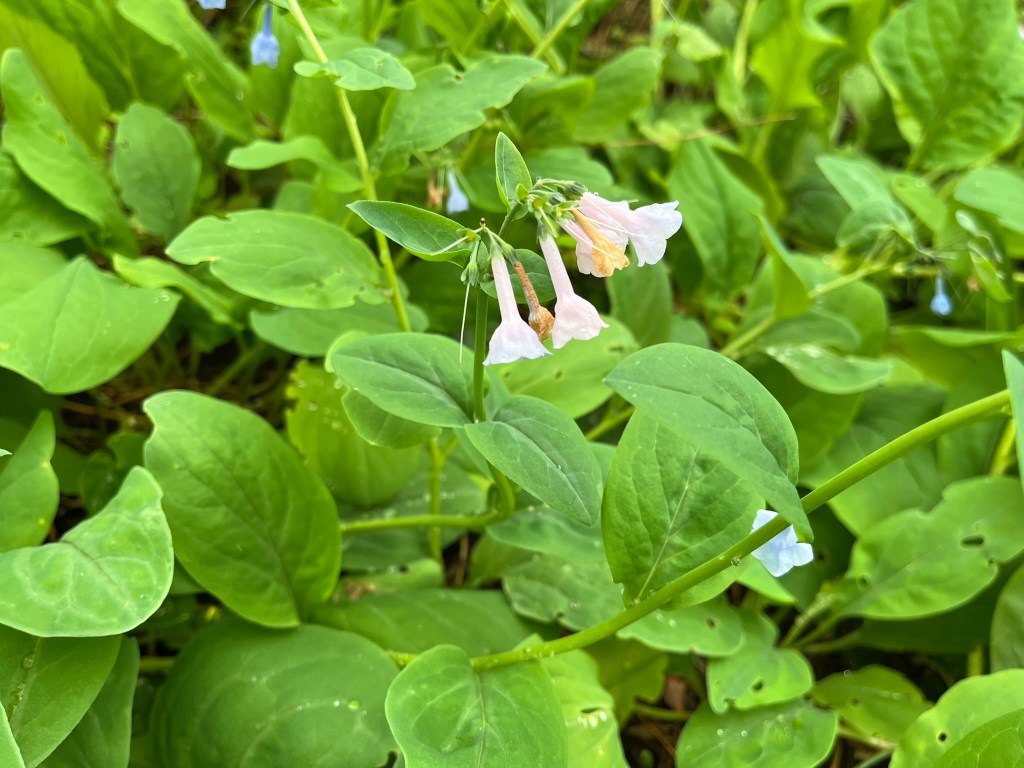
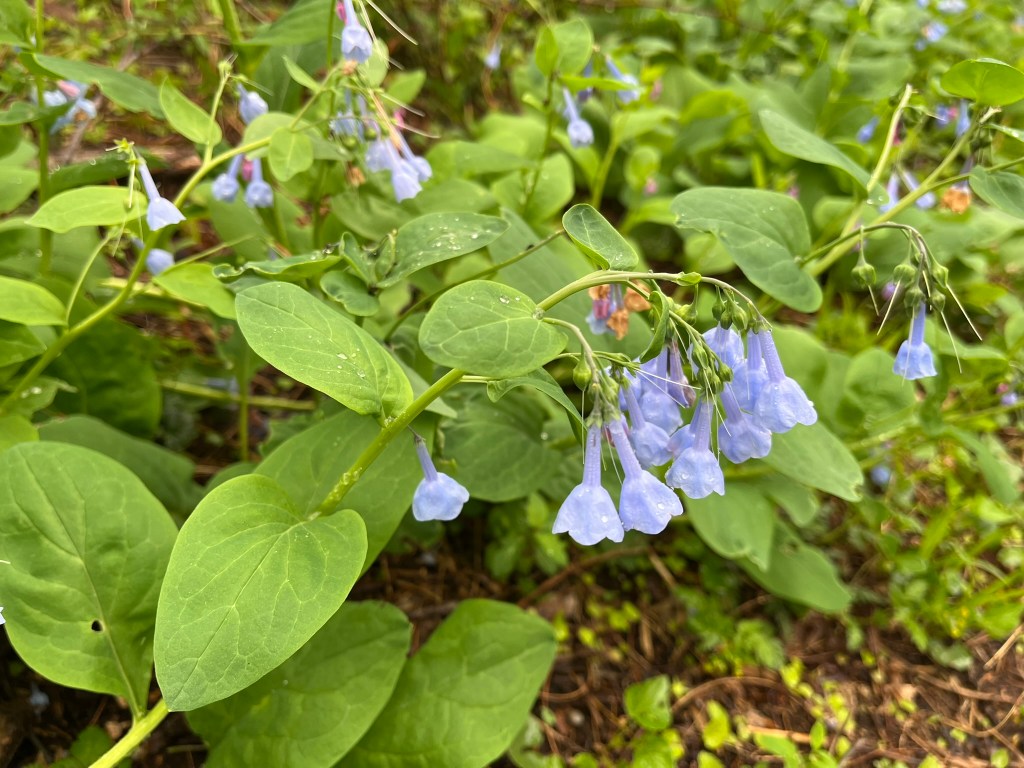
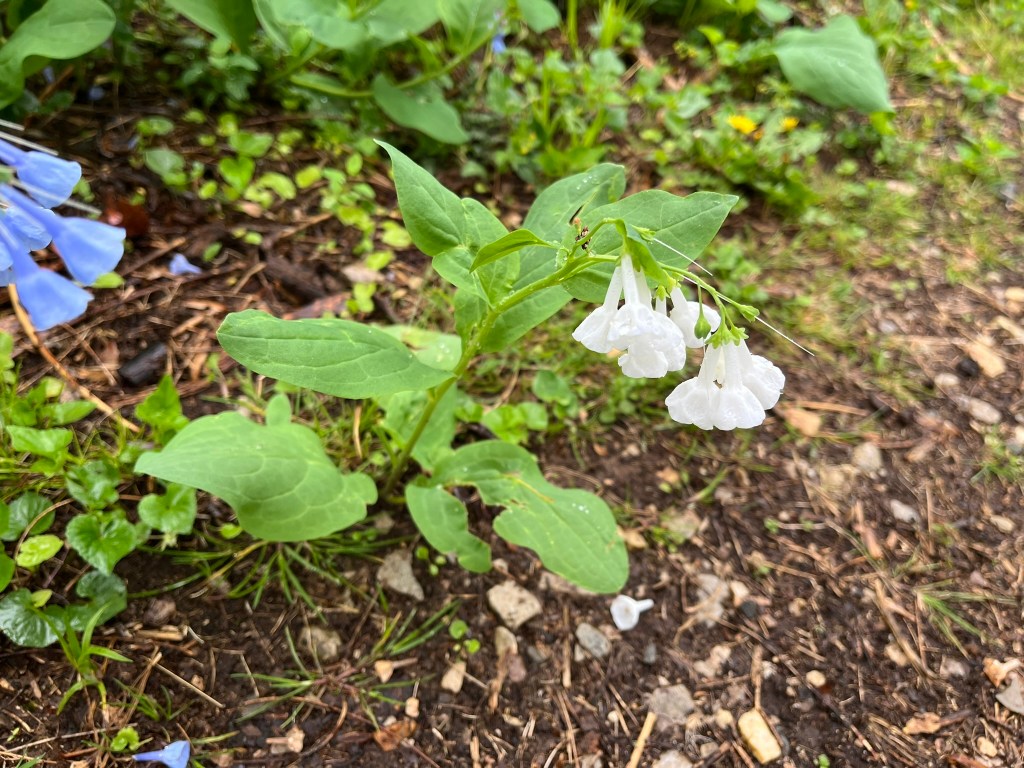
    While hiking, the huge variety of spring ephemerals growing at the park delighted me. I saw many species, including: Jack-in-the-Pulpit, trilliums, Wild Geranium, and Wild Pinks. Virginia Bluebells grew in masses- some of the plots also had pink and white varieties. White bluebells are rare, and carry the scientific name Mertensia virginica forma berdii. I saw many clumps of white bluebells, again feeling it was a good omen.

    Back at the pavilion, we lunched and enjoyed a variety of interesting talks and programs. Our highlight was DCNR Secretary Cindy Adams Dunn. She stopped to visit with us on her way to check on the forest fires in Michaux State Forest. Her words filled me with inspiration, and I thought about them often throughout the rest of the day.

    During a break, I needed to rest and dry my feet. I attempted to take a brief nap, but instead relaxed at the picnic table at Dragonfly Cottage. With my polarized sunglasses, I watched bluegill and bass dart in the water close to shore. Further off, a Green Heron stalked the shallows. The air was full of the calls of Red-bellied Woodpeckers and Red-winged Blackbirds. My heart and soul felt restored while enjoying the peace around me.

    Later after dinner, we met Dr. Reigner from the Office of Outdoor Recreation and Executive Director Blischke from the Pennsylvania Council on the Arts. Their session was a facilitated discussion, and I learned a lot from the others in our group. Compared to everyone else, I’m a “baby” creator. The mentorship I was receiving from this session alone… priceless.

    The following morning, we packed up and carried on in own ways- and I decided to go birding. At Boat Mooring Area #1, I picked up new lifers: Northern Parula and Yellow-rumped Warbler. On the drive between areas, I saw a Brown Thrasher in a bush! At the Quaker Race Day Use Area, I watched a Cooper’s Hawk get mobbed by a huge flock of crows.

    I continued on to the Dam Overlook, hoping to spot more wilderness and forest species. I only saw and heard Tree Swallows. A tall chain-link fence separated visitors from the actual dam area. The fencing eliminated the chance for a scenic overlook. I understand safety concerns, yet it felt out-of-place. Disappointed, I left as a group of peppy flyfishermen started their hike down to the water.

    Once I finished birding, I set off for home. I listened to more podcasts- my favorite one from was a Ghost Furnace episode on a sasquatch sighting. I also re-listened to Think Outside with the Pennsylvania Parks & Forests Foundation. I made an impromptu stop at another park, which I’ll share about soon. I stopped at Red Rabbit for lunch, turned off the GPS, and cruised home to my cat, fiancé, and hot shower.

    I recommend visiting Gifford Pinchot State Park. There’s a little bit of everything for everyone. With plenty of water, you can kayak, canoe, and fish to your heart’s content. A variety of hiking trails will entertain any level of hiker. Be sure, though, to pack a padded sleeping bag- the camping cottage bunks are unforgiving!

    Have you visited Gifford Pinchot State Park before?

  • Noticing April Yard Flowers

    Noticing April Yard Flowers

    Vinca minor, Lesser Periwinkle

    On my quest to explore the nature close to me, I have spent a lot more time in my own yard than I expected. A long-standing tradition of grass lawns in America has taught many generations that our backyards are devoid of nature, not full of it. Of course, I know better than that! Yet, I still found myself trapped in the belief that nothing exciting or interesting grows in my yard.

    Two things have changed how I view my backyard:
    1. I’ve been spending more time in my own yard
    2. My lawnmower needed repaired

    In the months I’ve been spending more time outside, my yard has transformed from a brown, barren wasteland to thriving blanket of plants. In years past, I would be dragging the mower out, spending two hours on a weeknight cutting the grass lower than the neighboring yards. This year is a little different- our aging mower needed repaired, delaying the “first cut” by a few weeks.

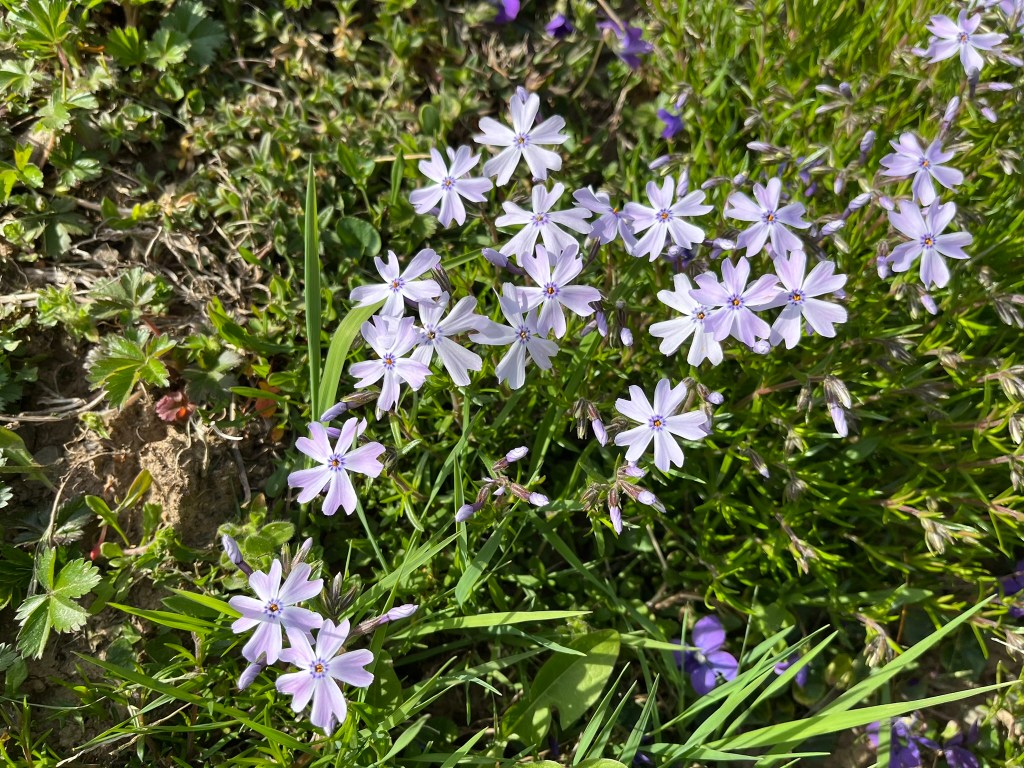
    Phlox subulata, Moss Phlox

    Coupled with my increased time spent on the patio- primarily doing “back porch birding” and reading after work- more subtle changes jump out at me. Early last week, a tiny blue flower popped up in the time between lunchtime birding and evening reading. A day later, smoky purple stalks shot up and revealed speckled flowers. By the weekend, violets erupted across the yard.

    On my 0.33-acre property, I found 9 species of flowering forbs: Moss Phlox, Ground-Ivy, Little Mouse-Ear, Philadelphia Fleabane, Hairy Bittercress, Lesser Periwinkle, Grey Field-Speedwell, Birds’-eye Speedwell, and Common Blue Violet. In early- to mid-April, only a handful were blooming. Most are nearly budding and will most likely bloom in another week or so, revealing their flowers to the world.

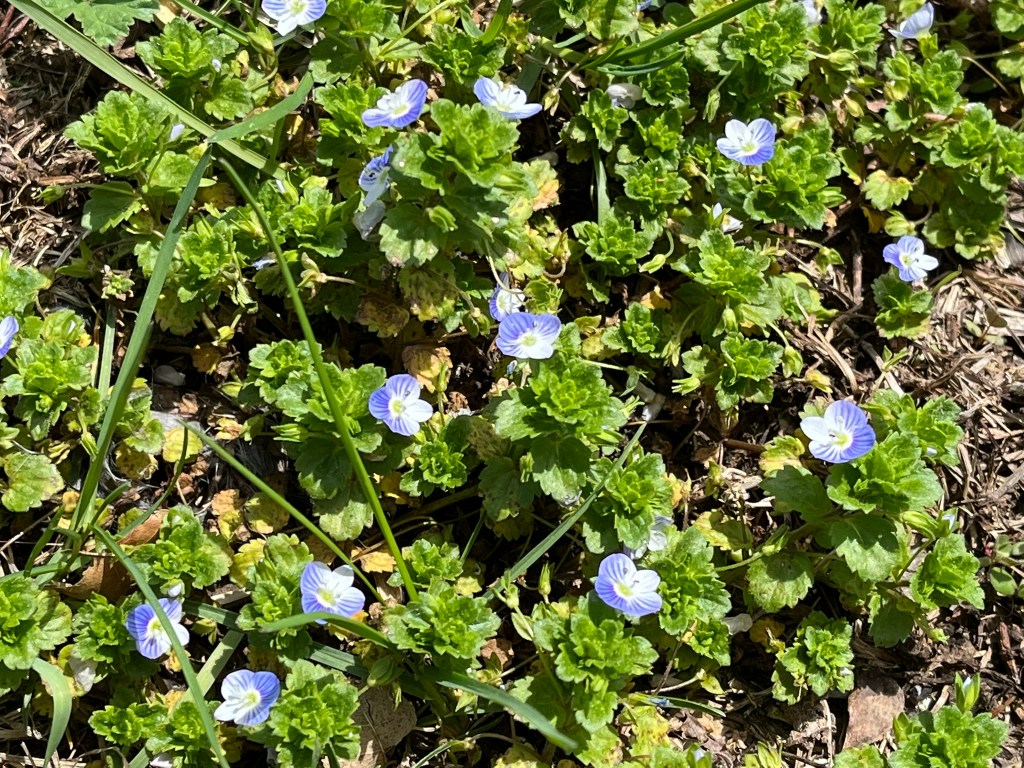
    Veronica polita, Grey Field-Speedwell

    While beautiful, some of these species are not native to my ecoregion. Veronica polita, the Grey Field-Speedwell, was most likely introduced by settlers in Europe. White-tailed deer and Eastern cottontail don’t appear to favor the plant, and it will continue to spread in areas that have thin soil and are infrequently mown. Another plant in my yard, Glechoma hederacea, Ground-Ivy, was introduced as a medicinal plant by European settlers and left to grow wild.

    On the flip side, two species I’ve noticed are native to Pennsylvania- violets and Moss Phlox. Violets are a favorite of mine, and in my ecoregion grow as the Common Blue, or if I’m lucky, the Northern White. My yard lies low and retains water well, great habitat for Common Blue violets. Near my grandmother’s house, in a patch of wood, Northern White Violets grow up from the leaf litter. The other native flower, Moss Phlox, is often cultivated as a ground cover in my area. While I’ve never purposefully planted phlox, I appreciate volunteering to crowd out unsavory species.

    Viola sororia, Common Blue Violet

    Right now, the lawn is over 6 inches tall, and over 9 inches tall in especially lush areas. My lawnmower is due to be returned any day, and I dread it. I’m torn between allowing my lawn to grow into a meadow and keeping it trimmed. I’ve always wanted to grow a native grass meadow for a lawn and am free of homeowner’s authorities to prevent me- yet the knowledge that a lawn meadow will attract ticks holds me back. Keeping a trimmed lawn will permit me to be outside more often and enjoy what is there. A compromise my partner proposed is to simply mow less, and when we do mow, trim the grass on the highest blade setting.

    I’m going to attempt to hold out to see some of the other flowers before trimming the yard. The Little Mouse-Ear, Philadelphia Fleabane, and Hairy Bittercress are only days away from bloom. Even then, I may attempt to wait even longer to allow the native species to pollinate and grow seeds. Yet, I know I can’t wait forever. Eventually I will need to trim the lawn and carry on with my explorations beyond the yard.

  • Lichen Love Affair

    Lichen Love Affair

    Flavopunctelia soredica, Powder-edged Speckled Greenshield

    In February, I attended Community Nature Journaling at Shaver’s Creek. The day’s lessons focused on the biology and ecology of lichens. This event opened my eyes to lichenology and has been a source of many hours of study.

    Lichens are the product of a symbiotic relationship between algae and fungi. The fungi is the dominant partner- dictating the lichen’s thallus to fruiting body. The algae is a type of cyanobacterium and provides food for the fungi. Lichens will grow on many substrates, and we will see them often on trees and rocks. Lichens are among the first colonizers of bare rocks. They aid in the development of better habitat for mosses and other plants.

    Flavoparmelia caperata, Common Greenshield

    Lichens grow on many different substrates in a vast array of environments. Lichens occur everywhere in Pennsylvania. Lichens are often accessible for study- my favorite place to find them are in parking lots! Even though lichens are common, they are very slow to grow and develop. It’s best to snap a picture and move on. Disturbing any lichen, especially a large one, will damage years or decades of growth.

    My favorite lichen species is Flavoparmelia caperata – the Common Greenshield Lichen. This species is among the most common species of lichens in North America. On a tree, it has a bright, limey green foliose thallus. The edges of the leaves are smooth and feel tough and leathery to my touch. My second favorite is Parmotrema hypotropum – the Powdered Ruffle Lichen. This lichen reminds me of the tops of lettuce with their deep ruffled surface. The colors of the Powdered Ruffle Lichen aren’t as intense as my favorite, but are still beautiful to me.

    Xanthoria parietina, Common Sunburst Lichen

    Despite the variety of lichens, I’ve had a difficult time finding a definitive field guide. I’ve been relying on the Pennsylvania Bryophyte and Lichen Diversity Project on iNaturalist. I post my pictures and rough identifications, and a member of the project checks my work. I learn a lot from their corrections, and have become better at identification.

    With the summer months coming, it will become more difficult for me to spot lichens. My favorite species’ preferred habitats are on trees. Once leaves emerge, I’m not sure if the lichens will be so easy to spot. Plus, any exposed rocks will soon cover with brush and vines. I’m hoping to spend the “off” months looking for a good field guide. One book exists, Urban Lichens by Jessica Allen and James Lendemer. There’s many websites that appear promising but are difficult to navigate.

    Flavoparmelia caperata, Common Greenshield

    The last few months have been full of lichen-related exploration and learning. I look forward to more en-lichen-ing discoveries as the seasons progress!