The 2025 Bill Russell Foray

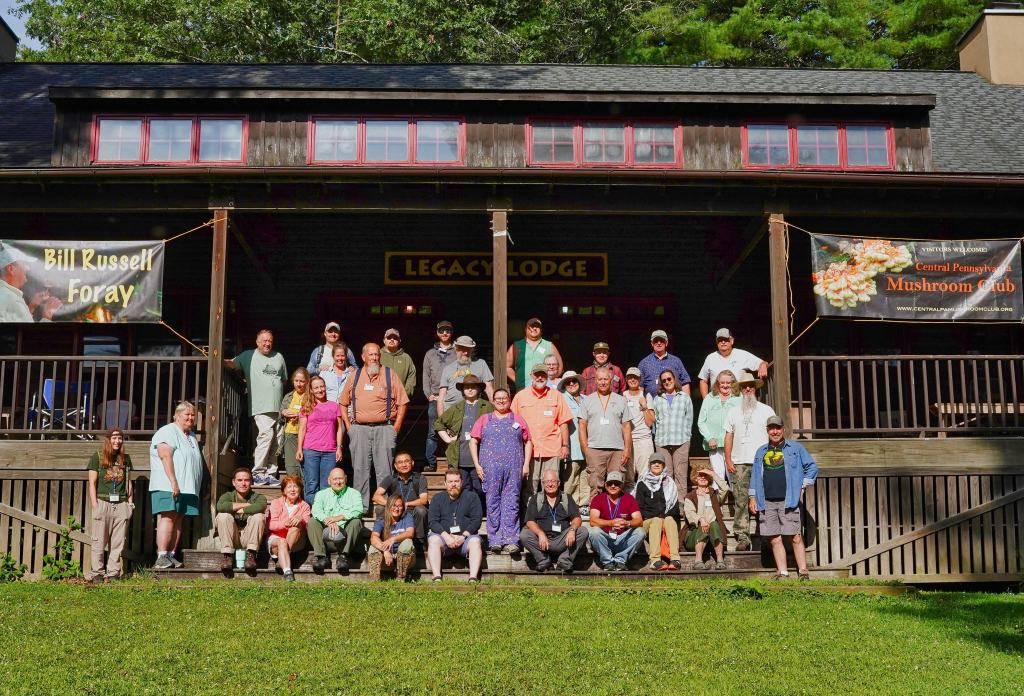
The 2025 Bill Russell Foray group photo, courtesy Rodney Spencer

Once our honeymoon wrapped up, there was one thing on my mind: the 2025 Bill Russell Foray, held by the Central Pennsylvania Mushroom Club. While we wandered through the Finger Lakes, I mulled over what the first weekend in August would have in store for me. I had never visited Camp Golden Pond, a Girl Scout Camp now transformed into a private campground. In my typical overthinker style, I read countless reports of other forays happening up and down the East Coast. By the time August 7th rolled around, I was exuberant.

On Friday afternoon, my sister and I took off in my loaded-up Jeep, headed for Petersburg. My sister was equally as excited as myself, and as we passed Jo Hayes Vista, we realized we were far ahead of schedule. To kill some time, we stopped at Shaver’s Creek Environmental Center. We zipped through the exhibits, tip-toed through Klingsberg Aviary, and took a long break kneeling in the lobby to watch a monarch caterpillar transform into a cocoon.

After the caterpillar sealed itself away, we hit the road again. We pulled into Camp Golden Pond right at 5 o’clock, finding ourselves in the middle of a busy scene. Some were setting up tents, and others were carrying gear indoors. My sister and I checked in at the registration table and headed over to Palmer Lodge to find some bunks on the Tussey Level. We had our pick of bunkrooms, as most were tenting. After setting up our bunks and stowing gear, we headed back up to Legacy Lodge for the commencement of our weekend.

Friday evening began with dinner, a taco bar prepared by club members. As the cleanup crew reset the hall for our guest speaker, the Silent Auction kicked off. Shortly after 7:30pm, our speaker for the evening was ready: Hanna Huber, Conservation Mycologist for the Pennsylvania Natural Heritage Program (PNHP). She spoke to us about her experience and love for mycology, and her goals for her work with PNHP. Her sincere passion for mycology and conservation shone through during her presentation. After her presentation, I felt even more inspired and excited for the day head.
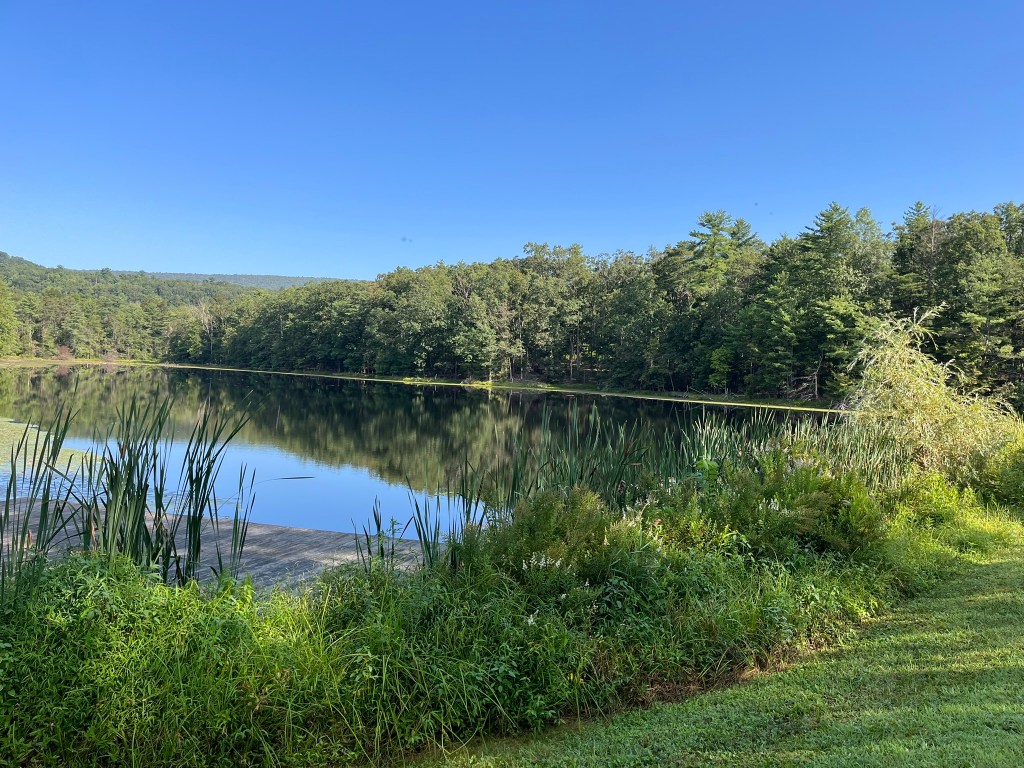
Lake Louise at Camp Golden Pond

Saturday morning dawned bright and hot- the temperatures would later peak in the high 80s. After breakfast, we took a group photograph before heading off for our initial collecting walks. Everyone was worried about what we would find. Centre County had had several weeks of no rain and high temperatures; a poor recipe for good foraying. However, we were delighted to be proven otherwise. After walking around Lake Louise and up to Unit II, my basket was full of fungi and lichen. We returned to Legacy Lodge for lunch and initial mushroom identification.

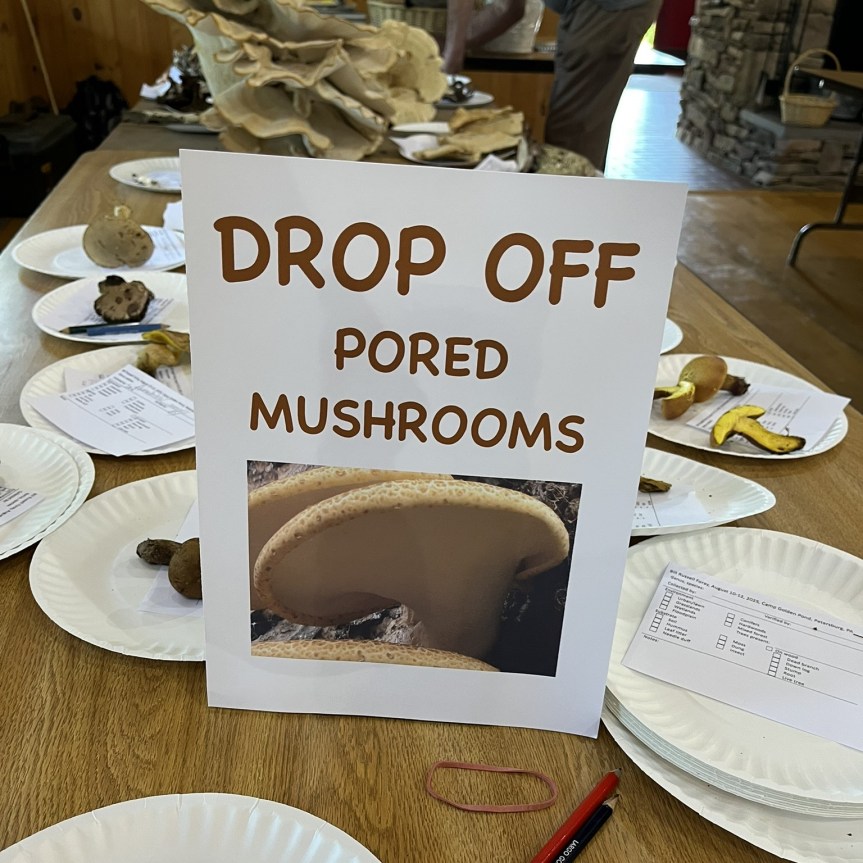
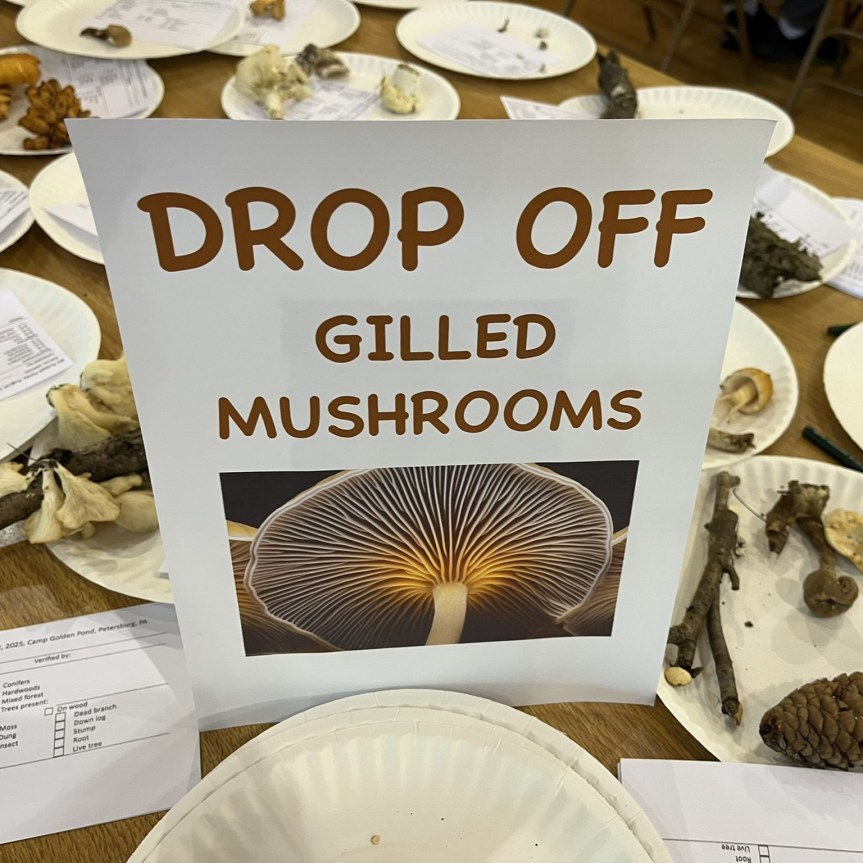
This year, CPMC was trying something new with identification. Upon returning from a collecting walk, participants sorted their finds into three categories: pored mushrooms, gilled mushrooms, or “other, not gilled or pored.” Each specimen was given its own paper plate and a slip of paper with a simple form requesting information about the finder, location found, substrate, and general observations. I dutifully filled out the forms to the best of my ability, I am a beginner, after all! Our finds quickly filled the tables and the lodge with the subtle scent of the forest.
After lunch, we broke off into small groups for different activities. Some went to nearby Natural Areas for more collecting, others to a mushroom cultivation demo, or to a fabric dyeing activity. I chose to attend the fabric dyeing activity, which turned out to be loads of fun.  

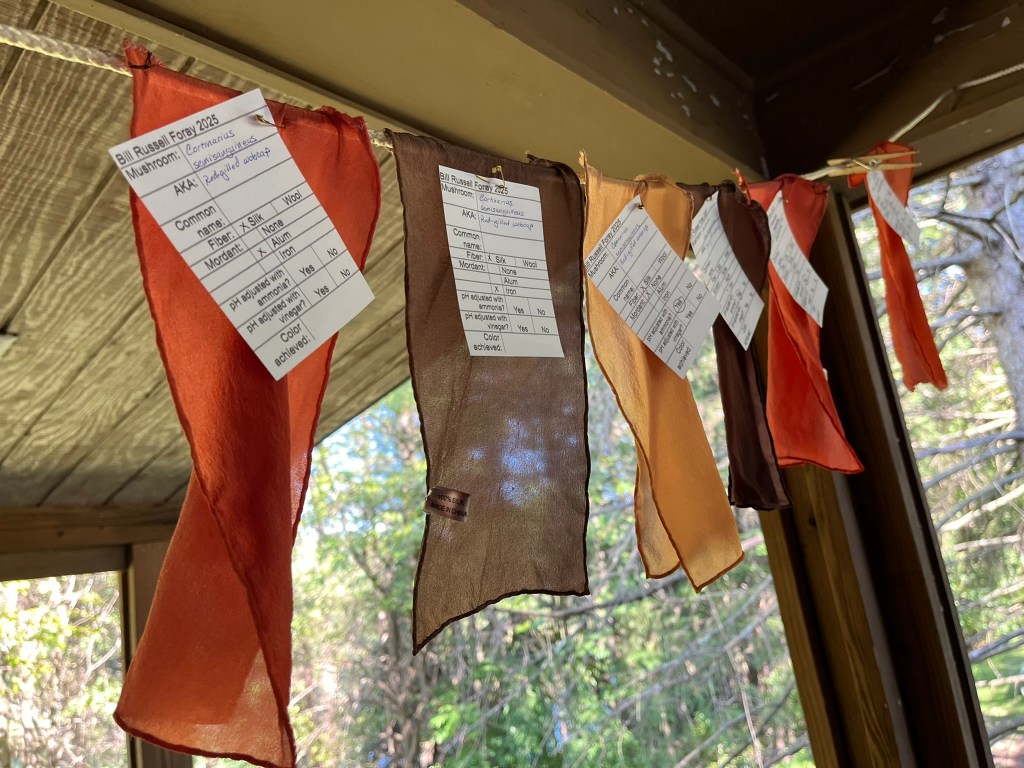
Over the ensuing hours, I learned that mushrooms and lichens can be used to dye natural fabrics and to make paints. As a small group, we worked together to dye silk squares with different types of mushrooms. We had our most striking results from using blood red webcap, dyer’s polypore, and artist’s conk. The breeze on Palmer Lodge porch kept us from being too hot as we checked water temperatures, steeped mushrooms, and soaked fabrics. In the middle of the activity, I rushed back up to Legacy Lodge to make a commemorative print of an Old Man in the Woods fungus, carved by artist Allan Sutley. With my print drying on my car’s dashboard, I rushed back to the porch to help tidy up and prepare the dyebaths for wool yarn. Colorful silk squares fluttered in the breeze as we returned to Legacy Lodge for dinner and our keynote speaker.
Our speaker for Saturday evening was Bolete Bill. His presentation, “Slugs, Bugs, and Other Mushroom Thugs” focused on connections in nature- how mushrooms are an integral part of habitats across the globe. I was really interested in all the different insects Bill introduced to us. Many different species of insects utilize mushrooms as nurseries for larvae, habitat for adults, and food supply for all phases of life. Some even carry mycelium with them to cultivate fungi to feed its larvae! I could have listened to Bolete Bill speak all night.

After breakfast the following morning, we split into two groups: one focusing on completing mushroom identification, and the other at a cooking demonstration in the kitchen. My sister was teaching us to prepare mushroom tartlets- an hors d’oeuvre of savory sauteed mushrooms secured to puff pastry with herbed cream cheese. While we waited for the tartlets to finish in the oven, she shared with us her pre-made loaded mushroom dip- equally delicious and easy to prepare.

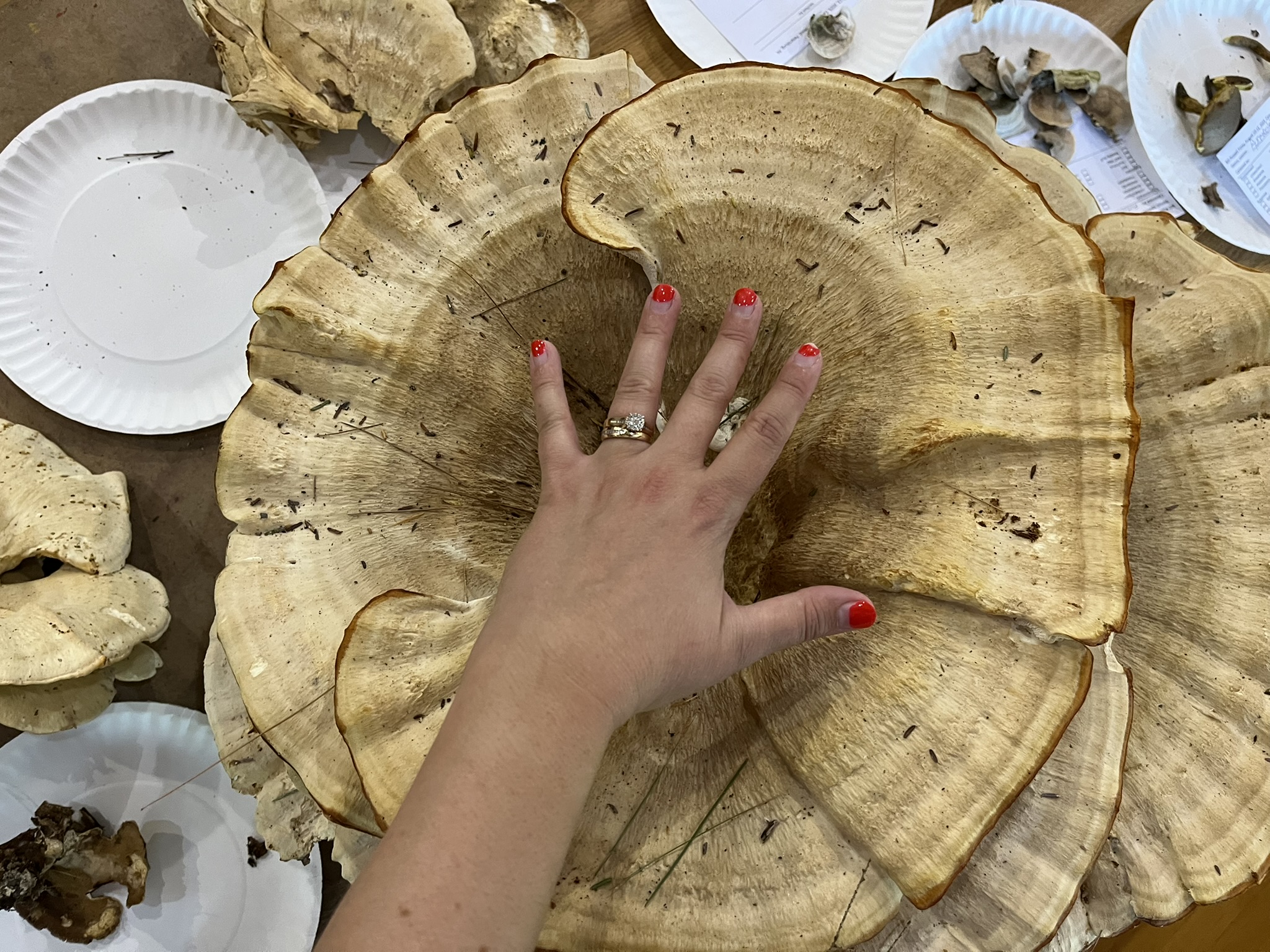
This gigantic polypore was found by a club member before the Foray started

With the cooking demonstration over, and Legacy Lodge cleaned, it was time for us to depart. I was exhausted, but happy- I had spent the whole weekend surrounded by other amateur and professional mycologists, people who care as deeply about fungi, lichen, and nature as myself. With plans to attend next year and participate in leading group activities, my sister and I jumped in the Jeep and headed home.

If you are interested in participating in the 2026 Bill Russell Foray, pay close attention to the website and social media (Facebook and Instagram) of the Central Pennsylvania Mushroom Club. I have covered an example of our regular meetings in the past, and more are still on the schedule for this coming Fall. I look forward for next year’s Bill Russell Foray and for continuing my journey through mycology with my friends in CPMC!

Mushrooming at S.B. Elliott State Park

On the last Saturday in July, my family and I attended a Central Pennsylvania Mushroom Club meeting at S.B. Elliott State Park. Throughout the Spring, Summer, and Fall months, CPMC meets at various locations throughout Central Pennsylvania to hunt, talk, and teach about mushrooms. This meeting was my first time visiting S.B. Elliott State Park and hunting for mushrooms in July!

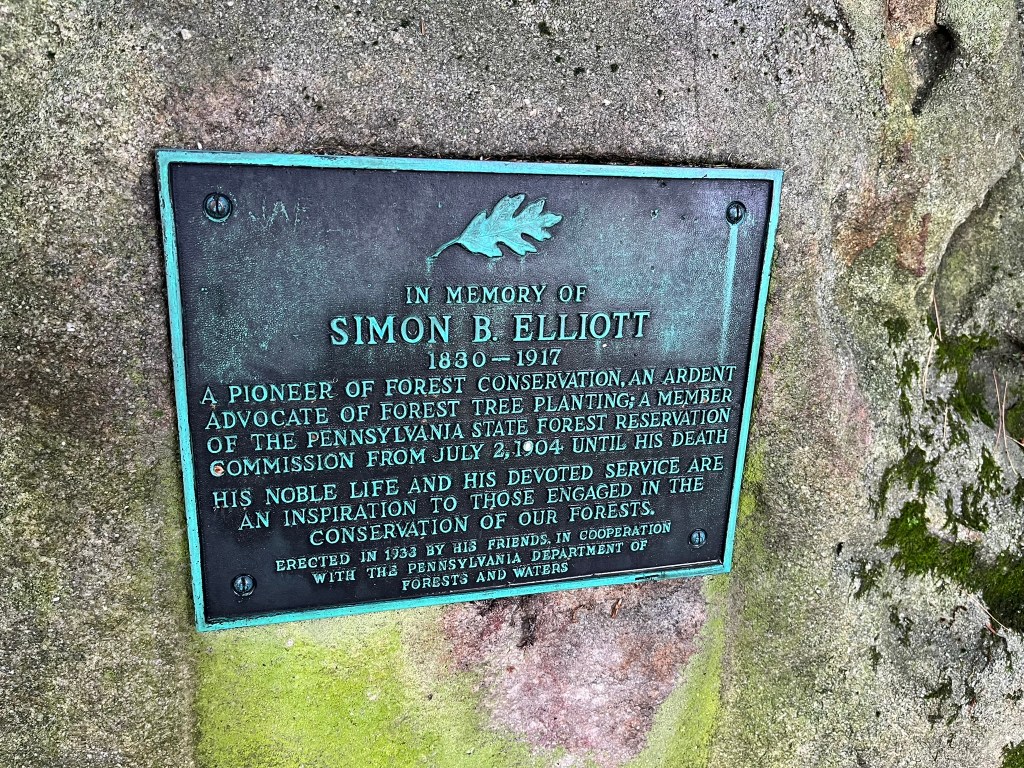
In the same year the Civilian Conservation Corps established Camp S-116-PA, 1933, the Department of Forests and Waters created S.B. Elliott State Park. A memorial plaque to Simon B. Elliott, a dedicated conservationist, was erected to commemorate the park. This heartfelt memorial is now shrouded by trees, which, I imagine, Simon B. Elliott would have liked. The CCC Lodge, outbuildings, and pavilions remain, which looked magnificently historical and mysterious.

Crown-Tipped Coral Fungus

Promptly at 1:00pm, our meeting divided into three groups. One group headed in the direction of the bog, which may be either the “Wallace Sphagnum Bog” or “Crystal Springs Bog.” I didn’t have the time on this trip, so I noted it for future exploration. Another followed Crystal Springs Road to walk up the snowmobile trails. The last group, which we followed, headed towards the wooded area between our pavilion and the old Dague Nursery. This area was composed of second-growth woodland, with lots of oak, beech, and evergreen trees. I also spotted plenty of Christmas Fern and New York Fern. Some trees had naturally fallen, but a small handful had been cut down and left to rot.

Just as we set out on our hunt, a light rain passed through our area. For a brief time, the rain cooled us off, but the humidity quickly ramped up again, and the bugs emerged. For a while, we found slugs and snails before seeing any mushrooms! I identified Western Dusky Slugs, but the snails escaped me. I was so focused on mushrooms that I forgot to take pictures of them.

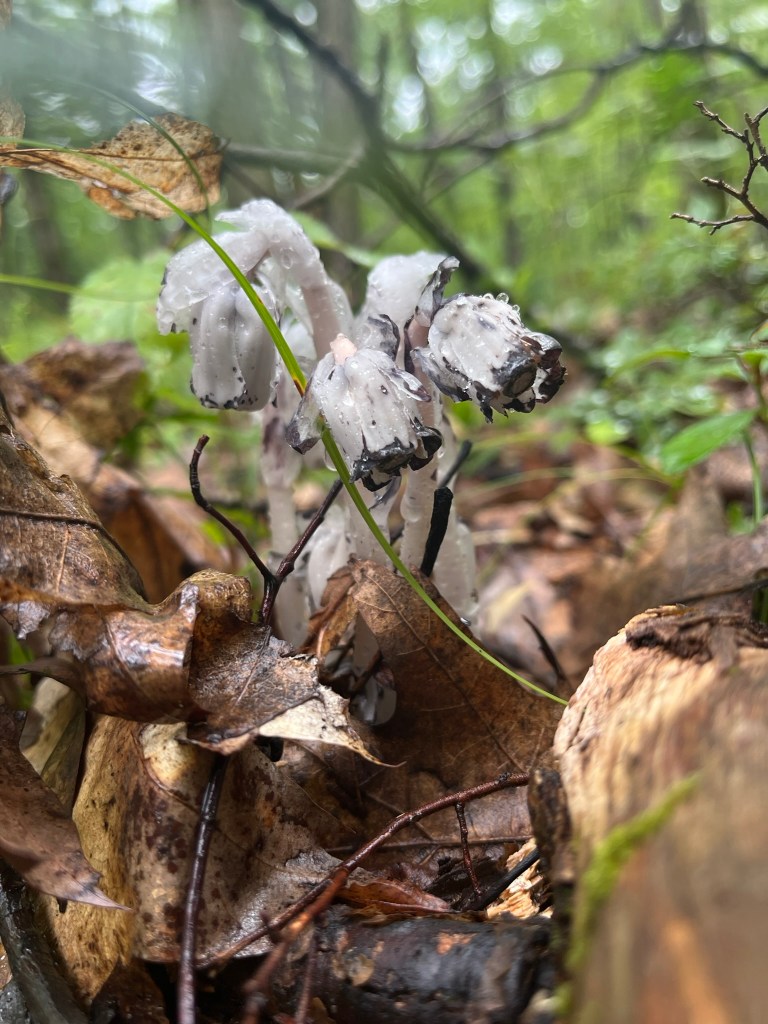
After the slugs and ferns, we spotted Monotropa uniflora, Ghost Pipes. These perennial wildflowers are found all throughout Pennsylvania. The plants are a mycoheterotroph, a parasitic flower hosted by fungi in the Russulaceae family. Ghost Pipes are known to be the favorite flower of Emily Dickinson. I hadn’t seen any in person for many years. I couldn’t take a single step without nearly crushing a bunch of Ghost Pipes!

As the humidity settled over us, we finally started spotting mushrooms. We were on the hunt for a Russula aeruginea, the Green Russula, which my sister spotted and took to our walk leader. I found some Crown-Tipped Coral Fungus sprouting in a large clump on a rotting log. I reached the point where I felt like every glance was full of mushrooms. We counted more than ten species from our small group alone. Favorites of mine were Oak Mazegill, Crowded Parchment, and Berkeley’s Polypore.

Jack-o’lantern Mushroom

Towards the end of our walk, our group stumbled upon a large growth of Omphalotus olearius, the jack-o’lantern mushroom. These poisonous mushrooms fruit at a similar time to Chantarelles, and look eerily alike. Jack-o’lantern mushrooms possess true gills, a feature Chantarelles lack. Plus, jack-o’lantern mushrooms are vivid orange, and are the same color throughout. While I know scientifically these mushrooms are poisonous enough to cause harm to human beings, I can’t imagine ever being tempted to eat them. There is a certain something in their appearance and smell that sets off my primitive instinct to leave them alone.

After we finished our walk, all the groups gathered at a pavilion to begin identifying all the mushrooms found. Quickly the plates of identified specimens filled two picnic tables, and the heady scent of fresh fungi filled the air. Club leaders walked us through the species and families one by one. One of the best parts of the club is that there is a mix of ages and experience, creating a wealth of knowledge. I love to simply listen to them discuss different specimens or trade stories.

All too soon, my family and I packed up our foraging baskets and backpacks. Tired and sweaty, we loaded in my Jeep and headed east on I-80. Mushrooms were on the mind as we discussed our plans for mushrooming in August. Soon a copy of Field Guide to Wild Mushrooms of Pennsylvania and the Mid-Atlantic will be on my doorstep, ready for more mushrooming adventures.

If you are interested in joining a local mushroom club, please check out NAMA, the North American Mycological Association. A database of mushroom clubs throughout the United States is on their website at https://namyco.org/clubs/. The schedule of events for the Central Pennsylvania Mushroom Club is on their website at https://centralpamushroom.club/events/.

Midwinter at the Arboretum

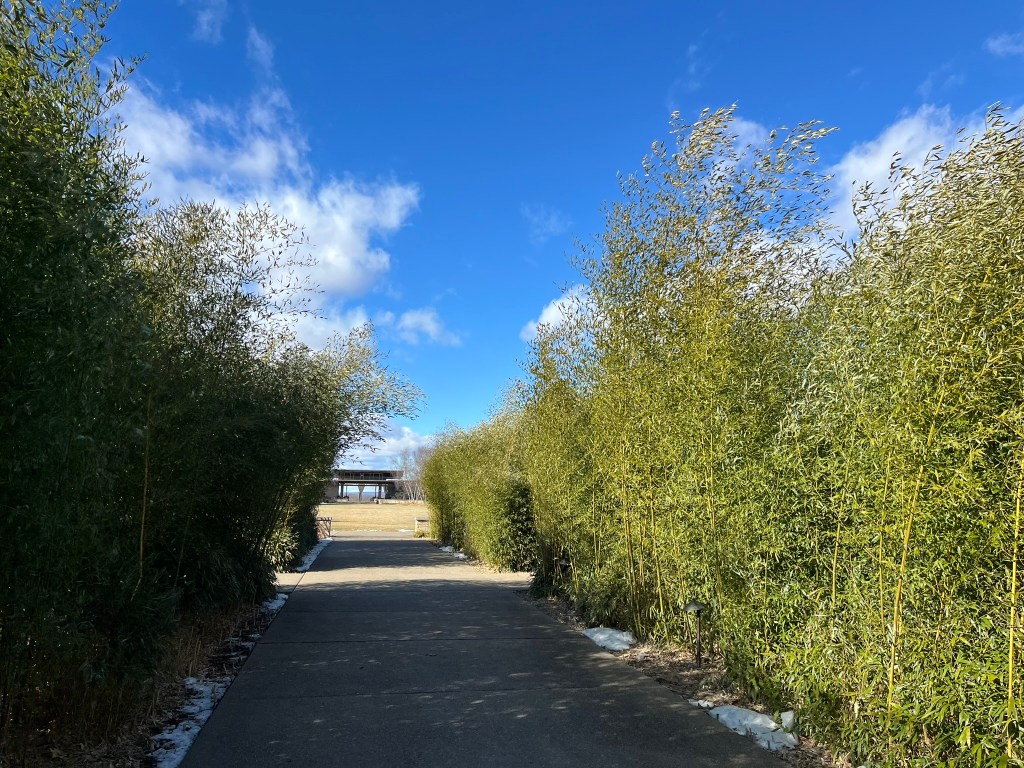
Lime-green stalks of bamboo greeted me as I entered the Arboretum at Penn State. This wonderful, ever-changing botanical garden always captures my attention and imagination. Even at midwinter, I enjoy spending my midday break walking among the dormant plants.

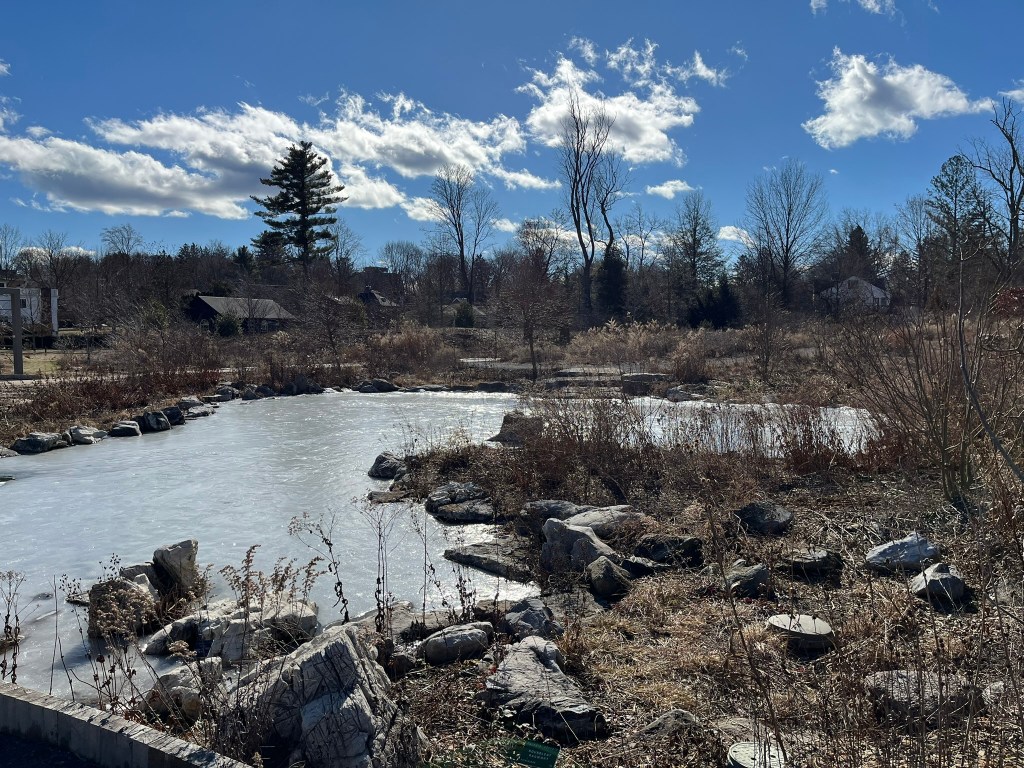
I always start with the Oasis Garden. Taking the first left, I wandered through and spun the ice on the Lotus Pool. The walls protected me from the wind as I poked around the plants. Very little was growing here, with most fading away into the mulch. The Rose and Fragrance Garden was more promising. The little buds peeping from the tips of branches signal oncoming Spring. As I finish looping through, a gust of wind shakes the waxy magnolia leaves, causing them to clack like bones.

The walled gardens lead into the Pollinator and Bird Garden. Here the wind gusted, unobstructed by trees or hedges. I pull my shawl closer to my neck and continue to the pond by the Pollinator Plaza. From the top of the willow house, a Song Sparrow calls, spinning around on its perch to watch me. Most other birds are flitting overhead, or on a beeline to the Bird House.

The small wooden building is a relief from the wind. Another visitor is sitting on the porch, so I veer to the back and rest on the bench to watch the feeders. Dark-Eyed Juncos were tumbling over each other as they dig through the mulch for seeds. From the tops of the evergreen trees, a Blue Jay crunched a peanut. After a few minutes, a trio of Black-Capped Chickadees swept in to chase House Finches. I could- and I have- spent hours in this exact spot. Yet with my break ticking to a close, I knew I needed to keep going.

The Pollinator and Bird Garden connects to an esplanade with a giant sundial. The sidewalks border the Children’s Garden. I veered left into the Children’s Garden and entered the faux cave. Cold water dripped from the ceiling, most likely ice melting from the roof. The path carved through the cave, then out and behind the Glass House. Grey and black squirrels danced in the trees overhead as I walked. An employee was tending to the garden, and I stayed out of their way as best as I could.

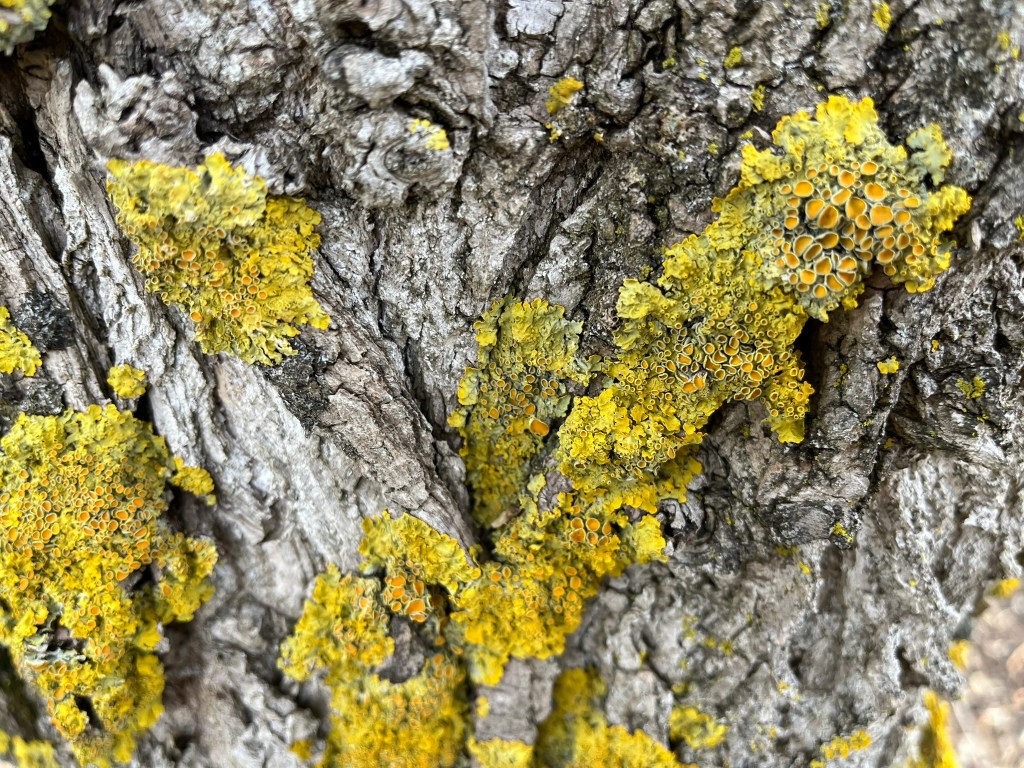
From the Children’s Garden, I followed the the Strolling Garden path to the Poplar Court. The Black Poplars stretched high into the sky over my head. I wove in and out between the trees, admiring the neon yellow and neon orange lichens. Most appeared to be a species from genus Candelaria. (I’m still waiting for some confirmations on iNaturalist now.) I took as many pictures as I could before I hurried back to work.

Xanthoria parietina (Common Sunburst Lichen)

Even though there were few blooming flowers, the Arboretum is still full of life in winter. From lichens to songbirds, there is a little bit of something for everyone. During my walk, I found a pamphlet rack, which had a booklet on trails in Hartley Wood. As I’ve been walking, I’ve been planning the rest of this year’s adventures… which won’t take me very far at all!

Exploring Local Lichens

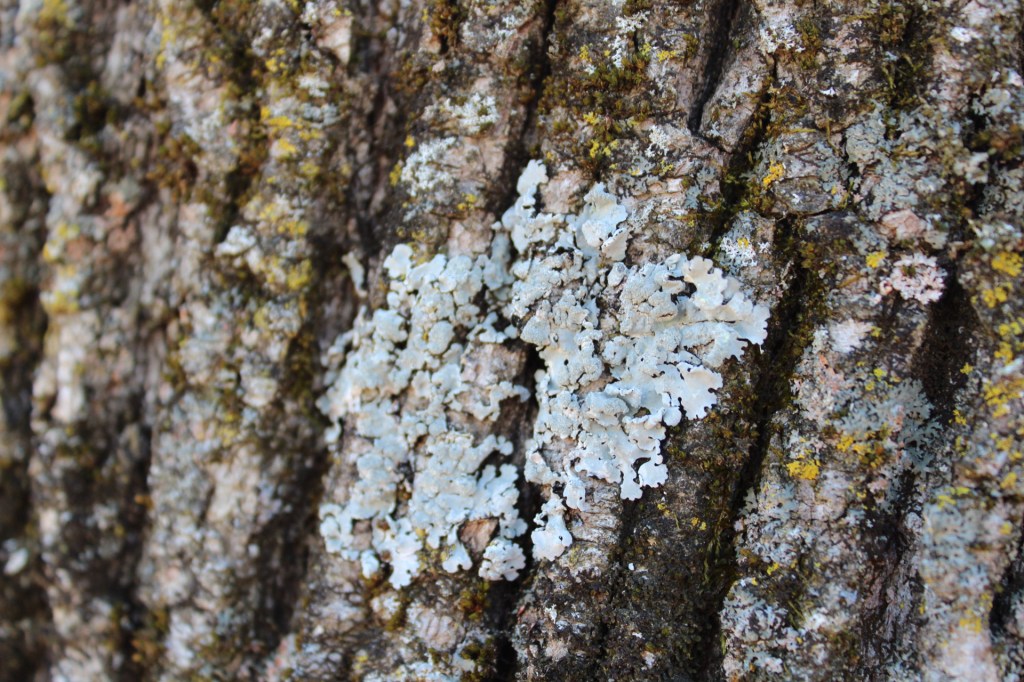
Foliose lichen found on a Norway Maple tree

Despite my interest in mushrooms, I know little about lichens. At the January Community Nature Journaling meeting, Stephen Bucklin introduced us to lichens. I learned a little on their ecology, physiology, and reproductive systems. Since then, I’m noticing lichens a lot more, especially in my own backyard.

I first noticed some lichens growing on the Norway Maple tree in my front yard. On the eastward side of the tree were many lichens, and I took a couple of snaps of the largest ones. The majority of them appear to be at least be Parmelioideae; typical shield lichens. To the touch, the lichens were cold and a little leathery.

The Norway Maple also had many small yellow lichens, which my camera and I struggled to capture. They grew in many small spots, some smaller than a pencil tip. Most were between the size of a pencil eraser to bottle cap. If I touched them, they brushed right off the tree. In the picture above, you can see the abundance of the yellow lichen all around the big shield lichen.

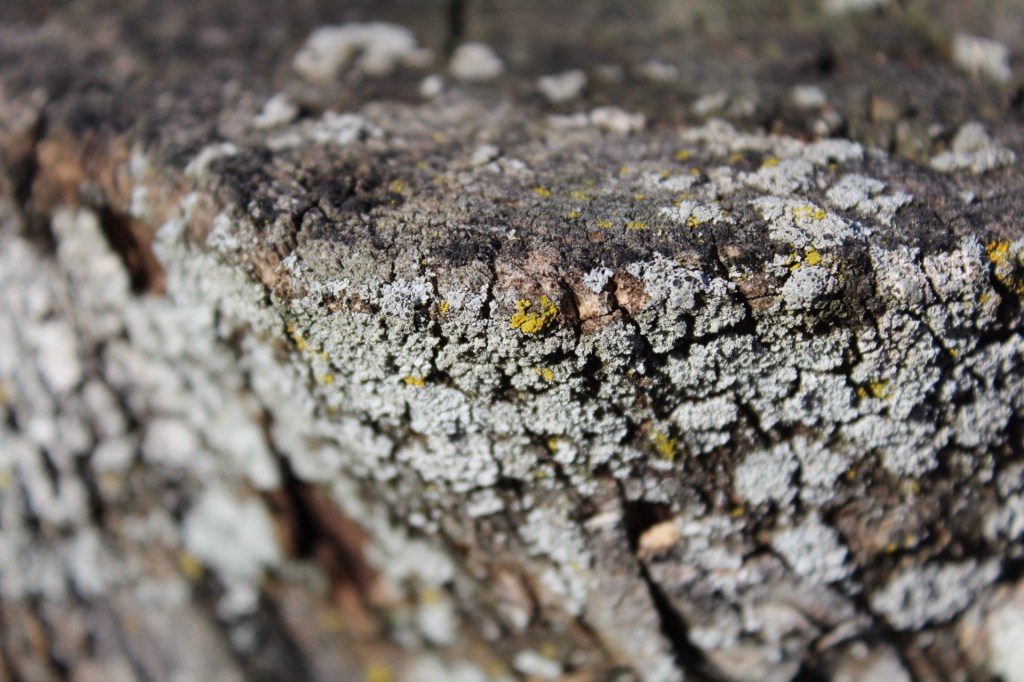
Crustose lichen found on a post

On the post that holds my CoCoRaHS rain gauge, a crustose lichen appears on all sides. It didn’t brush off using my finger pad or nails- the medulla of the lichen anchors it to the substrate. In this case, the substrate is a post of unknown origin. Looking close, I could see little black dots- the mycobiont’s reproductive structures.

Foliose lichen found on same post

Near the ground, the post had another species, a foliose lichen. Yet again, iNaturalist suggested that it hailed from the typical shield lichen family. I’m waiting for more species suggestions from experts now. These felt cold and leathery to the touch, too. I liked how bright and green they were in comparison to the grey-green of the crustose lichen at the top of the post.

Foliose lichen and Ulota crispa competing for habitat

On a dead snag in my yard, I found an example of a lichen and a moss competing for habitat. The foliose lichen spread all over the trunk of the snag, in groups roughly the size of my hand. In one spot, Ulota crispa, crisped pincushion moss, was growing over and up through the lichen. Lichens take anywhere from tens to hundreds of years to grow and develop. On the flip side, a moss can grow in spread in a year and a half or less. The moss is out-competing the lichen on this tree. I’m going to keep an eye on its development in the future.

I’m surprised that my yard had so many examples of lichens. I only have three trees, a snag, a forsythia bush, and a single post. I didn’t see any lichens growing on my house or garage. With such little habitat, the lichen has found its niche and is growing. Considering how long it takes for a lichen to develop, I can say that they may have been “born” at the same time as me. Thinking about it, some of these lichen may be older than me!

2024 iNaturalist Year in Review

2024 is my first year of using iNaturalist to note new and familiar species in the field. I focus on identifying plants and fungi using iNaturalist. I try to identify the genus in the field, then the species after some reflection and research. This year, I made a total of 68 observations spread over 59 species.

44.12% of my observations were of plants. I have a ton of favorite observations, but there are a handful of very memorable ones…

Witchhazel

27.94% of my observations were of fungi. My favorite observation was of Trametes versicolor, the Turkey-Tail Mushroom, which grew on a stump in my yard.

Trametes versicolor (Turkey-Tail Mushroom)

A small number were of insects, which were hard to photograph clearly. My favorite observation of the year was of Atteva aurea, the Alianthus Webworm Moth. This picture turned out so beautifully… it’s a shame it’s only on iNaturalist!

Atteva aurea (Alianthus Webworm Moth)

Most of by observations are for August through October. I was outside much more this fall than I was in the spring or summer. With my Master Naturalist class, I was able to be outside one evening every week and almost every weekend. We had a dedicated class for iNaturalist, which is where I identified most of the insects from the year.

The most important part of iNaturalist is the online naturalist community. I relied on the help of others to identify and affirm my identifications. 3 users helped me the most: mabrybiggs, tz_nh, and chia. I am indebted to them for helping me learn about new-to-me species. I’ve been able to help with a few identifications for others, but not as many as they helped me with!

I can’t let any year-in-review go without a goal for the next year… in 2025, my goal is to make at least 150 observations… and to write about them on TKN. I let my iNaturalist activities lie at the wayside this year, and I would like to highlight them more.

Food for thought… do you use iNaturalist? If so, how many species did you identify this year?