Late Summer at Shaver’s Creek

During the last weekend of August, two of my sisters and I took a trip to Shaver’s Creek Environmental Center to explore. On Saturday morning, we hustled down the road, first stopping at The Naked Egg Café for brunch. About an hour before the Penn State football game kicked off, we were parked and walking into Shaver’s Creek. We were practically alone- it felt like everyone in the Centre Region was at the game!

Established in 1976, Shaver’s Creek Environmental Center is now an integral branch of Penn State Outreach. Shaver’s Creek is more than a “typical” environmental or nature center- in addition to hosting many programs for the public and Penn State students, the Center participates in a number of research projects ranging from citizen science to Appalachian Botany and Ethnobotany. My favorite Shaver’s Creek program is Community Nature Journaling, which has inspired me on my own nature journaling journey.
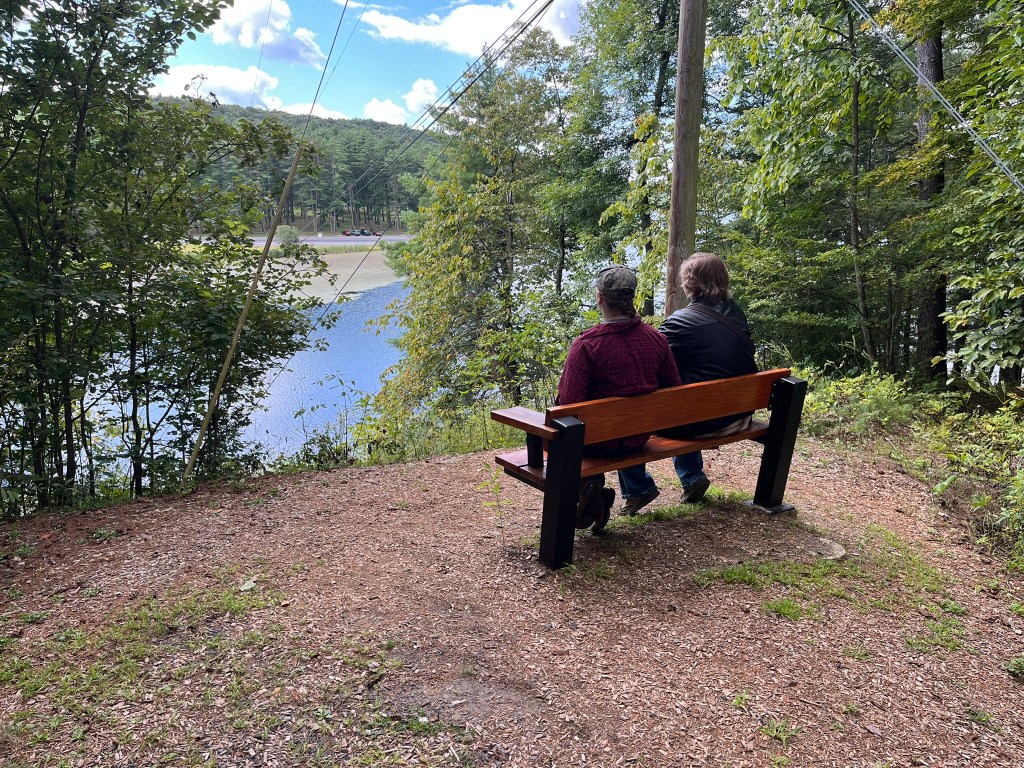
I was first introduced to Shaver’s Creek when taking my Pennsylvania Master Naturalist training classes in 2024. At the time, our classes were after-hours, and I could only explore small portions of the 7,000+ acres of it and Stone Valley Recreation Area. I have been back many times since exploring or attending programs hosted on its grounds. One of my favorite ways is to visit with family- there is something for everyone at Shaver’s Creek.

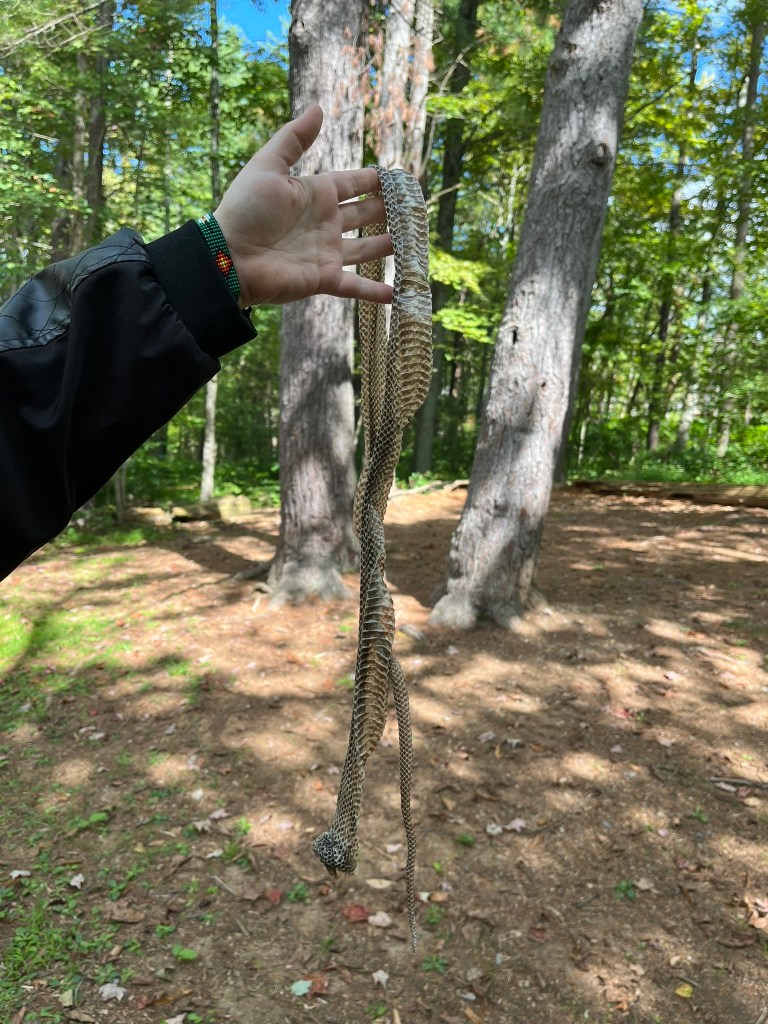
This Saturday, I wanted to share my favorite trail with my sisters. Together, we walked down the Point Trail to Sunset Point Pavilion. We were slow hikers, stopping many times to look at insects, lichen, or flowers. One of my sisters noticed a blacksnake shed- totally in one piece and very fresh. We put it back where she found it, so others could see the shed, too. Besides, if we wanted to find and keep a shed, I’m certain there’s one at home, from the blacksnake living in my garage!
We hung out at Sunset Point Pavilion for a long time, watching a flock of Canada Geese and some kayakers out on Lake Perez. The lake is the key feature of the Stone Valley Recreation Area, and Shaver’s Creek is deeply connected to it. Lake Perez is one of the locations of the Long-Term Ecological Reflections Project, and has experienced massive change over the last 20 years. For some time, the lake was drained, then eventually refilled. Now, Lake Perez is open to fishing and human-powered boating.

While hiking, we stumbled upon a geocache. It was my youngest sister’s first geocache- and my 41st find. It was a little tough to log the cache while out hiking- there is poor cell reception in the area, and only WiFi at the Center. For me, this is another reason why Shaver’s Creek is so wonderful- it’s the perfect place to go for an unplugged day outdoors.

After hiking around, we made a stop at Klingsberg Aviary. This is, by far and large, my favorite part of Shaver’s Creek. Four long buildings, mews, are home to a host of birds that now live in the care of devoted staff. For one reason or another, these birds have found themselves unable to return to life in the wild, and now they serve as avian ambassadors to the public. While Shaver’s Creek is home to a Red-Tailed Hawk, my favorite bird in residence is Jane the Sandhill Crane.

Unfortunately for us (well, me), Jane was not out-and-about in her mew during our visit. Currently, the Aviary is under renovation, and I can imagine it disturbs the birds quite a bit. While we were quietly observing the birds, Rosalie the Bald Eagle was out and surveying us with a sharp eye. As we were visiting her, she let out one of the signature Bald Eagle screeching laughs. Feeling oddly chastised by the bird, we tip-toed out of the Aviary and on to our next destination.

Our last stop at Shaver’s Creek was the Boardwalk. Neither of my sisters had been on the Boardwalk before, which perches over a leg of Lake Perez. While hiking, we found some White Turtlehead, an unusual late summer wildflower. We did a little more birdwatching and checked around for another geocache. Too quickly, it was time for us to head out for the day. As we hiked back to the Jeep, we started making plans for a return trip to Shaver’s Creek later in the Fall to search for geocaches.

If you are interested in visiting Shaver’s Creek Environmental Center, I highly recommend you go. The Center is open daily, from 10:00am to 5:00pm. You will need to be a little prepared before you visit- Shaver’s Creek is working on becoming a zero-waste facility, so you will need to recycle on-site or pack out your trash. Dogs are not permitted in the Aviary but may be at Shaver’s Creek or Stone Valley Recreation Area if they are on a 6-foot leash. Don’t forget lots of water and a trail map!

Have you visited Shaver’s Creek before?

High Summer at the Arboretum

Margery Enes Smith Soaring Waters

The sun beat onto my back as I crossed Park Avenue and into the Arboretum at Penn State. By the time I reached the wetland bridge, I felt thawed from a long morning spent working in a chilly office. I last shared a visit to the Arboretum with you in February, when the gardens lay dormant. In August the gardens hum with life- plants, animals, and insects.

Several construction workers perched on the wall near the Margery Enes Smith Soaring Waters fountain, sharing their lunches away from their jobsite. I took a seat on the bench and snacked on a granola bar, tucking the trash in my pocket before entering the Oasis Garden.

Bird and Pollinator Garden

At this time of year, the Lotus Pool was full of flowers. Several different types of lotuses are planted in the pool, and one looked like the American Lotus. Nelumbo lutea is a member of the water-lily family that grows in still waters and blooms from June through September. According to the Lady Bird Johnson Wildflower Center, it is native to the continental United States. Mississippi State University Extension shares that the roots, leaves, and seeds are edible when properly harvested and prepared. As I’m not inclined to forage from public gardens, I continued my walk.

I passed quickly through the Rose and Fragrance Garden and into the Pollinator and Bird Garden. Glorious native plants shone in the sunlight; a variety of goldenrod species and asters fluttered in the light breeze. I walked in circles for a while, waiting for a seat to open in the Birdhouse, but none came available, and instead I went into Childhood’s Gate Children’s Garden.

Cave with Barn Swallow

There were a few families packing up after an event, and I kept my distance and went into the artificial cave. The call of a Barn Swallow echoed in the small, cool space. I found the swallow perched on one of the cave ledges. I thought about Aristotle and this quote from Nichomachean Ethics – “For as one swallow or one day does not make a spring, so one day or a short time does not make a fortunate or happy man.” In this moment, Aristotle was wrong… one swallow makes me a happy woman. I enjoyed the cool cave for a few minutes more and watched the swallow take flight and soar out the entrance.

I stopped to admire the bronze buffalo on my way out of the Children’s Garden. This piece is in honor of the American Buffalo, which once had a range nearly covering the entire continental United States. By the dawn of the 17th century, Bison bison had been hunted to extinction in Pennsylvania and effectively relegated to the American West. This lone buffalo rests as a testament to its ancient range.

Overlook Pavilion

The steps of the Overlook Pavilion were shrouded in vibrant flora. I refilled my water bottle at the water fountain and took a few moments to gaze out over the rolling landscape. According to maps of the Arboretum, this area could eventually be converted into further botanic gardens, but for now is kept as open grasslands and seasonal tailgating.

I followed the path of the Kathryn Bower Smith Strolling Garden, admiring hydrangeas and trying to stay mindful of my time. My lunch break was quickly ending, and I needed to visit one last place in the Arboretum before I returned to my desk.

Poplar Court

The Poplar Court, once my favorite spot to read at the Arboretum, felt sad and empty. Recently, arborists needed to cut down the cultivated Black Poplars. The cultivar kept by the Arboretum are like the Lombardy Poplar, which has an elegant shape but potentially short life cycle. The trees needed to be cut down- while they were declining in beauty, they were becoming increasingly a hazard to visitors. In the shrinking court, I rested on the bench and gave quiet thanks to the trees that remained. Their shade and whispering leaves were a comfort to me in troubled times, and I hoped that the Arboretum could do something to re-imagine the area while keeping the same feeling of the towering trees.

After a few moments, I left the Poplar Court and headed back to work. Unlike the hot sun beating on me at the beginning of my visit, a cool breeze floated by. I took this as a sign of the changing seasons and marking the point on which I needed to prepare for incoming freshmen. For the next few months, there will be more visitors to the Arboretum as students study and relax during the school year. I won’t mind- even when the Arboretum is busy, I can find quiet pockets to slow down and notice the nature all around me.

Penn State’s Living Filter

I participated in this event as part of my commitment to Centred Outdoor’s Outdoor Leadership Cohort. I recommend participating in their events throughout the Summer and Fall seasons. You can check out their schedule on their website. Please consider supporting Centred Outdoors and Clearwater Conservancy today.

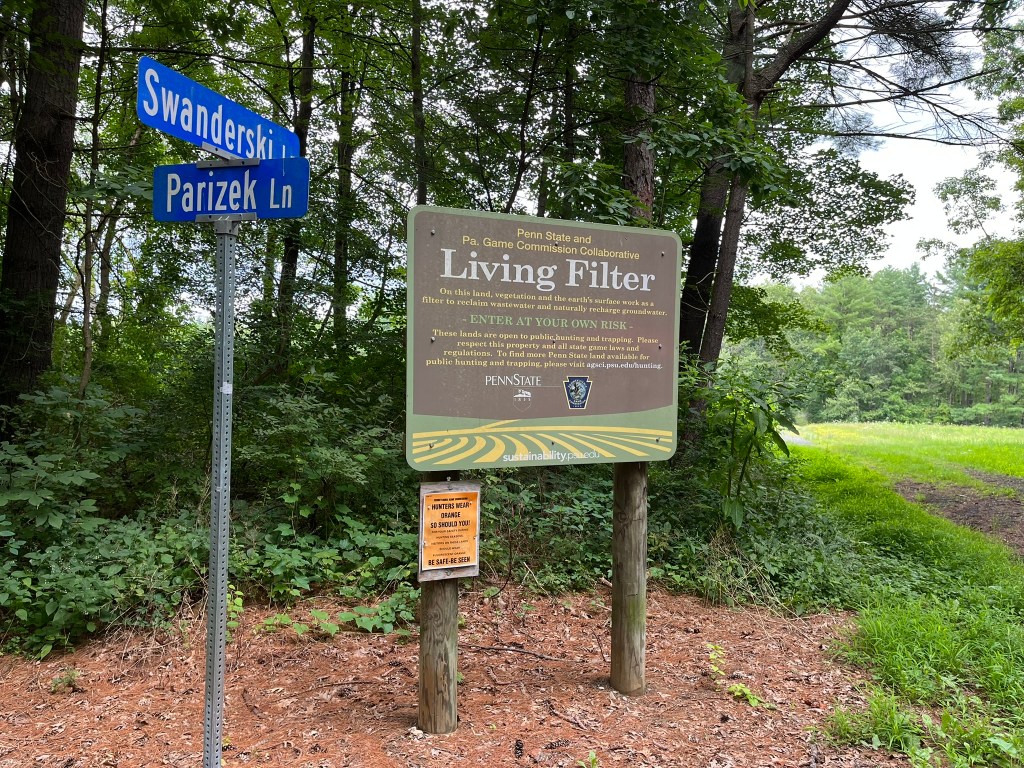
Last Sunday, I packed a bag and dashed out the door to reach Penn State’s Living Filter in time for the 1:00pm guided tour. I wasn’t sure what to expect… I had gathered from promotional materials that the Living Filter was an experiment, yet also an established wastewater management practice. From the guided walk, I learned the Living Filter was much more than what met my eye.

Dr. Preisendanz from the Department of Agricultural and Biological Engineering met us at the sign-in station to share the history of the Living Filter. For almost four decades, Penn State has used their wastewater effluent as forest and crop irrigation. The hope is that after nourishing the plants and crops, the water will recharge groundwater aquifers. Wastewater is sprayed over the foliage using aboveground pipe systems. This wastewater is some of the cleanest wastewater around- Penn State recently upgraded their wastewater treatment facility to better treat the wastewater from University Park campus and part of State College.

Penn State staff, faculty, and researchers play an active role in maintaining the Living Filter. To ensure proper safety and security of the pipes, staff manually turn on and off the sprayer systems and handle the collection of samples for researchers. Working together, they have managed to eliminate the direct discharge of wastewater into streams and assist in maintaining the base flow of Spring Creek. Plus, this system supports different crops which are used to nourish research animals, eliminating the need to purchase and transport commercial feed.

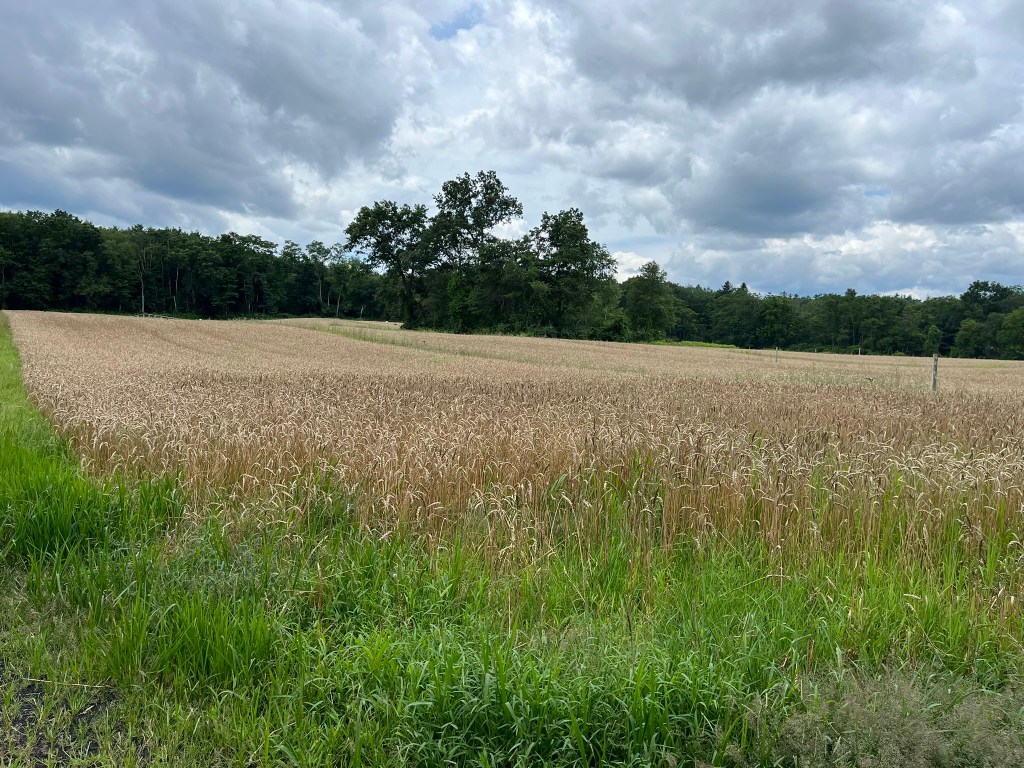
During our walk, we soaked in the lush foliage around the service roads. Thick bushes of jewelweed lined our walking path. Grain crops emanated a warm and comforting glow over the hills. Climbing up over the grain fields, we passed into fields of tall, strong corn. While the hedgerows were not perfect, they were tidy. However, not all plants love the nutrient-rich water. Some trees, most of species that prefer dryer territory, were fading or even already dead. Penn State technical service staff maintain the safety of the Living Filter by removing any dead trees before, or immediately after a tree goes down.

While the Living Filter is an inspiring facility, what caught me by surprise was the investment of the community members attending the outing. Our small crowd was certainly a mix of ages, experiences, and knowledge. We stopped multiple times during the walk to ask Dr. Preisendanz questions, which she met with enthusiasm. I felt comfortable in this group of (mostly) strangers, and happy to listen to the discussion surrounding wastewater management and sustainable agriculture. I learned that the morning group was larger and had even more questions than us. The 11:00 am group took over an hour, while ours was just under!

On my way home from the outing, I drove past the site of the old Radio Astronomy Building. Now a decommissioned special services building, the area of what used to study celestial objects using radio waves now is the home of the Living Filter’s second half. I didn’t stop to check it out as I was unsure of the permissions one would need to see it for themselves. The initial portion of the Living Filter, on State Game Lands 176, is publicly available. However, be warned that the sprayers are turned on for all other days- even in the middle of winter.

I enjoyed my visit to Penn State’s Living Filter. The “lesson” was fun, the walk was easy, and the attendees were interesting. While this place is checked off my To-Visit List for the Summer, it’s on my To-Visit List for the Winter. Dr. Preisendanz shared the area is a winter wonderland starting in December and worth the trip. For now, when I wash my dishes in the breakroom sink, I know the water will exit the system at the Living Filter!

Late Winter at Hort Woods

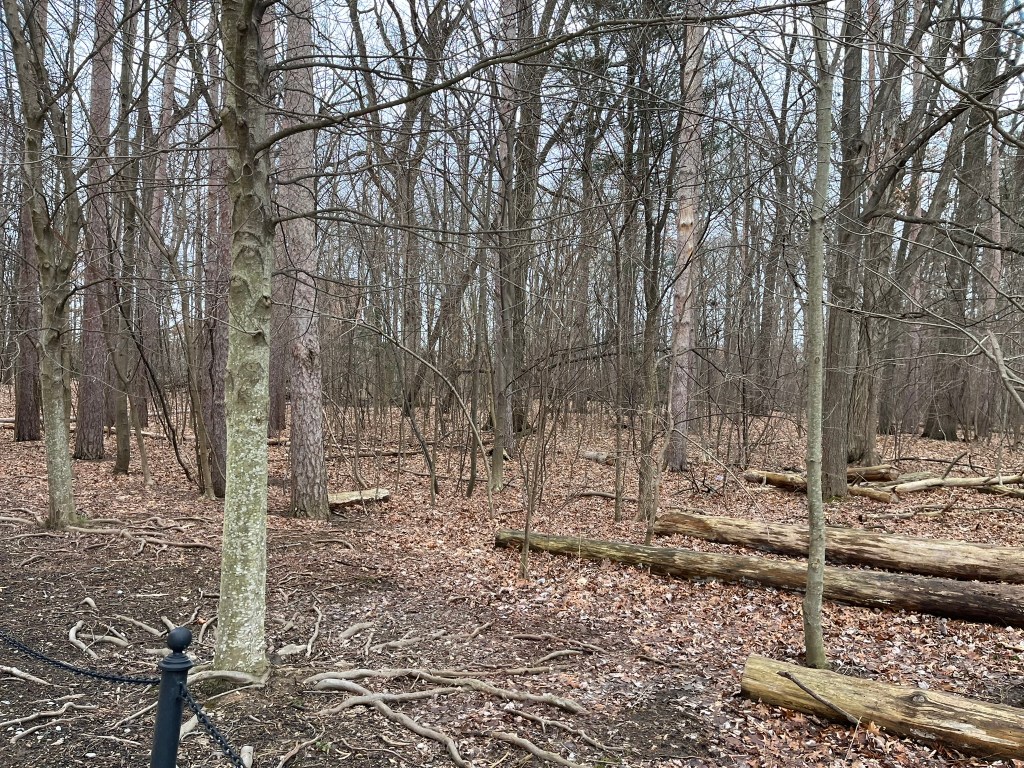
The March winds pushed me as I hurried down the sidewalk to Hort Woods. Traffic zipped by, and students shivered as they ran from dorm to dorm. Even though I’ve taken hundreds of walks on campus, I’ve never taken a dedicated walk through Hort Woods. This past Thursday I spent a half-hour in this historic grove of trees at University Park.

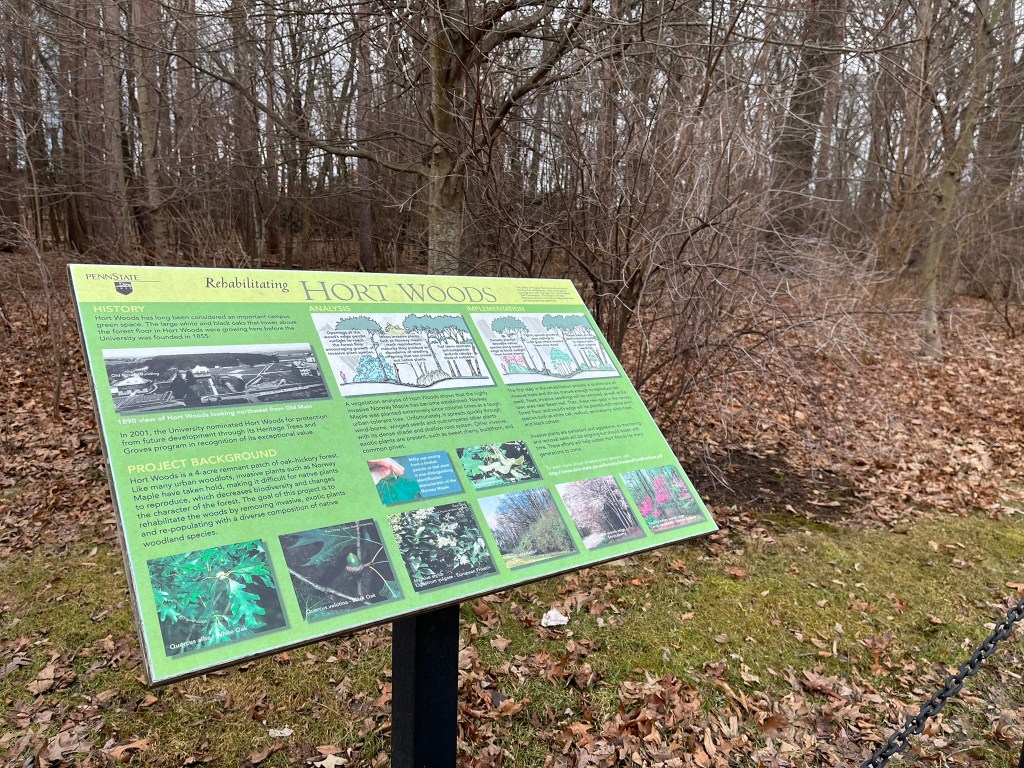
In 2001, Hort Woods earned “Heritage Grove” status at Penn State. In the 1800s, Hort Woods stretched from central campus to the Penn State Arboretum site. The original Hort Woods was cleared for construction. The remaining patch of land contains some surviving trees, or at least their progeny. Yet, by the 2010s, the area had become degraded by invasive plants. The Penn State Eco Action Club partnered with Penn State OPP to rehabilitate Hort Woods. Supplemental funding from the Penn State Student Fee Board helped the project along. Rehabilitation included removing invasive species and replanting with the Miyawaki Method.

On my walk, I followed the sidewalks surrounding and through Hort Woods. Despite the dormant landscape, the tract of trees was humming with life. I first spotted a Red-Bellied Woodpecker digging through a snag. Right after, a Downy Woodpecker flitted over my head. I heard the high calls of American Goldfinches and House Finches in the canopy. A Merlin recording revealed more species: Black-capped Chickadees, Dark-eyed Juncos, and White-breasted Nuthatches.

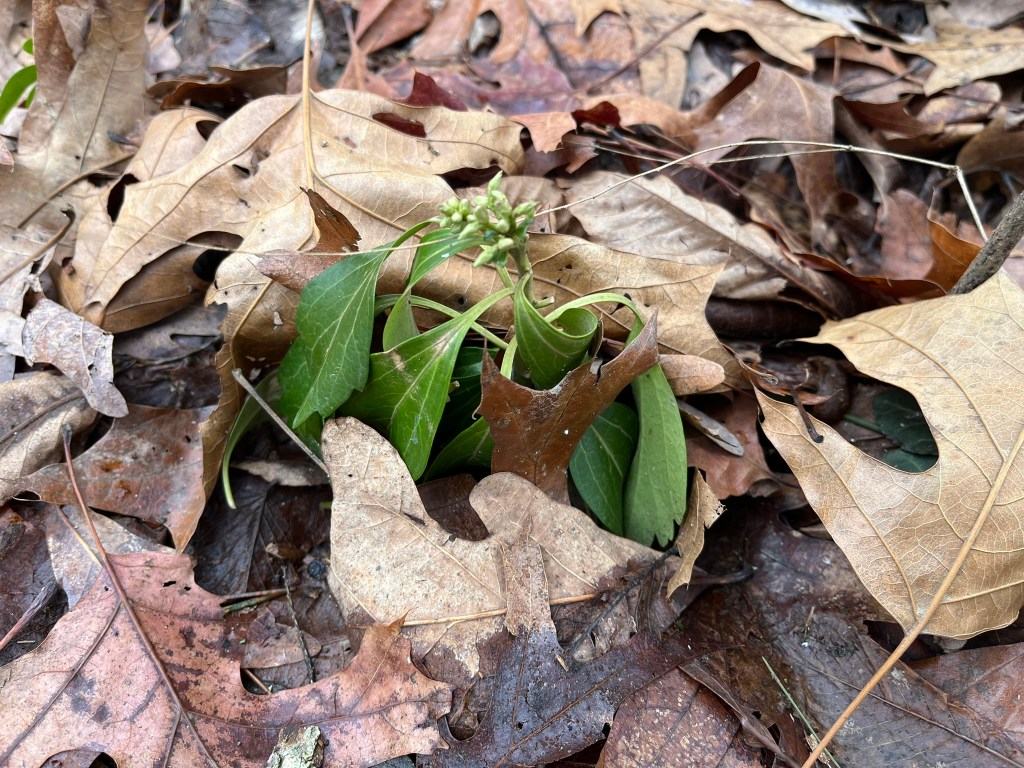
Along the sidewalk in some areas, small green plants were pushing up through the leaf litter. A check with iNaturalist revealed them to be Japanese Pachysandra. In other sections, English Ivy trailed along the ground and up the trunks of trees. English Ivy, while pretty, is difficult to eradicate. The ivy reminded me that eradicating invasive species requires many years of effort. Penn State is making that effort by implementing a sustainable landscape plan.

Derek K., Senior Landscape Architect and Eco Action Club Adviser, shared the University Park Campus Sustainable Landscape Implementation Plan with me via email. The plan mentions “Restoring the Legacy of Hort Woods” as a major action item. The goal of the project is to restore native species and develop the area into a 4-acre swath of healthy habitat. The action plan utilizes straightforward management techniques familiar to non-foresters like myself. Penn State is focusing on soil decompaction, low- or no-till methods, and composting. From my experience, I know these plans will be executed as carefully and thoughtfully as funding permits.

Late winter can be a depressing time of year. My walk tempered this feeling, and I left hopeful for what is in store for Hort Woods. By exploring this one patch of wood, I learned I’m one of many that care deeply for Penn State’s landscapes. Hort Woods is now a part of my walks, and I’m excited to observe the changes as we transition into Spring.

Works Cited

Penn State University. (2014, November 8). Heritage tree groves: G-6. The Pennsylvania State University. https://web.archive.org/web/20141108064008/http://lorax.opp.psu.edu/trees/heritage/groves/hgrove.jsp?ID=G-6

Penn State University. (2012, February 13). Hort Woods rehabilitation project to begin soon. https://www.psu.edu/news/university-park/story/hort-woods-rehabilitation-project-begin-soon

Stephen Stimson Associates Landscape Architects, Inc., Phyto Studio, Climate Positive Design, & The Pennsylvania Horticultural Society. (2024). University Park Campus Sustainable Landscape Implementation Plan. Penn State University.

Midwinter at the Arboretum

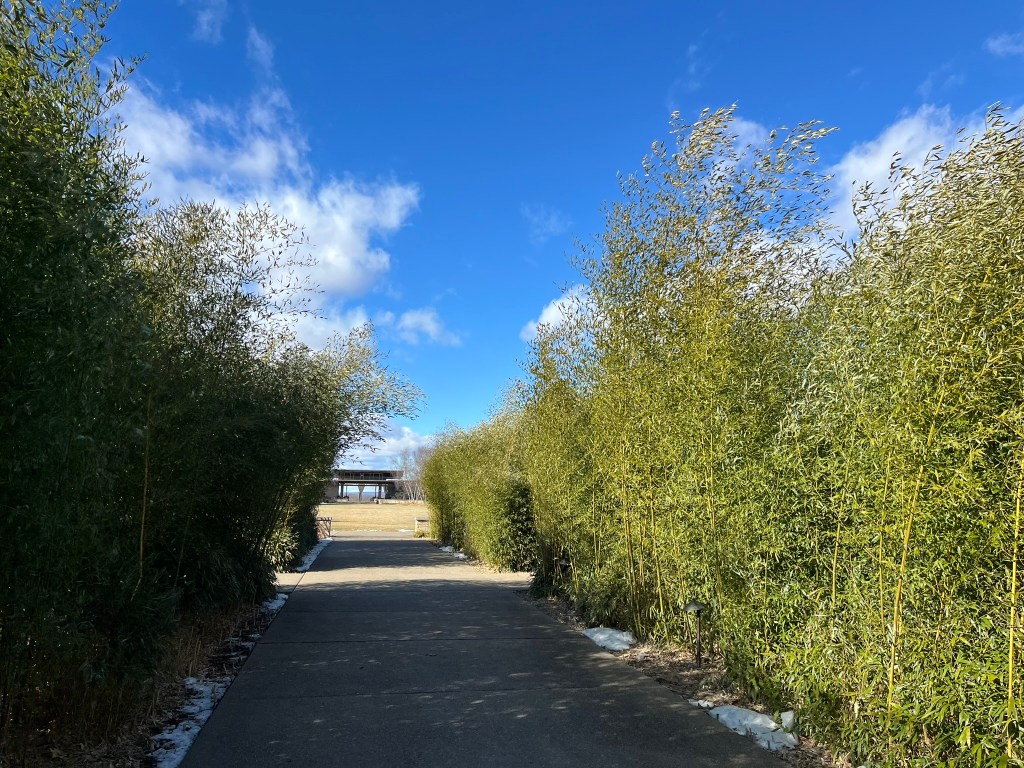
Lime-green stalks of bamboo greeted me as I entered the Arboretum at Penn State. This wonderful, ever-changing botanical garden always captures my attention and imagination. Even at midwinter, I enjoy spending my midday break walking among the dormant plants.

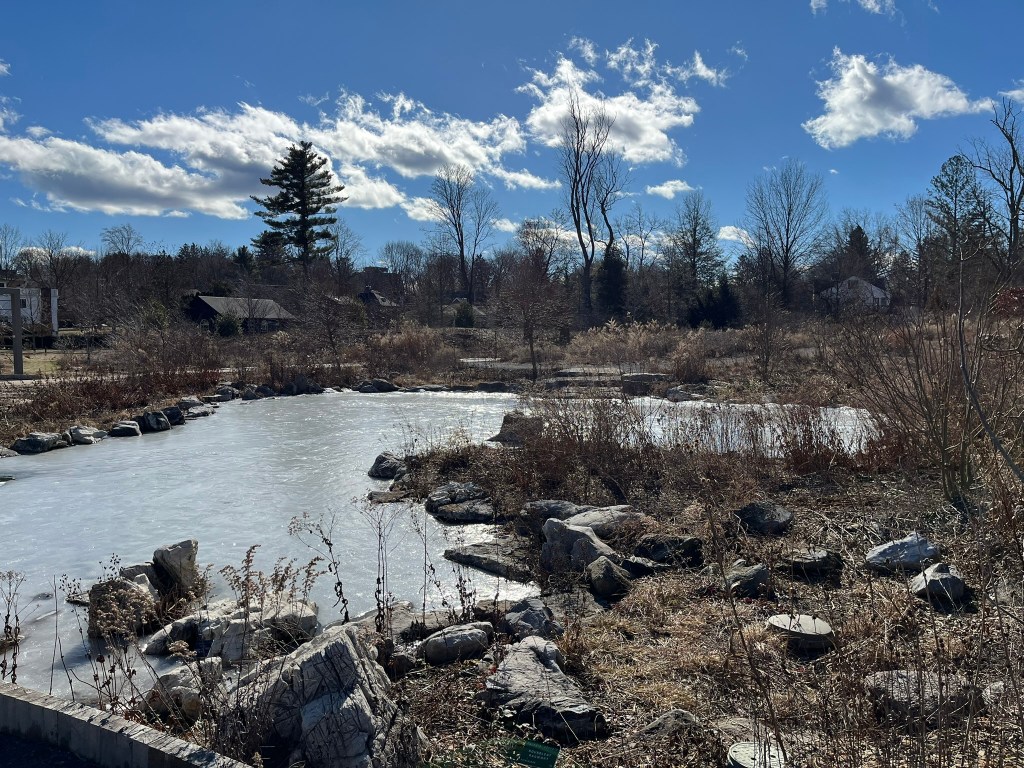
I always start with the Oasis Garden. Taking the first left, I wandered through and spun the ice on the Lotus Pool. The walls protected me from the wind as I poked around the plants. Very little was growing here, with most fading away into the mulch. The Rose and Fragrance Garden was more promising. The little buds peeping from the tips of branches signal oncoming Spring. As I finish looping through, a gust of wind shakes the waxy magnolia leaves, causing them to clack like bones.

The walled gardens lead into the Pollinator and Bird Garden. Here the wind gusted, unobstructed by trees or hedges. I pull my shawl closer to my neck and continue to the pond by the Pollinator Plaza. From the top of the willow house, a Song Sparrow calls, spinning around on its perch to watch me. Most other birds are flitting overhead, or on a beeline to the Bird House.

The small wooden building is a relief from the wind. Another visitor is sitting on the porch, so I veer to the back and rest on the bench to watch the feeders. Dark-Eyed Juncos were tumbling over each other as they dig through the mulch for seeds. From the tops of the evergreen trees, a Blue Jay crunched a peanut. After a few minutes, a trio of Black-Capped Chickadees swept in to chase House Finches. I could- and I have- spent hours in this exact spot. Yet with my break ticking to a close, I knew I needed to keep going.

The Pollinator and Bird Garden connects to an esplanade with a giant sundial. The sidewalks border the Children’s Garden. I veered left into the Children’s Garden and entered the faux cave. Cold water dripped from the ceiling, most likely ice melting from the roof. The path carved through the cave, then out and behind the Glass House. Grey and black squirrels danced in the trees overhead as I walked. An employee was tending to the garden, and I stayed out of their way as best as I could.

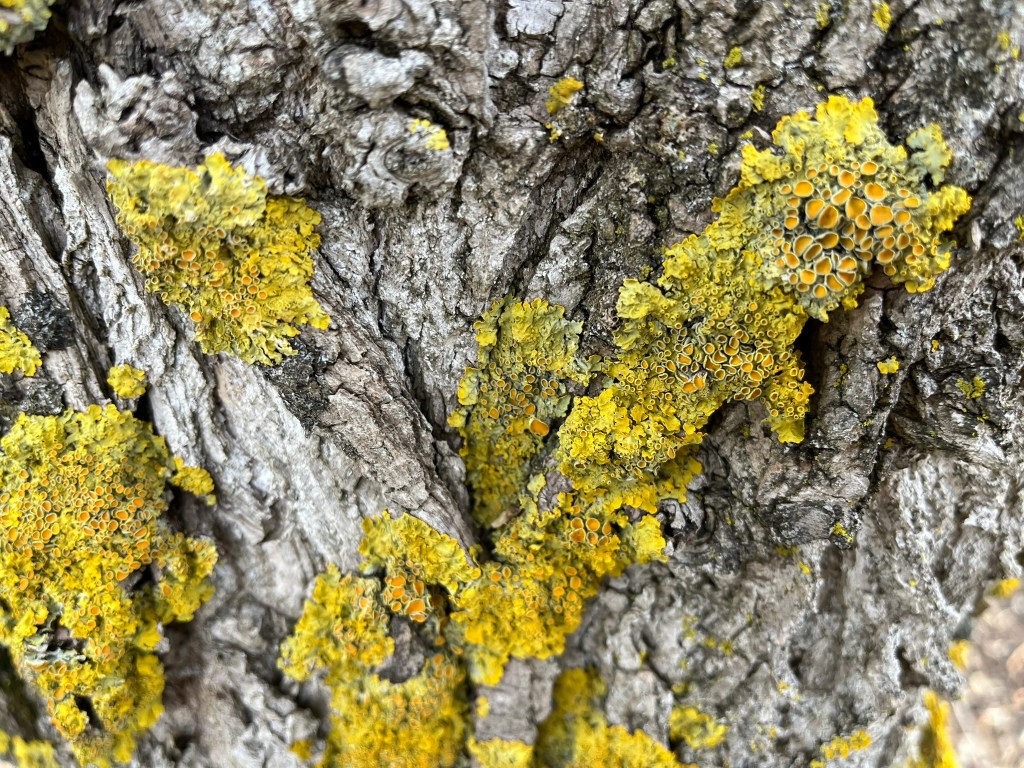
From the Children’s Garden, I followed the the Strolling Garden path to the Poplar Court. The Black Poplars stretched high into the sky over my head. I wove in and out between the trees, admiring the neon yellow and neon orange lichens. Most appeared to be a species from genus Candelaria. (I’m still waiting for some confirmations on iNaturalist now.) I took as many pictures as I could before I hurried back to work.

Xanthoria parietina (Common Sunburst Lichen)

Even though there were few blooming flowers, the Arboretum is still full of life in winter. From lichens to songbirds, there is a little bit of something for everyone. During my walk, I found a pamphlet rack, which had a booklet on trails in Hartley Wood. As I’ve been walking, I’ve been planning the rest of this year’s adventures… which won’t take me very far at all!