Tag: pennsylvania

  • Practicing Bird Photography

    Practicing Bird Photography

    Fresh snow coated the earth on Monday morning, making my daily birding easy from my spot at the window. Birds came and went, the usual suspects… Mourning Doves, Purple Finches, Tufted Titmice, and a Dark-eyed Juncos. Despite looking at birds more than my laptop, I didn’t see any American Goldfinches like I did the day before. At last, lunch came, and I could try something new: sneak out with my camera and take some pictures.

    I bought a Canon Rebel T6 off of Facebook Marketplace two months ago. After replacing the batteries and buying an SD card, I haven’t had a chance to use it. I’ve been studying on how to best take pictures, but all advice pointed to “practice makes perfect.” I changed out to the larger zoom lens from my kit and slipped on my boots to wait on the porch for birds.

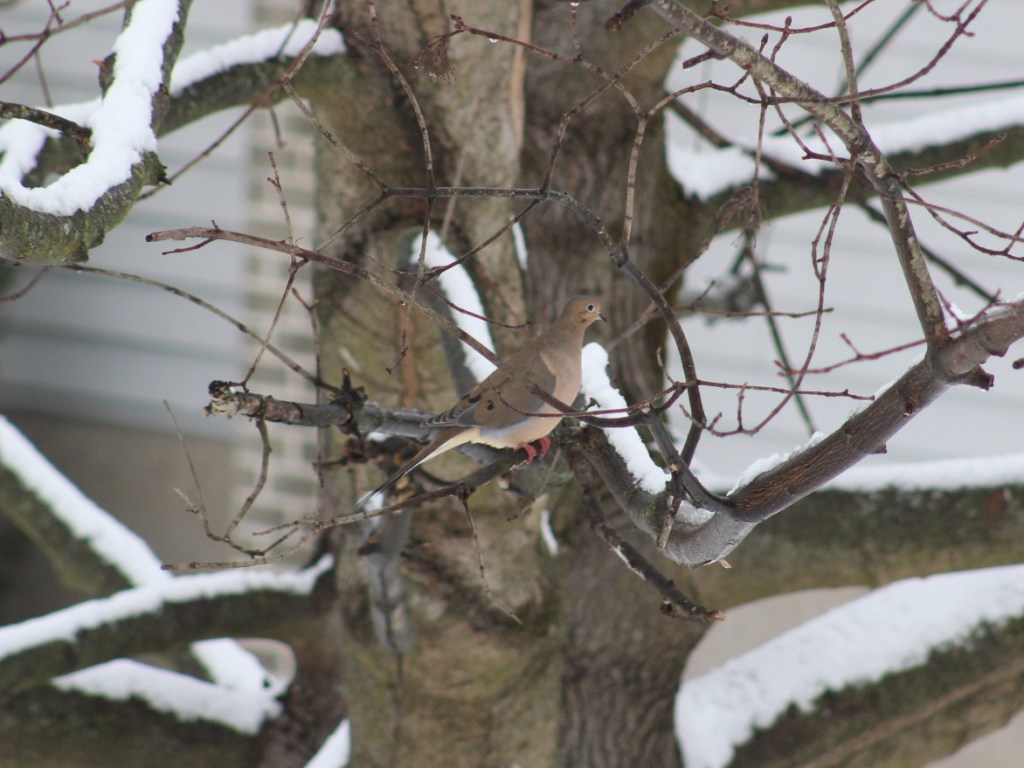
    A handful of birds took off the second I opened the door. Left behind were two confused Mourning Doves. One belatedly shot into the upper canopy of the maple tree, too far away for me to capture in a photo. The other chose a lower spot, eyeing me as I stood still on my porch. I snapped a couple shots in quick succession before it, too, left for higher branches.

    After about three minutes, the Tufted Titmice swarmed back into my feeders. At least three small family units visit my feeders daily. One brave bird swooped into my light-blue metal hopper and stole away with a sunflower seed. Others were dangling off the branches of the maple tree, waiting for their turn.

    The Tufted Titmice were hard for me to photograph. They sprint across the yard, and when landed at the feeder, they antagonize each other. Of course, it’s in their nature to dine-and-dash, preferring to crack seeds at a high, safe spot than down at the feeder. Tufted Titmice also form hoards of food over the winter, so some will grab a seed and disappear. It was easiest to photograph them when they were watching me for sudden movements. The entire time I was photographing the Titmice, I was holding my breath!

    I watched them come and go for ten minutes- Titmice dominate my feeders at any point during the day. A Red-Bellied Woodpecker flew overhead, and decided to not munch at the suet upon spotting me. A handful of Dark-eyed Juncos came to forage on the ground, but I missed a chance at photographing them. Their dark upper halves contrasted too much against the snow and white bellies.
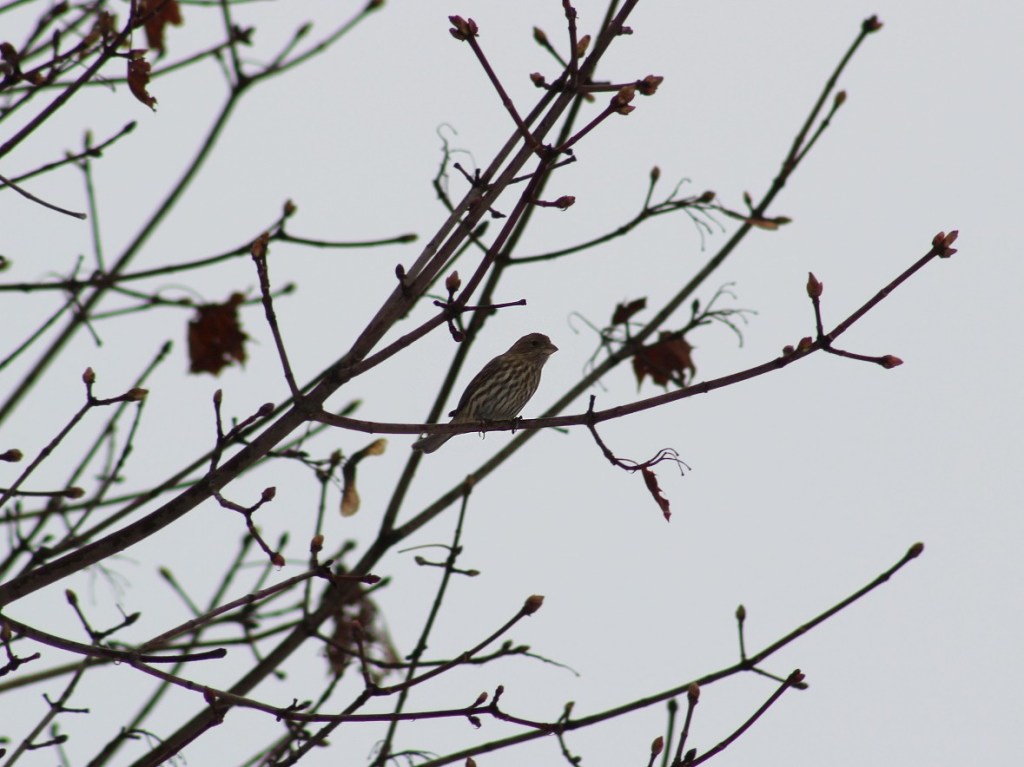
    As the end of my lunch drew near, the birds started to dwindle in my yard. My neighbor’s feeder, out of my camera’s view, was bustling with Purple Finches. I can imagine the birds felt safer with the shrubs and arbor between me and their tiny bodies. With their feeder so busy, a small group of birds waited on the far branches of the maple tree.

    I leaned on the support of my porch roof as I zoomed into their spot. My movement scared away all except for one female, who ignored my existence. With the light misty sky behind her, the shot appeared too dark on my camera. Dejected, I went back inside, feeling that my experiment was a failure.

    At my desk, I fumbled with the camera settings to import the pictures to my iPhone. I almost gave up in frustration, but with the help of a Youtube video, I figured it out in the nick of time. The last five minutes of my lunch break was total awe, admiring my pictures. I had never, in my life, taken a picture of a bird. I could see the subtle colors of the Mourning Dove and the gleam of a Titmouse’s eye. Satisfied, I put my camera away and went back to work, planning the next time to photograph birds in my backyard.
  • 2024 CoCoRaHS Year in Review

    2024 CoCoRaHS Year in Review

    I learned about Community Collaborative Rain, Snow, and Hail Network (CoCoRaHS) in 2020. At the time, I didn’t have the cash I needed to invest in the proper gear, or the place to set up a station. Flash forward 4 years, I’m now measuring precipitation every morning in my backyard.

    The process is a simple daily ritual: check a standard rain gauge every morning and upload the data to the site. The best time to check is between 6:30am and 9:00am. You can use the CoCoRaHS website or their mobile app. The process is quick- on average, it takes me about 3 minutes every morning.

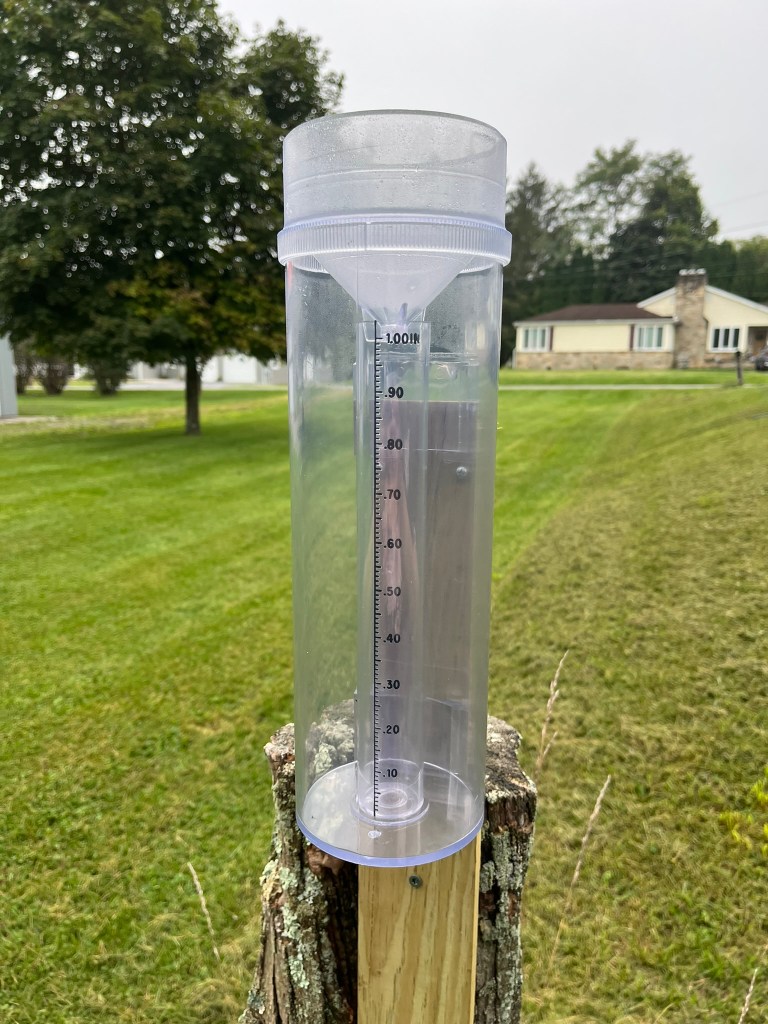
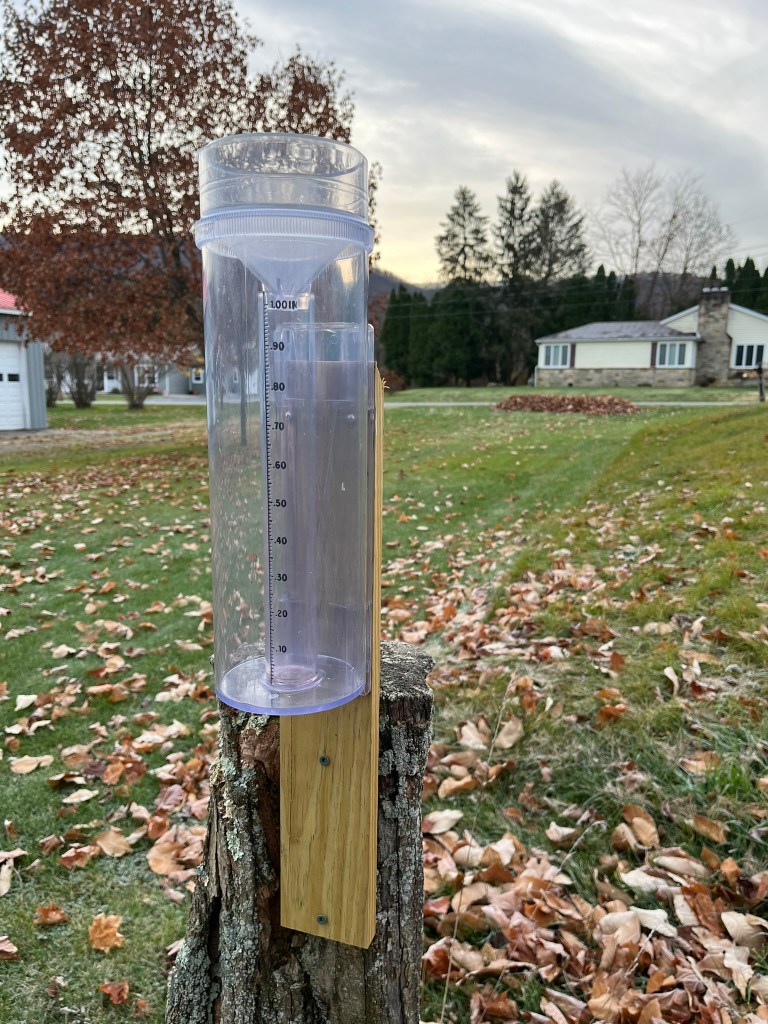
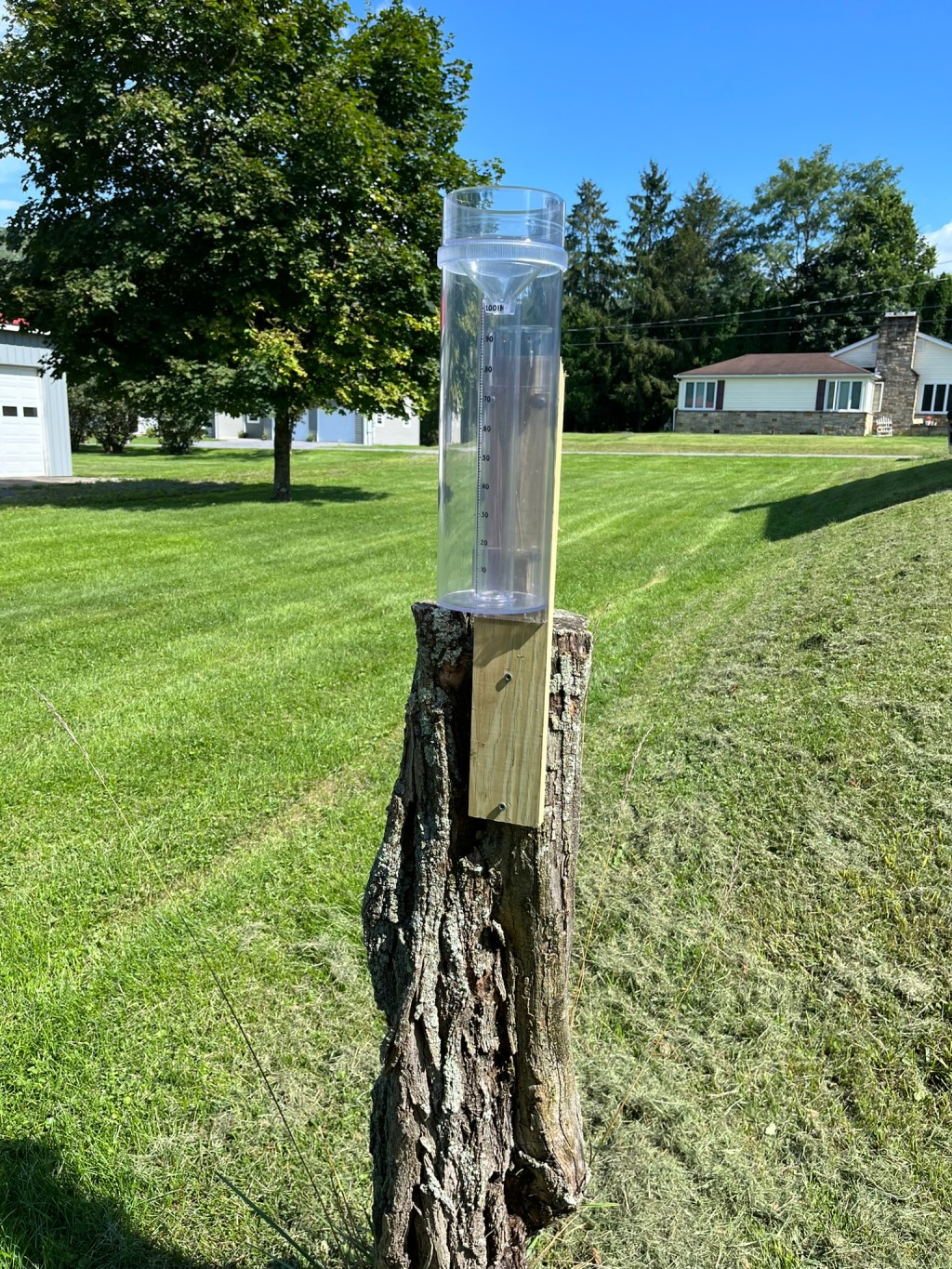
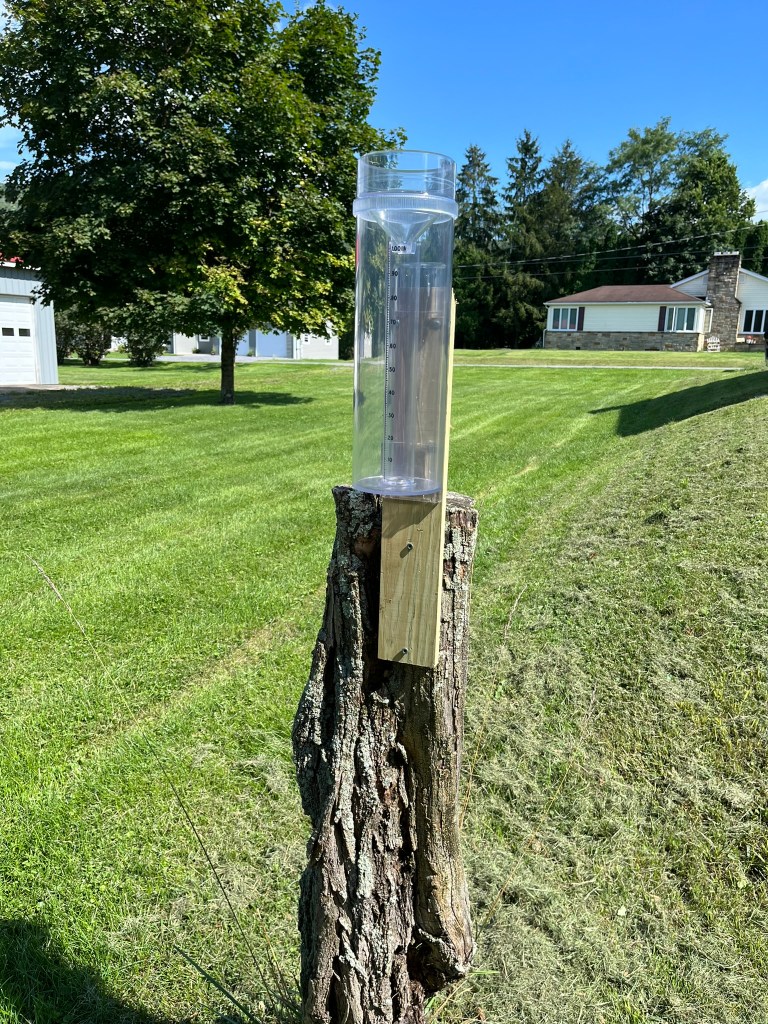
    I started my gauging station on August 13, 2024. I’ve reported a measurement for 124 days this year- so far! My grandfather helped me install my gauge on an old post in my backyard. CoCoRaHS HQ provides lots of training resources for selecting a spot and setting up. You can buy cool signs for your station, to let people know what you’re doing!

    Since commencing operations, I’ve measured 10.94″ of precipitation. According to the CoCoRaHS Data Explorer, this is Below Normal for the year. I definitely agree- we have had less rain this fall and early winter than in previous years. By gauging precipitation in my yard, I’m tracking climate change in real time.

    Rain gauging has made me more aware of the weather, and how it’s influencing my environment. I started to be able to correlate days without rain and my browning grass… and how we received most of our rain in heavy storms. I could track the days between a hurricane making landfall in the south and when we would receive its rains. I can do the same for lake effect snowstorms- it takes 3 days for the snow to travel south from Erie!

    Right now, I’m only tracking precipitation collected in my gauge. I have yet to need to calculate SWE (Snow Water Equivalence) or measure ice accretion. I don’t yet have a snow board, which I’m going to make during my winter break. Plus, participants can make weekly conditions reports, of which I have yet to try.

    I’m also branching out from the CoCoRaHS website and sharing on Instagram. I started a highlight for all my daily gauging pictures on my Story. Recently I posted a Reel on how to take a precipitation measurement from ice. As Centre County Coordinator, it’s important to me to get the word out and share how simple the “daily ritual” is… less steps than my morning skincare!

    Looking back on the year, I can say I’ve had a positive experience. Even though I’m staring down climate change in the face, I’m hopeful. Thousands of Americans, all over the country, are taking notice of the weather. Our data is helping scientists form new models and predictions… which can help everyone make better choices in response to weather.

    If you’re interested in CoCoRaHS, feel free to send me an email! I’m happy to help connect you to the resources to get started. Anyone can gauge, anywhere in the world and take part!

  • 2024 eBird Year in Review

    2024 eBird Year in Review

    Birding is one of my favorite hobbies, and I try to squeeze in as much as I can. With my work schedule and life schedule, I’ve had minimal time birding until this past Fall. I learned about eBird this summer, and I’ve been growing my life list ever since. I’ve observed 43 species this year, and lucky enough to make memories at the same time.

    First was when I went birding at Fisherman’s Paradise with the State College Bird Club. Observing the Great Blue Herons interacting with the Bald Eagles was new and exciting for me. I blogged about the trip on September 29th on Birding at Fisherman’s Paradise.

    My second memorable trip was birding at Soaring Eagle Wetland (SEW). While the birds I saw there were not new to me, exploring the area was exciting. SEW has many active projects, and when I visit again, it will still feel like a brand-new place. I blogged about the trip on November 3rd on Early Fall at Soaring Eagle Wetland.

    Another recent memory- I was birding with friends at Bald Eagle State Park will go in the books as a highlight. We were chatting on the beach area when one of my friends spotted an unusual bird out on the water. I focused my binoculars and discovered a Common Loon in winter plumage. It was my first-ever Common Loon, and having spotted it with friends felt extra special.

    There’s still plenty of time to bird this winter. I’m participating in Project Feederwatch until it finishes in April. I’ve had a blast spending weekend mornings observing my backyard. There is a Downy Woodpecker that visits every day at 11:00am, rain or shine. Plus, Tufted Titmice are a daily treat, bringing joy to every morning. Visiting a winter raptor survey is on my to-do list, something I’ll share here when the trip concludes.

    2024 was a successful year for birding. Despite not birding 24/7 all year, I’ve been able to make memories, add to my life list, and take part in fun projects. The rest of this winter and next year look to be even better. I’ve developed my identification skills and am working on becoming a better photographer. I can’t wait to share with you what comes next!

    2024 Bird Species

    • Turkey Vulture
    • Eastern Bluebird
    • Common Merganser
    • European Starling
    • American Robin
    • Red-tailed Hawk
    • Mourning Dove
    • Red-Bellied Woodpecker
    • American Crow
    • House Finch
    • Dark-eyed Junco
    • Red-winged Blackbird
    • Northern Cardinal
    • Black Vulture
    • American Goldfinch
    • Field Sparrow
    • Common Grackle
    • Common Nighthawk
    • Great Blue Heron
    • Bald Eagle
    • Ring-billed Gull
    • Black-capped Chickadee
    • Eastern Phoebe
    • Tree Swallow
    • Cedar Waxwing
    • Double-crested Cormorant
    • Osprey
    • Killdeer
    • Blue Jay
    • Chipping Sparrow
    • Tufted Titmouse
    • Wood Duck
    • Mallard
    • Grey Catbird
    • Downy Woodpecker
    • Pileated Woodpecker
    • White-breasted Nuthatch
    • Carolina Wren
    • White-throated Sparrow
    • House Sparrow
    • Song Sparrow
    • Canada Goose
    • Common Loon
  • My Favorite Place: Rattlesnake Rock

    My Favorite Place: Rattlesnake Rock

    When I was a little girl, my family often took day trips to Wellsboro, Pennsylvania. In truth, “day trip” is a misnomer- any time my Dad turned the family van left out of Avis, we started a pilgrimage. Dedicated worshipers we were, visiting the same places year after year. Pictures, picnics, and family memories dot the mountains around Rt. 44 and Rt. 414.

    The forests in the High Allegheny Plateau are gorgeous, and almost wild. Now, there is little in the way of industrial improvement, and the remnants of an agrarian past lie fallow. A handful of homes tucked between the small towns, and the woods are full of hunting camps. Hiking trails, fishing holes, and canoe launches are everywhere. The Pine Creek area is an outdoorsman’s dream.

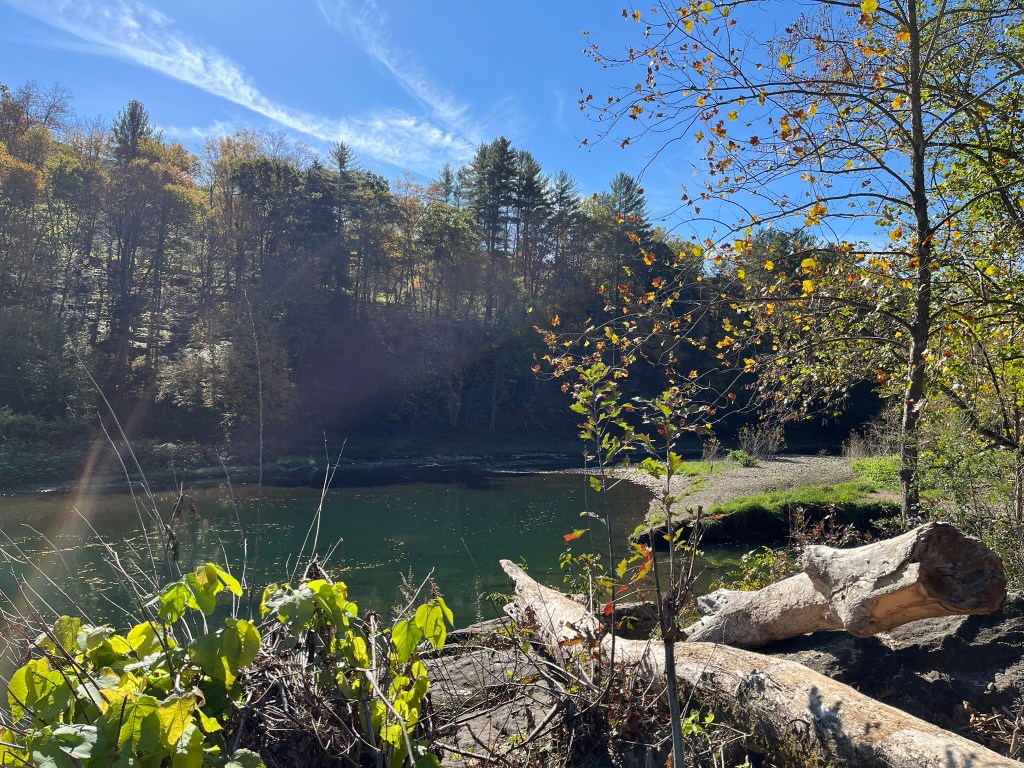
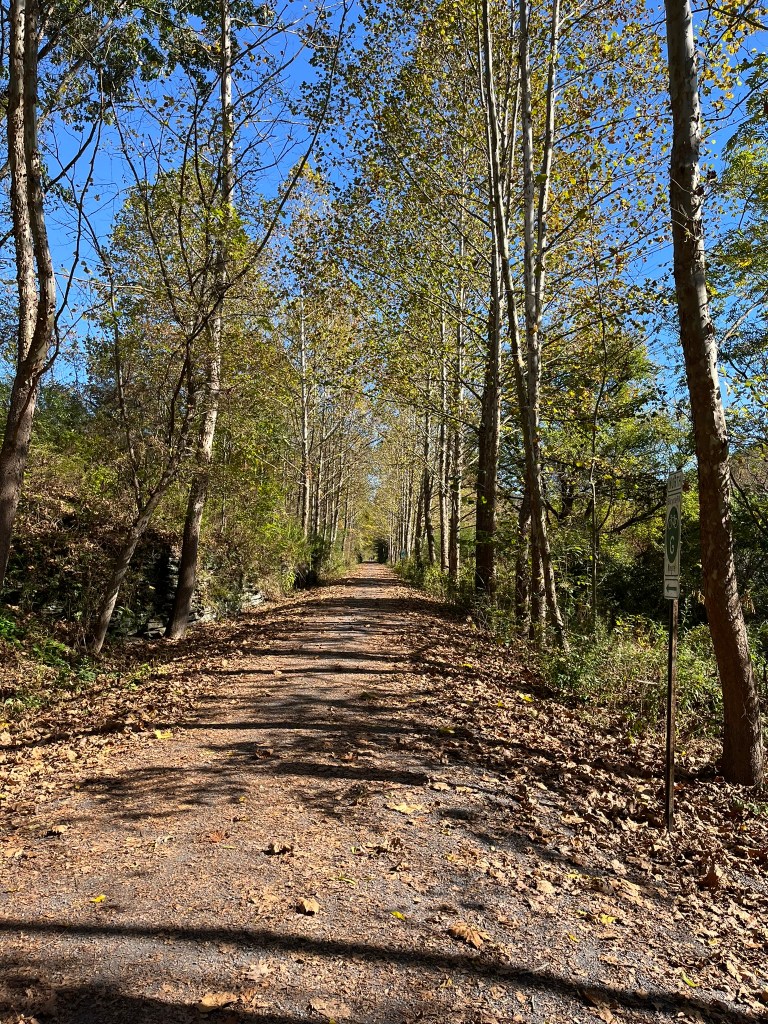
    Between Cedar Run and Blackwell is my most favorite place in the world, Rattlesnake Rock. Tucked into a bend of Pine Creek, the rock juts out over the water, offering a beautiful 180 degree view. A short spur trail off the Pine Creek Rail Trail connects the Rattlesnake Rock Access Area and the rock.

    As a child, my parents would pack us snacks to have while sitting on the rock, dangling our feet over the edge. In all my life, I have never seen a snake at Rattlesnake Rock, but I have seen evidence of other wildlife. Once, while visiting in the winter, we found an otter slide down the hillside and into the water. Another time, a shift in the rocks revealed an owl’s nest full of feathers and pellets.

    In Philip Tome’s Thirty Years a Hunter, he shares a brief interlude at Rattlesnake Rock. He claims that the location was a stopover for traveling Native Americans. The high rock over the water would make a safe vantage point, being able to see upriver and downriver. He camped there overnight and moved on. The story led me to search for his fire ring- even though I was visiting in the early 2000s, almost 200 years after!

    Beauty and history aside, Rattlesnake Rock is a geological curiosity. A recent study from Mansfield University claims that Rattlesnake Rock originates elsewhere. Research shows that Rattlesnake Rock is not in aligned with nearby bedrock. This suggests translocation of a block rather than deposition of sediments. The authors believe this happened during the formation of the Pennsylvania Grand Canyon… making Rattlesnake Rock a periglacial feature!

    In college, I would drive to Rattlesnake Rock to retreat from the world. During periods of high stress or anxiety, I would leave a note for my friends and take off to unplug from the world. With the water swirling below me, and the sounds of bikers silenced by the thick trees, I could relax. Sometimes, I would take a book and bask in the sun while reading, and once, I took a nap. I have never felt alone at Rattlesnake Rock- instead, I felt immersed in the wild world and at peace.

    For the twenty years I have been visiting, I have changed, and so has Rattlesnake Rock. More flora has crept in, and the rock worn smooth from many exploring feet. Parts of the rock have sloughed off into Pine Creek, and the water fluctuates every season. Yet, the heart of the place is the same- wild and wonderful.

    Works Cited

    Murphy, K. (2022). EVALUATING THE ATTITUDE OF RATTLESNAKE ROCK FROM THE PINE CREEK GORGE, LYCOMING COUNTY, PENNSYLVANIA. Confex.com; GSA. https://gsa.confex.com/gsa/2022NE/webprogram/Paper374904.html

    Tome, P. (1928). Pioneer Life; Or, Thirty Years a Hunter. Being Scenes and Adventures in the Life of Philip Tome.

  • Picnicking at Penn-Roosevelt State Park

    Picnicking at Penn-Roosevelt State Park

    The turn off Old Rt. 322 onto Crowfield Road is innocuous. The road passes under the bridges and takes a sharp left, headed towards a small cleft in the valley. Cruising in my Jeep Patriot that day, the abrupt change from pavement to gravel woke my partner up from his nap. The 6-mile road up valley was a beautiful drive- one I had never seen before.

    Up the mountain we climbed, passing many tidy hunting camps. The road reminded me of the way to my great-grandfather’s hunting camp. I mused on childhood memories while driving, and partner fell back asleep. Far too soon, we reached the rear entrance of Penn-Roosevelt State Park.

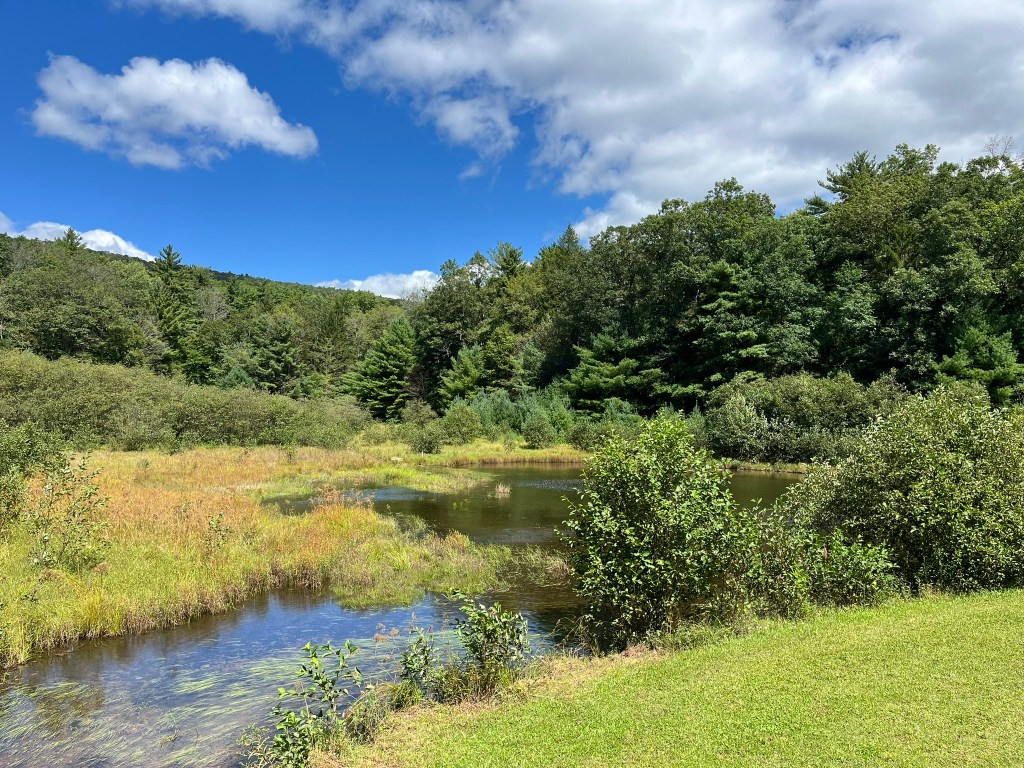
    From behind, there are only signs to signal the entrance to the Park. The road splits off in two directions: a hard left turn over a bridge, or a gentler right turn downhill. First, we took the right-hand road, passing by the impoundment lake, picnic area, and CCC ruins. I turned around in a pull-off and headed back up to explore the other side- the tenting area.

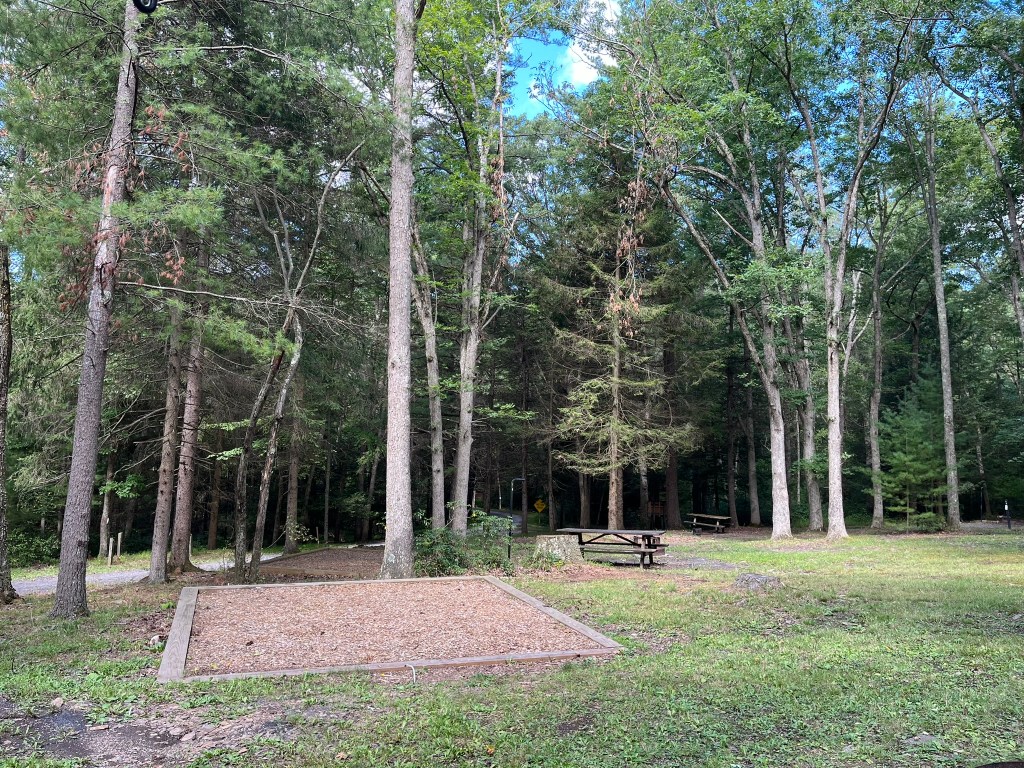
    We decided to picnic in the tenting area, as it was close to the vault toilets and a bearproof trash can. A few families were camping- the Park felt empty in comparison to Bald Eagle State Park. Yet, there was a subtle bustle and we had our meal and played card games in the quiet of the woods.

    After a while, we hiked over to the impoundment lake, the largest remnant of the CCC camp which was here in the 1930s. S-62-PA, otherwise known as “Stone Creek Kettle” or “Penn-Roosevelt,” was 1 of 12 Black CCC camps in PA. Despite legislation calling for integrated facilities, CCC camps were segregated. Many, like Penn-Roosevelt, were purposefully placed in remote areas.

    When the CCC workers arrived, there were no improvements. They had to build their lodgings themselves, camping in old Army tents. Throughout the CCC era, the men helped fight forest fires and aid in rescue during floods. Their work made a lasting impact on the area; some of the facilities they built are standing today.

    The facilities here are simple, but beautiful. The impoundment lake has started to silt in, with the forest taking over. In the 1960s, the DCNR covered the original dam and created the small side spillway visible today. The restored hearth of the original recreation building is close by the day-use area. Other ruins were nearby, but we didn’t have the chance to explore them.

    While ambling through the Park, I thought a lot about the geomorphology of the area. Stone Creek Kettle is not an actual kettle; a type of depression formed at the edge of glaciers. After some research, I couldn’t find any explanation for the name. DCNR recommended to contact Mr. Fagley, retired Greenwood Furnace State Park educator. He shared with me that in early America, folk considered any bowl-like feature a kettle. Mr. Fagley also mentioned in his e-mail that “neither the First nor Second Geological surveys of PA, both conducted in the 19th century, don’t mention the “Stone Creek Kettle” by this name, though do briefly mention the area and noted its geologic structure.”

    After hiking around, we packed up for the day and headed back out Crowfield Road. Six miles later, we were on Old Rt. 322, headed for home. I wondered what the men of S-62 would have thought about the changes… what may have taken them hours or days to hike into the woods cost us an hour and a few dollars in gas.

    Works Cited

    DCNR. (2018, February 21). Recognizing the Conservation Work of Black CCC Companies in PA. Good Natured; Pennsylvania Department of Conservation and Natural Resources. https://www.dcnr.pa.gov/GoodNatured/pages/Article.aspx?post=33

    DCNR. (2019). Penn-Roosevelt State Park. Pennsylvania Department of Conservation & Natural Resources. https://www.dcnr.pa.gov/StateParks/FindAPark/Penn-RooseveltStatePark/Pages/default.aspx

    Fagley, P. (2024, September 11). Stone Creek Kettle Question [E-Mail to Autumn Dannay].

    McNeil, A. (2022). Moving Forward Initiative: The African American Experience in the Civilian Conservation Corps. The Corps Network. https://corpsnetwork.org/moving-forward-initiative-the-african-american-experience-in-the-civilian-conservation-corps/#:~:text=To%20reduce%20community%20outcry%2C%20many

    Pennsylvania CCC Online Archive. (n.d.). Camp Information for S-62-PA. Pennsylvania CCC Online Archive. Retrieved September 20, 2024, from https://www.iframeapps.dcnr.state.pa.us/stateparks/ccc/Camp.aspx?ID=88