
On my quest to explore the nature close to me, I have spent a lot more time in my own yard than I expected. A long-standing tradition of grass lawns in America has taught many generations that our backyards are devoid of nature, not full of it. Of course, I know better than that! Yet, I still found myself trapped in the belief that nothing exciting or interesting grows in my yard.
Two things have changed how I view my backyard:
1. I’ve been spending more time in my own yard
2. My lawnmower needed repaired
In the months I’ve been spending more time outside, my yard has transformed from a brown, barren wasteland to thriving blanket of plants. In years past, I would be dragging the mower out, spending two hours on a weeknight cutting the grass lower than the neighboring yards. This year is a little different- our aging mower needed repaired, delaying the “first cut” by a few weeks.
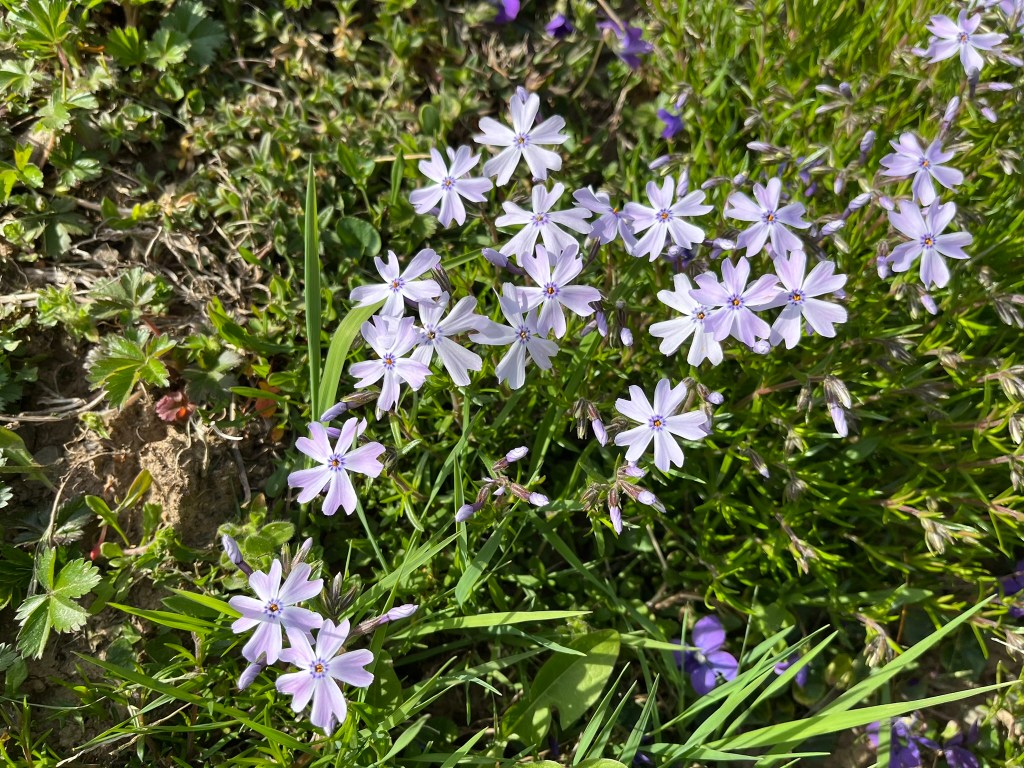
Coupled with my increased time spent on the patio- primarily doing “back porch birding” and reading after work- more subtle changes jump out at me. Early last week, a tiny blue flower popped up in the time between lunchtime birding and evening reading. A day later, smoky purple stalks shot up and revealed speckled flowers. By the weekend, violets erupted across the yard.
On my 0.33-acre property, I found 9 species of flowering forbs: Moss Phlox, Ground-Ivy, Little Mouse-Ear, Philadelphia Fleabane, Hairy Bittercress, Lesser Periwinkle, Grey Field-Speedwell, Birds’-eye Speedwell, and Common Blue Violet. In early- to mid-April, only a handful were blooming. Most are nearly budding and will most likely bloom in another week or so, revealing their flowers to the world.
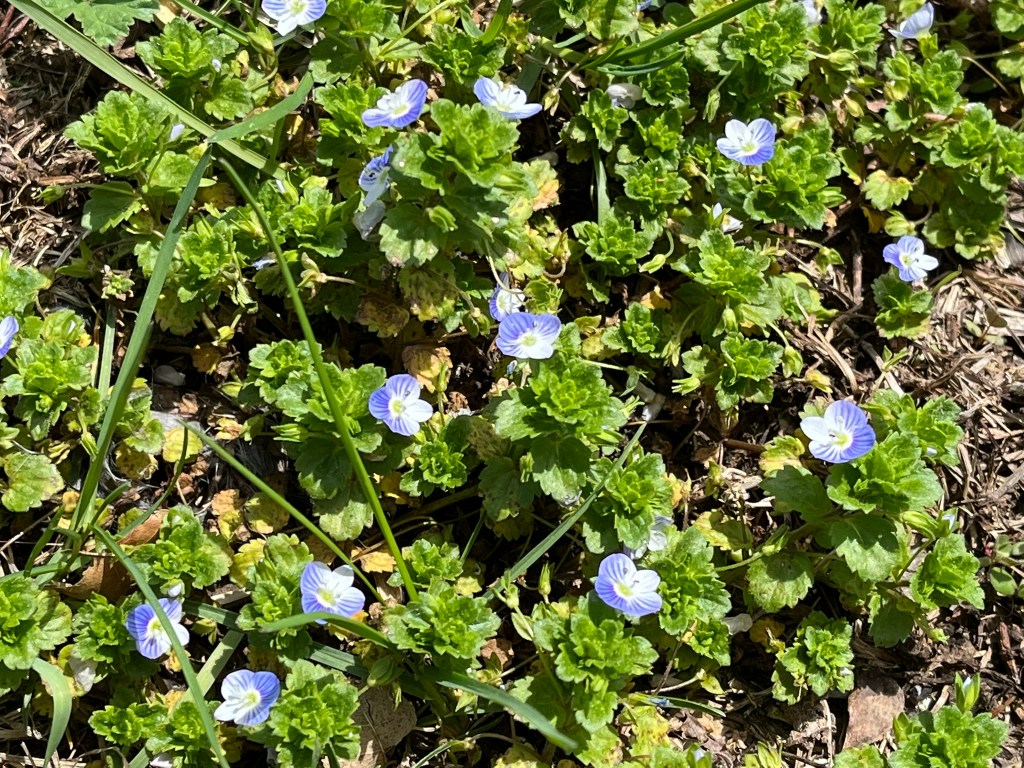
While beautiful, some of these species are not native to my ecoregion. Veronica polita, the Grey Field-Speedwell, was most likely introduced by settlers in Europe. White-tailed deer and Eastern cottontail don’t appear to favor the plant, and it will continue to spread in areas that have thin soil and are infrequently mown. Another plant in my yard, Glechoma hederacea, Ground-Ivy, was introduced as a medicinal plant by European settlers and left to grow wild.
On the flip side, two species I’ve noticed are native to Pennsylvania- violets and Moss Phlox. Violets are a favorite of mine, and in my ecoregion grow as the Common Blue, or if I’m lucky, the Northern White. My yard lies low and retains water well, great habitat for Common Blue violets. Near my grandmother’s house, in a patch of wood, Northern White Violets grow up from the leaf litter. The other native flower, Moss Phlox, is often cultivated as a ground cover in my area. While I’ve never purposefully planted phlox, I appreciate volunteering to crowd out unsavory species.

Right now, the lawn is over 6 inches tall, and over 9 inches tall in especially lush areas. My lawnmower is due to be returned any day, and I dread it. I’m torn between allowing my lawn to grow into a meadow and keeping it trimmed. I’ve always wanted to grow a native grass meadow for a lawn and am free of homeowner’s authorities to prevent me- yet the knowledge that a lawn meadow will attract ticks holds me back. Keeping a trimmed lawn will permit me to be outside more often and enjoy what is there. A compromise my partner proposed is to simply mow less, and when we do mow, trim the grass on the highest blade setting.
I’m going to attempt to hold out to see some of the other flowers before trimming the yard. The Little Mouse-Ear, Philadelphia Fleabane, and Hairy Bittercress are only days away from bloom. Even then, I may attempt to wait even longer to allow the native species to pollinate and grow seeds. Yet, I know I can’t wait forever. Eventually I will need to trim the lawn and carry on with my explorations beyond the yard.



 Autumn Knepp