A Weekend at Gifford Pinchot State Park

In April, I attended the Pennsylvania Outdoor Content Creator Meetup at Gifford Pinchot State Park. This event was organized by Christian from the Hemlocks to Hellbenders podcast and sponsored by Explore York PA. The drive, while long, was easy. I listened to The Ghost Furnace Podcast and The American Birding Podcast. A little after 1 o’clock, I rolled up to the camping cottage to unload my stuff.

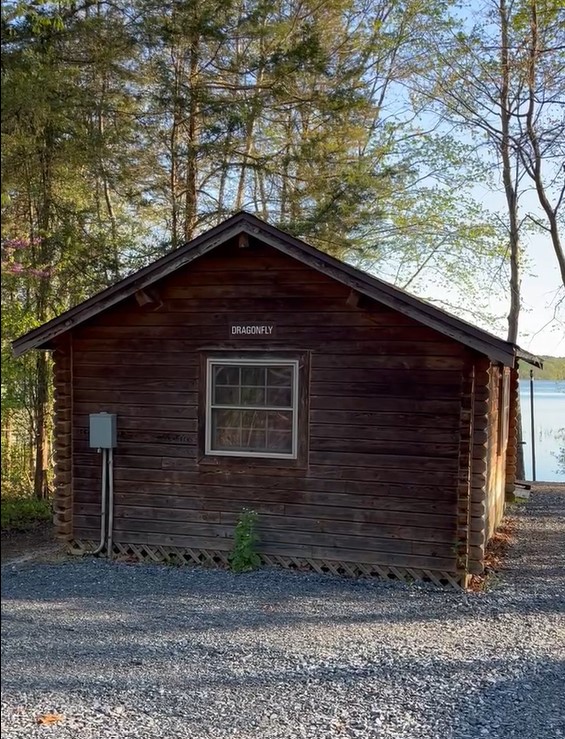
Dragonfly Cottage is at the back of the campground on the shore of the lake. As I hopped out of my car, a Bald Eagle took off from a snag across the water. Spotting the eagle felt like a good omen for the weekend. In a flash, I unloaded my bags and set up my bunk. I was set to share with Sara from Hiking Outdoor Family, Britt from Britt Around Town, and Michele from Adventures Abound.

A little later, I headed over to the Conewago Day Use area to meet everyone. I explored the area around our pavilion, finding lots of spring ephemerals. My favorites in this area were Virginia Springbeauty and Azure Bluets. Moss and lichens covered the diabase rocks scattering the area. Introductions were made, and before dinner we went on a hike along Lakeside Trail. Dinner was had, and then we loaded up to visit the vernal pools of Gifford Pinchot.

As Park Educator Beth spoke about vernal pools, I resisted the urge to dip my hands in the dark water. I wanted to hold tadpoles in my hands like a little girl. After she finished speaking, Beth let us explore the pool. I checked out the two citizen science projects there. On the far end is a CrowdHydrology station, and the near end a Chronolog station.

After we finished exploring, I headed back to our cabin to head to bed. I fell asleep fast – as I drifted off, I could hear the night calls of birds and a light patter of rain on the cottage roof.  

The following morning started with a shower and coffee. One of the creators, oneeyewanderz/itravel4coffee, brought an espresso machine. Yes, you read that right- an ENTIRE, ACTUAL espresso machine. He made me a latte, which energized me for our hike to Boulder Point.

Boulder Point is a unique geological feature at the park. It’s a “balanced rock” created by spheroidal weathering and repeated freeze-thaw cycles. About 200 million years ago, molten rock shot through Triassic-aged materials. Thousands of years of erosion revealed the diabase rocks. Keeping age in mind, these rocks may be a periglacial feature. 75 thousand years ago, a huge part of Pennsylvania lie under a glacier. The proximity to permafrost and dramatic freeze-thaw cycles would have accelerated erosion… leaving behind the rocks we see today.

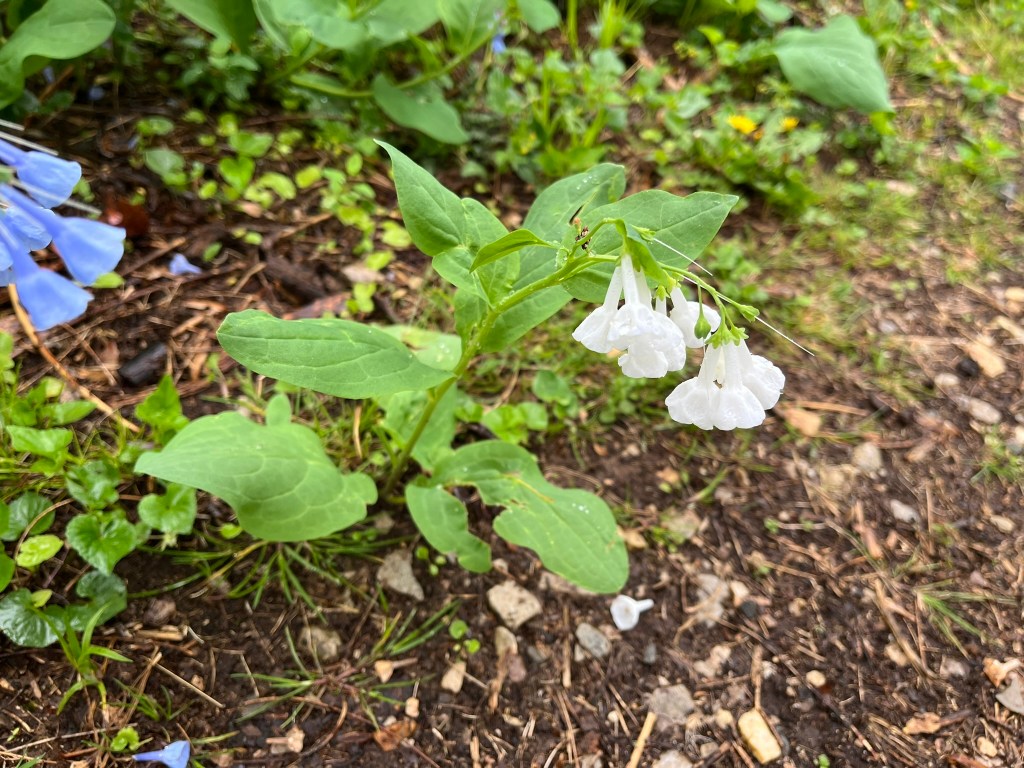
While hiking, the huge variety of spring ephemerals growing at the park delighted me. I saw many species, including: Jack-in-the-Pulpit, trilliums, Wild Geranium, and Wild Pinks. Virginia Bluebells grew in masses- some of the plots also had pink and white varieties. White bluebells are rare, and carry the scientific name Mertensia virginica forma berdii. I saw many clumps of white bluebells, again feeling it was a good omen.
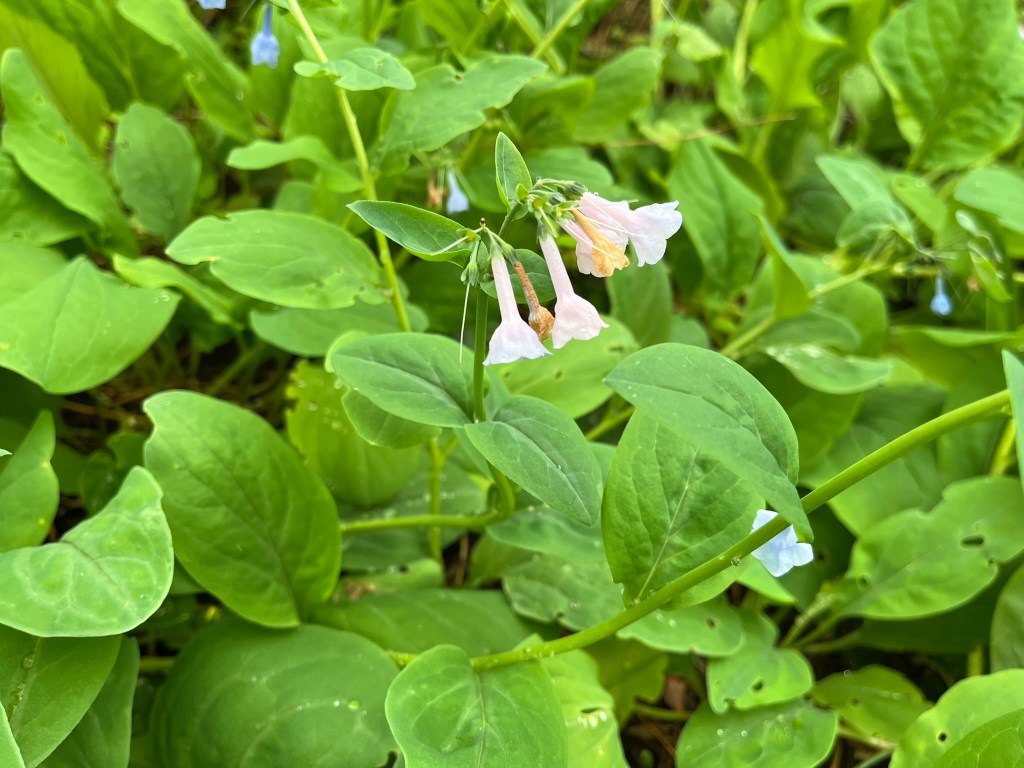
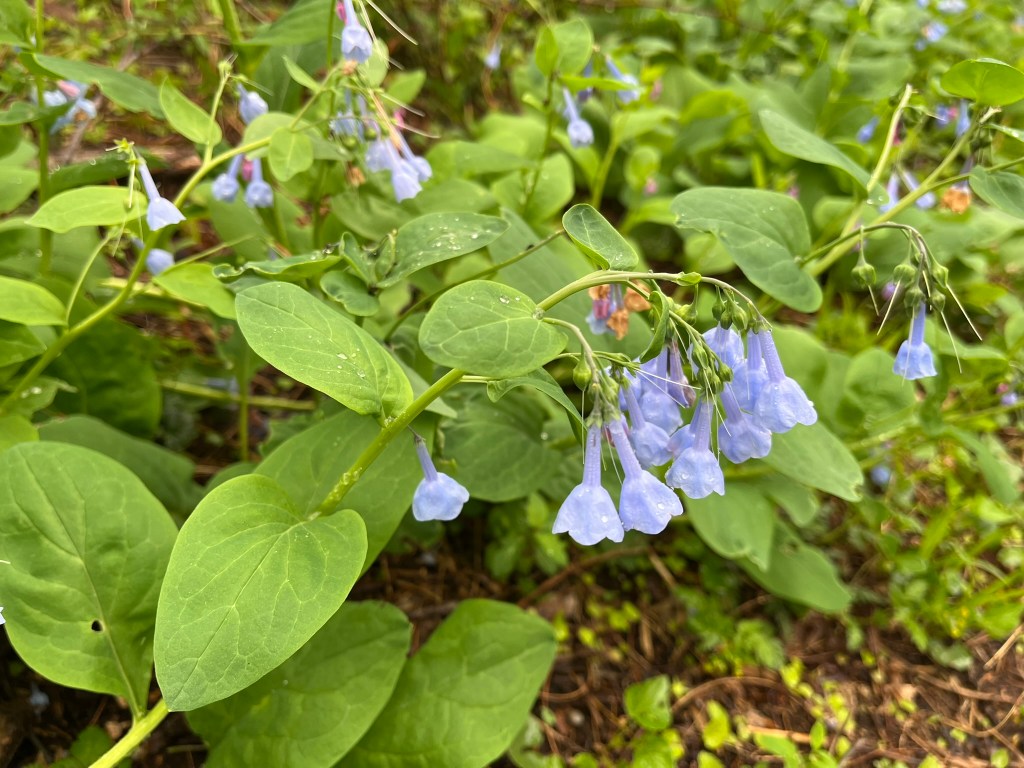
Back at the pavilion, we lunched and enjoyed a variety of interesting talks and programs. Our highlight was DCNR Secretary Cindy Adams Dunn. She stopped to visit with us on her way to check on the forest fires in Michaux State Forest. Her words filled me with inspiration, and I thought about them often throughout the rest of the day.

During a break, I needed to rest and dry my feet. I attempted to take a brief nap, but instead relaxed at the picnic table at Dragonfly Cottage. With my polarized sunglasses, I watched bluegill and bass dart in the water close to shore. Further off, a Green Heron stalked the shallows. The air was full of the calls of Red-bellied Woodpeckers and Red-winged Blackbirds. My heart and soul felt restored while enjoying the peace around me.

Later after dinner, we met Dr. Reigner from the Office of Outdoor Recreation and Executive Director Blischke from the Pennsylvania Council on the Arts. Their session was a facilitated discussion, and I learned a lot from the others in our group. Compared to everyone else, I’m a “baby” creator. The mentorship I was receiving from this session alone… priceless.

The following morning, we packed up and carried on in own ways- and I decided to go birding. At Boat Mooring Area #1, I picked up new lifers: Northern Parula and Yellow-rumped Warbler. On the drive between areas, I saw a Brown Thrasher in a bush! At the Quaker Race Day Use Area, I watched a Cooper’s Hawk get mobbed by a huge flock of crows.

I continued on to the Dam Overlook, hoping to spot more wilderness and forest species. I only saw and heard Tree Swallows. A tall chain-link fence separated visitors from the actual dam area. The fencing eliminated the chance for a scenic overlook. I understand safety concerns, yet it felt out-of-place. Disappointed, I left as a group of peppy flyfishermen started their hike down to the water.

Once I finished birding, I set off for home. I listened to more podcasts- my favorite one from was a Ghost Furnace episode on a sasquatch sighting. I also re-listened to Think Outside with the Pennsylvania Parks & Forests Foundation. I made an impromptu stop at another park, which I’ll share about soon. I stopped at Red Rabbit for lunch, turned off the GPS, and cruised home to my cat, fiancé, and hot shower.

I recommend visiting Gifford Pinchot State Park. There’s a little bit of everything for everyone. With plenty of water, you can kayak, canoe, and fish to your heart’s content. A variety of hiking trails will entertain any level of hiker. Be sure, though, to pack a padded sleeping bag- the camping cottage bunks are unforgiving!

Have you visited Gifford Pinchot State Park before?

Noticing April Yard Flowers

Vinca minor, Lesser Periwinkle

On my quest to explore the nature close to me, I have spent a lot more time in my own yard than I expected. A long-standing tradition of grass lawns in America has taught many generations that our backyards are devoid of nature, not full of it. Of course, I know better than that! Yet, I still found myself trapped in the belief that nothing exciting or interesting grows in my yard.

Two things have changed how I view my backyard:
1. I’ve been spending more time in my own yard
2. My lawnmower needed repaired

In the months I’ve been spending more time outside, my yard has transformed from a brown, barren wasteland to thriving blanket of plants. In years past, I would be dragging the mower out, spending two hours on a weeknight cutting the grass lower than the neighboring yards. This year is a little different- our aging mower needed repaired, delaying the “first cut” by a few weeks.

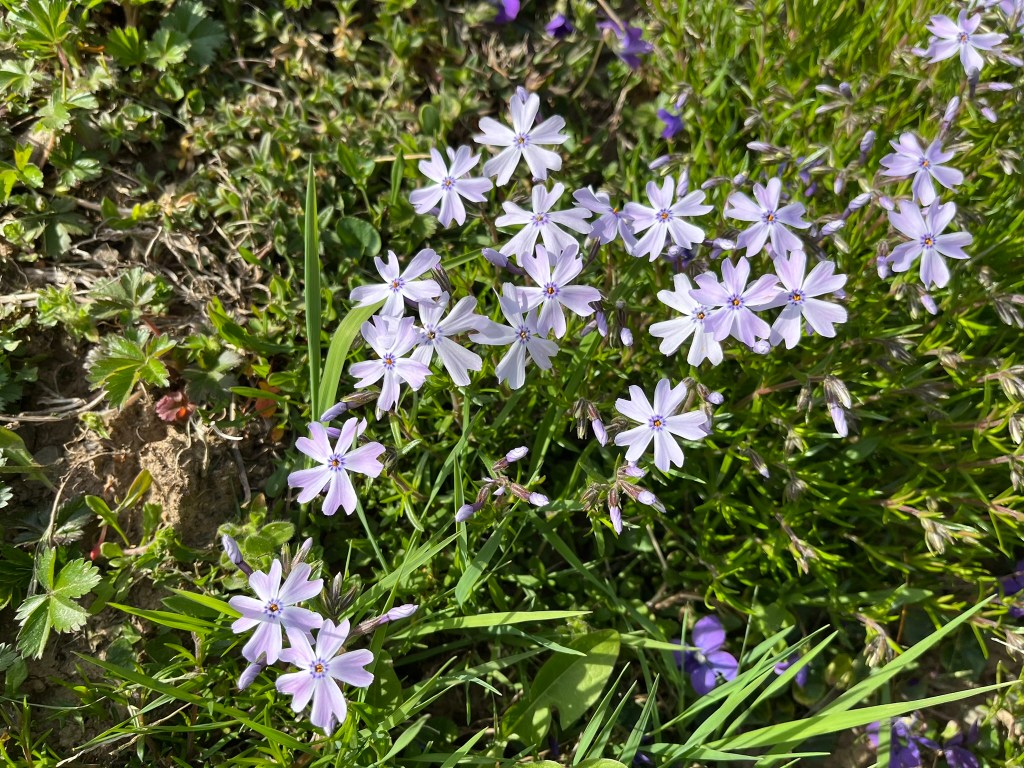
Phlox subulata, Moss Phlox

Coupled with my increased time spent on the patio- primarily doing “back porch birding” and reading after work- more subtle changes jump out at me. Early last week, a tiny blue flower popped up in the time between lunchtime birding and evening reading. A day later, smoky purple stalks shot up and revealed speckled flowers. By the weekend, violets erupted across the yard.

On my 0.33-acre property, I found 9 species of flowering forbs: Moss Phlox, Ground-Ivy, Little Mouse-Ear, Philadelphia Fleabane, Hairy Bittercress, Lesser Periwinkle, Grey Field-Speedwell, Birds’-eye Speedwell, and Common Blue Violet. In early- to mid-April, only a handful were blooming. Most are nearly budding and will most likely bloom in another week or so, revealing their flowers to the world.

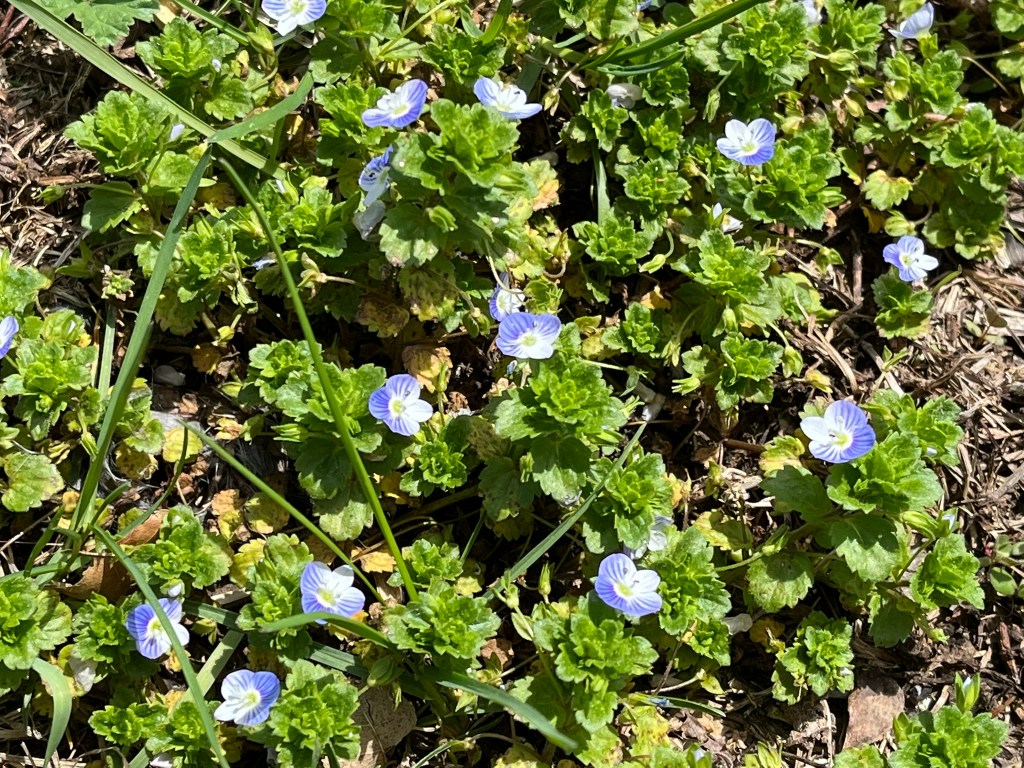
Veronica polita, Grey Field-Speedwell

While beautiful, some of these species are not native to my ecoregion. Veronica polita, the Grey Field-Speedwell, was most likely introduced by settlers in Europe. White-tailed deer and Eastern cottontail don’t appear to favor the plant, and it will continue to spread in areas that have thin soil and are infrequently mown. Another plant in my yard, Glechoma hederacea, Ground-Ivy, was introduced as a medicinal plant by European settlers and left to grow wild.

On the flip side, two species I’ve noticed are native to Pennsylvania- violets and Moss Phlox. Violets are a favorite of mine, and in my ecoregion grow as the Common Blue, or if I’m lucky, the Northern White. My yard lies low and retains water well, great habitat for Common Blue violets. Near my grandmother’s house, in a patch of wood, Northern White Violets grow up from the leaf litter. The other native flower, Moss Phlox, is often cultivated as a ground cover in my area. While I’ve never purposefully planted phlox, I appreciate volunteering to crowd out unsavory species.

Viola sororia, Common Blue Violet

Right now, the lawn is over 6 inches tall, and over 9 inches tall in especially lush areas. My lawnmower is due to be returned any day, and I dread it. I’m torn between allowing my lawn to grow into a meadow and keeping it trimmed. I’ve always wanted to grow a native grass meadow for a lawn and am free of homeowner’s authorities to prevent me- yet the knowledge that a lawn meadow will attract ticks holds me back. Keeping a trimmed lawn will permit me to be outside more often and enjoy what is there. A compromise my partner proposed is to simply mow less, and when we do mow, trim the grass on the highest blade setting.

I’m going to attempt to hold out to see some of the other flowers before trimming the yard. The Little Mouse-Ear, Philadelphia Fleabane, and Hairy Bittercress are only days away from bloom. Even then, I may attempt to wait even longer to allow the native species to pollinate and grow seeds. Yet, I know I can’t wait forever. Eventually I will need to trim the lawn and carry on with my explorations beyond the yard.

Lichen Love Affair

Flavopunctelia soredica, Powder-edged Speckled Greenshield

In February, I attended Community Nature Journaling at Shaver’s Creek. The day’s lessons focused on the biology and ecology of lichens. This event opened my eyes to lichenology and has been a source of many hours of study.

Lichens are the product of a symbiotic relationship between algae and fungi. The fungi is the dominant partner- dictating the lichen’s thallus to fruiting body. The algae is a type of cyanobacterium and provides food for the fungi. Lichens will grow on many substrates, and we will see them often on trees and rocks. Lichens are among the first colonizers of bare rocks. They aid in the development of better habitat for mosses and other plants.

Flavoparmelia caperata, Common Greenshield

Lichens grow on many different substrates in a vast array of environments. Lichens occur everywhere in Pennsylvania. Lichens are often accessible for study- my favorite place to find them are in parking lots! Even though lichens are common, they are very slow to grow and develop. It’s best to snap a picture and move on. Disturbing any lichen, especially a large one, will damage years or decades of growth.

My favorite lichen species is Flavoparmelia caperata – the Common Greenshield Lichen. This species is among the most common species of lichens in North America. On a tree, it has a bright, limey green foliose thallus. The edges of the leaves are smooth and feel tough and leathery to my touch. My second favorite is Parmotrema hypotropum – the Powdered Ruffle Lichen. This lichen reminds me of the tops of lettuce with their deep ruffled surface. The colors of the Powdered Ruffle Lichen aren’t as intense as my favorite, but are still beautiful to me.

Xanthoria parietina, Common Sunburst Lichen

Despite the variety of lichens, I’ve had a difficult time finding a definitive field guide. I’ve been relying on the Pennsylvania Bryophyte and Lichen Diversity Project on iNaturalist. I post my pictures and rough identifications, and a member of the project checks my work. I learn a lot from their corrections, and have become better at identification.

With the summer months coming, it will become more difficult for me to spot lichens. My favorite species’ preferred habitats are on trees. Once leaves emerge, I’m not sure if the lichens will be so easy to spot. Plus, any exposed rocks will soon cover with brush and vines. I’m hoping to spend the “off” months looking for a good field guide. One book exists, Urban Lichens by Jessica Allen and James Lendemer. There’s many websites that appear promising but are difficult to navigate.

Flavoparmelia caperata, Common Greenshield

The last few months have been full of lichen-related exploration and learning. I look forward to more en-lichen-ing discoveries as the seasons progress!

Tick Tricks to Prevent Lyme Disease

Female Blacklegged Tick” by Lennart Tange is licensed under CC BY 2.0.

The summer after I turned 16, I developed a huge bull’s eye rash on my left leg. Shortly after, I started experiencing severe migraines, dizziness, and piercing joint pain. One trip to the doctor later, and I was diagnosed with Lyme Disease. With one bite, my summer was ruined, and how I explored the outdoors changed forever. I’ve learned since that it’s easy to protect myself from contracting Lyme Disease again.

First, learn when and where to expect ticks. Blacklegged Ticks are the most common carrier of the bacteria that causes Lyme Disease. When temperatures are above freezing, young (nymphal) and adult ticks emerge and start searching for a blood meal. Nymphal and adult Blacklegged Ticks will bite humans, animals, reptiles, and even amphibians!

Ideal habitat for ticks is forest edge habitats and understory vegetation. Think of places like walking, biking, and hiking trails- right along the forest’s edge. Other places, like streambanks and gardens, are also likely places for ticks. For me, I was bit by a tick while walking along the edge of a farm field!

Second, wear appropriate clothing and gear. Light colored clothing makes the dark, poppy-seed sized tick nymphs easier to spot. While it looks silly, tuck your shirt into your pants and your pants into your socks. This helps prevent ticks from crawling under your clothes. While shorts are great on warm spring and summer days, it’s easier for a tick to crawl under your clothes.

Clothes can also be pre-treated with appropriate pesticides. Companies like L. L. Bean, Columbia, and Insect Shield sell pre-treated clothing. I buy pre-treated clothing, saving me from struggling to apply insecticides at home.

Thick brush, like the kind surrounding this cherry tree, is prime tick habitat.

Third, use EPA-approved insect repellents every time you’re outdoors. Scientific research has proven that insect repellents with 20% to 30% DEET are most effective. Scientists also found that using only DEET is 85% to 89% effective at repelling ticks. The EPA has an online Insect Repellent Bot that can help users choose a repellent that aligns with their personal needs.

Fourth, conduct regular tick checks after being outdoors. The longer a tick is attached to you, the more likely you are to contract Lyme Disease. Ticks are usually found in moist, dark-skinned areas with thin skin. Focus in and around your hair and ears, armpits, belly button, waist, groin, and behind the knees. Some ticks will bite wherever, so also be sure to check your legs, arms, and between your toes and fingers.

Lastly, know how to remove a tick- if you find one. Removing a tick properly can help prevent Lyme Disease, even if a tick has been attached for some time. After finding a tick, use fine-tipped tweezers or a tick key to grasp the tick at the head or as close to skin as possible. Pull up with firm, even pressure, taking care not to twist or jerk the tick. After removing the tick, clean the area and your hands with rubbing alcohol or warm, soapy water.  

The most important part to remove is the tick’s head. Ignore old wives’ tales about ticks. Removing ticks by burning them or smothering with Vaseline is not successful at preventing Lyme Disease. Slowly and carefully removing a tick with the correct tools is the best way to ensure the whole tick is removed.

Lyme Disease is preventable by staying aware and protected. Other tricks, like removing ticks completely, are also beneficial. By following these tips and tricks, I’ve not had Lyme Disease since I was 16. I look forward to many more years of tick-free exploring outdoors!

Works Cited

CDC. “Preventing Tick Bites.” CDC.GOV, U.S. Centers for Disease Control and Prevention, 17 May 2024, www.cdc.gov/ticks/prevention/index.html. Accessed 5 Apr. 2025.

Columbia Sportswear. “Insect Shield® | Columbia Sportswear.” Columbia.com, 2025, www.columbia.com/c/technology-insect-shield/?srsltid=AfmBOopIZTpDgZ3e0Td6rBgLcC56u3mTJ4WLu9GNKF6IgBy4YkLER3Z4. Accessed 6 Apr. 2025.

Commonwealth of Pennsylvania. “​​Tick Surveillance and Testing.” PA.GOV, Commonwealth of Pennsylvania, 2025, www.pa.gov/agencies/dep/programs-and-services/integration/vector-management/ticks.html#accordion-7ff146f74e-item-776b68db7f. Accessed 6 Apr. 2025.

—. “Blacklegged Tick.” PA.GOV, Commonwealth of Pennsylvania, 2024, www.pa.gov/agencies/dep/programs-and-services/integration/vector-management/ticks/blacklegged-tick.html. Accessed 5 Apr. 2025.

—. “Tickborne Diseases Dashboard.” PA.GOV, Commonwealth of Pennsylvania, 2025, app.powerbigov.us/view?r=eyJrIjoiMTM1OWFiODUtM2ExZS00MDFhLThmN2ItMzUxNjZlYzY4NDg5IiwidCI6IjQxOGUyODQxLTAxMjgtNGRkNS05YjZjLTQ3ZmM1YTlhMWJkZSJ9. Accessed 6 Apr. 2025.

Insect Shield. “Insect Repellent Clothing | Built-in Bug Protection.” Insect Shield, www.insectshield.com/. Accessed 5 Apr. 2025.

L.L. Bean. “Insect-Repellent Clothing and Gear .” L.L.Bean, 2025, www.llbean.com/llb/shop/516182?qs=3091740_GOOGLE&Matchtype=e&gad_source=1&gclid=Cj0KCQjwqcO_BhDaARIsACz62vN5_mysh-7QLtv311FpELJxB-VZEc0ybWDgn-Y-nGB5DsJgwnPsklEaAqE0EALw_wcB&gclsrc=aw.ds. Accessed 6 Apr. 2025.

Tange, Lennart. Female Blacklegged Tick, 20 May 2012, www.flickr.com/photos/77856868@N04/7236314390. Accessed 12 Apr. 2025.

US EPA, OCSPP. “Repellents: Protection against Mosquitoes, Ticks and Other Arthropods.” EPA.GOV, United States Environmental Protection Agency, 9 July 2013, www.epa.gov/insect-repellents. Accessed 5 Apr. 2025.

Early Spring at Millbrook Marsh

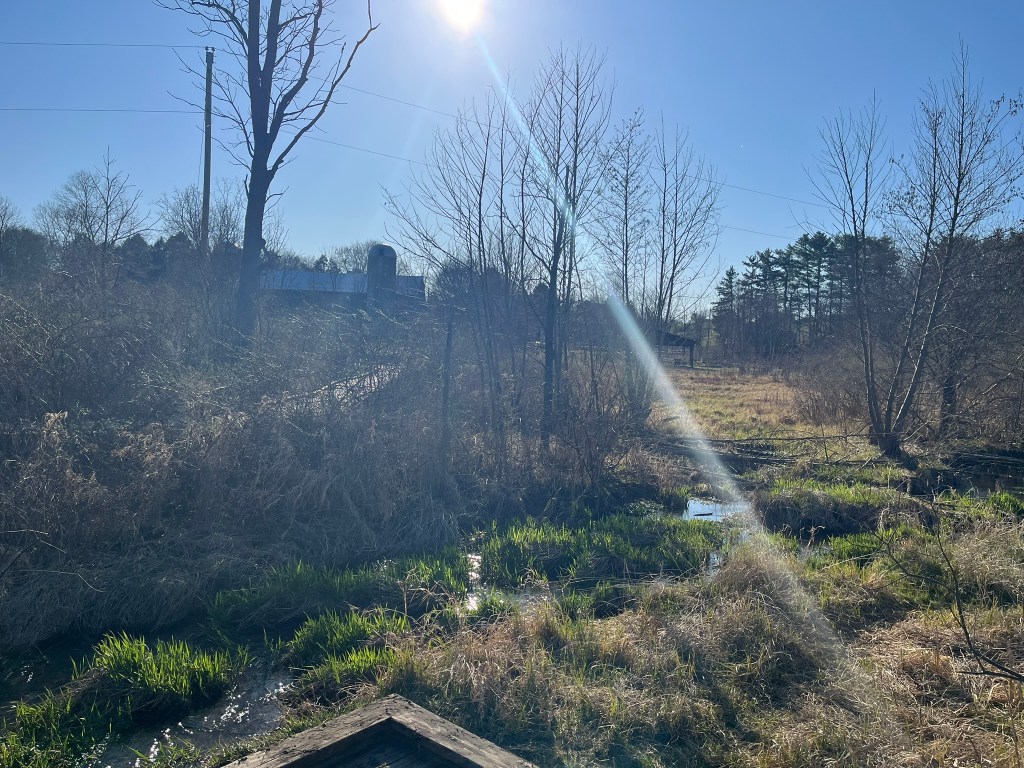
Some days call for a microadventure. I had one such day last week- on my way home, I made the impulse decision to stop at Millbrook Marsh Nature Center and enjoy the warm weather before spring rain rolled into Centre County.

I was delighted by what I found at the 62-acre site: skunk cabbages, good birding, and plenty of peace. From the moment I parked my car, a sense of relaxation washed over me. Over the sounds of the stadium, the raspy oak-a-lee of Red-winged Blackbirds filled the air. As I wandered to the boardwalk, American Robins implored me to go cheerily and cheer-up.

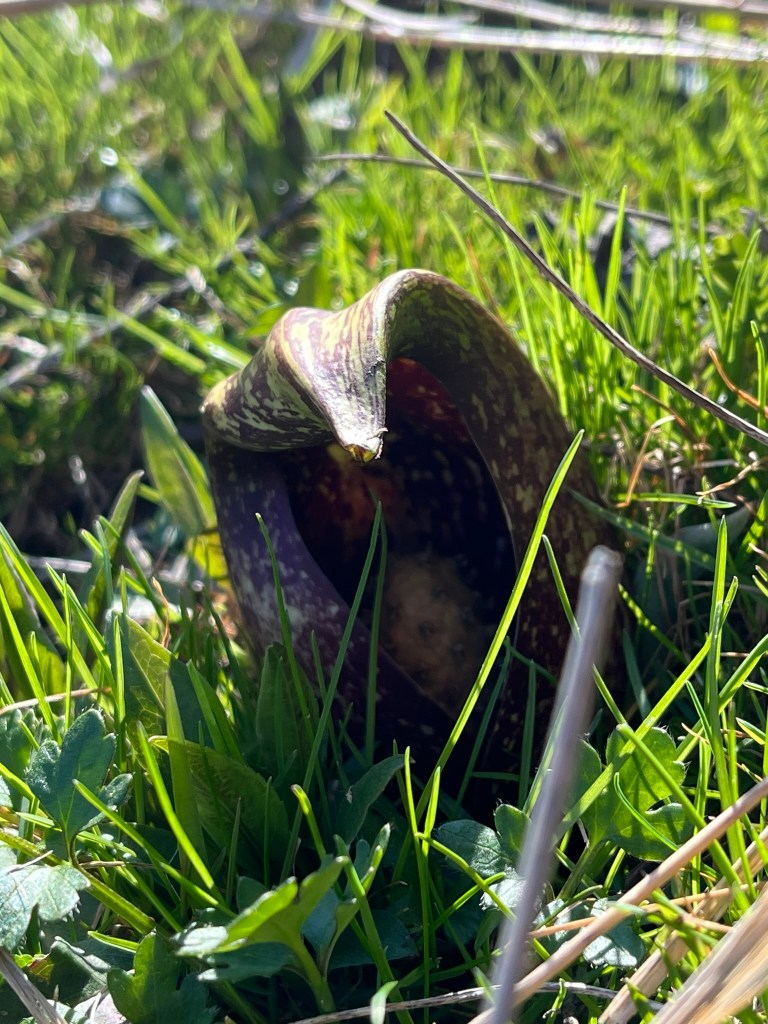
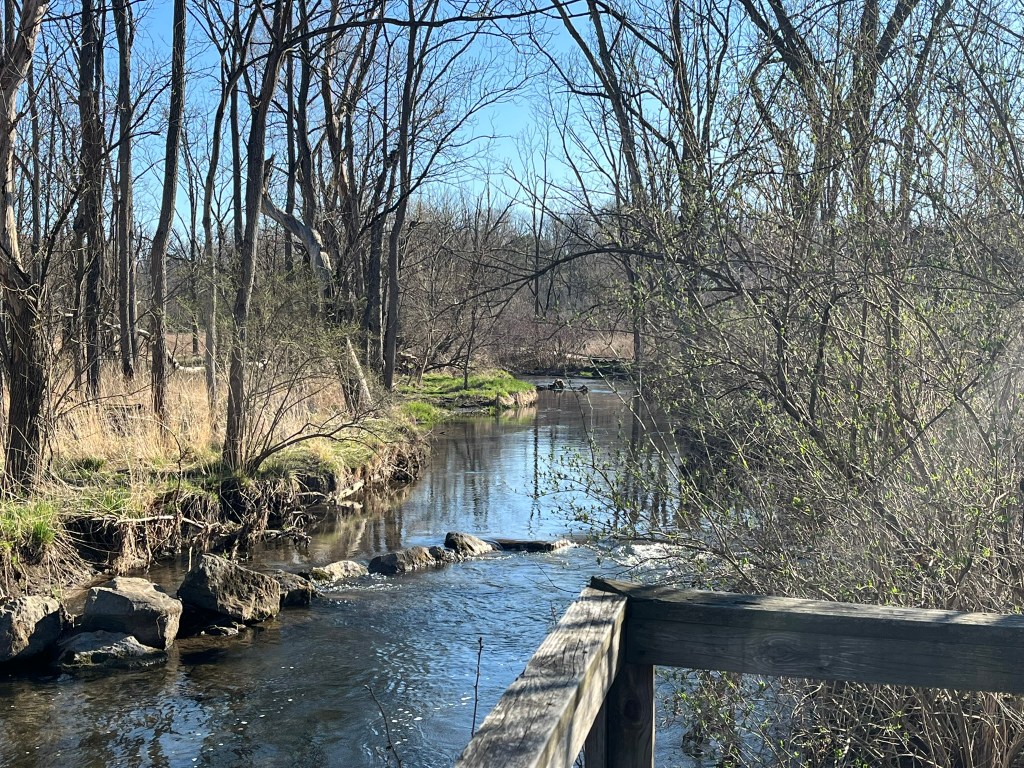
Close to the boardwalk, tributaries of Thompson Run and Slab Cabin Run flowed by. Near their banks sprouted skunk cabbage. While many folks dislike the smell of these Spring flowers, I don’t mind at all. The smell reminds me of my grandfather’s trapping shed and my college-era fieldwork. Despite the smell, skunk cabbage flowers are beautiful. They look like someone speckled lime-green leaves with burgundy wine.

I love the plethora of platforms along the boardwalk. If I hadn’t been wearing work clothes, I would have jumped in to wade and splash. I admit to laying flat on the boardwalk to snap pictures of skunk cabbage and dip my hands in the water. The cool water was refreshing, and helped connect me to the habitat around me. The grasses were soft and smooth, species unknown to me.

Continuing along, I had several close encounters with birds. A White-breasted Nuthatch hustled in a tree directly over my head. I stopped to observe it lifting up hanging bark to search for insects, bouncing from spot to spot. The bird had a bite at least ten times in a minute. I wondered how sharp its eyesight is in comparison to my own. Further down the boardwalk, some American Goldfinches foraged for seeds, unaware of me. I stood as still as I could for several minutes. Eventually, my phone vibrated, and the rustle of my windbreaker scared off the flock of five birds.

There’s many spots along the boardwalk to jump down and go fishing. While fishing with a trout stamp is permitted, all fish must be released unharmed. I stared into the water for some time, trying to catch a glance of a trout. I didn’t see anything except a pair of Mallards, urging me along with loud quacks.

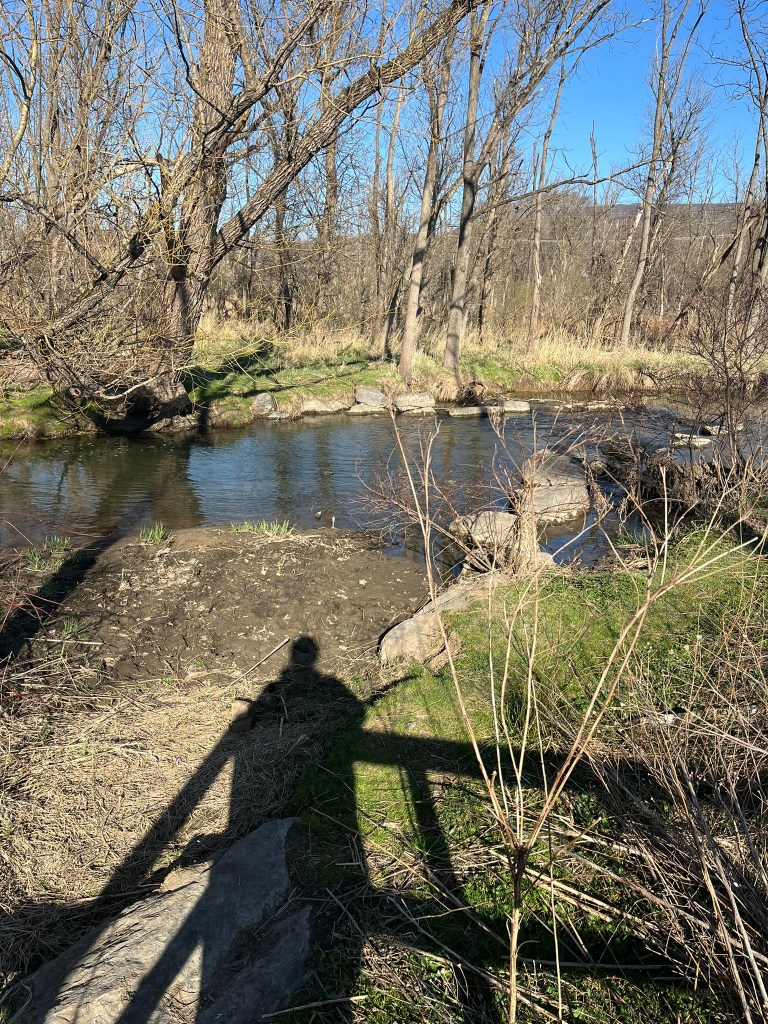
Slab Cabin Run has been under restoration by Trout Unlimited since 2024. Streambank restoration has been the main focus. Slab Cabin Run suffers from agricultural runoff and excess sedimentation. This is a typical problem for streams in Centre County. The new rock vanes and cross vanes are helping channelize the stream and hold back sediments. My inner hydrologist admired the quality of the work and wondered about how the water would test in a lab.

In total, I explored Millbrook Marsh for over an hour, strolling the boardwalk and birding. I left as the sun began to dip towards the mountains, casting a golden glow over the marsh. Before hopping in my car, I paused to soak in the light and start to plan my next trip here in another season.